

Japanese architect Kazuo Shinohara (1925-2006) is one of the most influential architects for contemporary Japanese architecture. He designed several iconic homes for unique owners, including Shuntaro Tanikawa, one of the most accomplished poets in modern Japan. The Tanikawa House was a “match made in heaven” between two of the most talented and ambitious artists.
The first “Tanikawa House” was built in Tokyo in 1959, but it no longer exists. The second one was built in Karuizawa in 1974 as Tanikawa’s second house. (Karuizawa, Nagano Prefecture, is a popular summer resort for Tokyoites.) It has been maintained very well, and was acquired by Japanese entrepreneur Masamichi Toyama in 2019. So far, Toyama has been keeping the property private. However, he is also exploring ways to maintain it for longer term through The Chain Museum, which is one of his enterprises. You can support his efforts via ArtSticker.
When Tanikawa asked Shinohara to design the second house, he sent his requests as a poem. He never published the poem, but you could see a glimpse of it from the notes Shinohara left.
“Winter house, or a hut for pioneers.” “Summer area, or a house of prayer for Pantheists.”…”a shower in late afternoon and snow.”… Apparently, Tanikawa envisioned two distinct areas in his house – the “winter” area as residential units, and “summer” area to do other activities. By using a poem, Tanikawa challenged Shinohara to come up with bold, unconventional ideas.

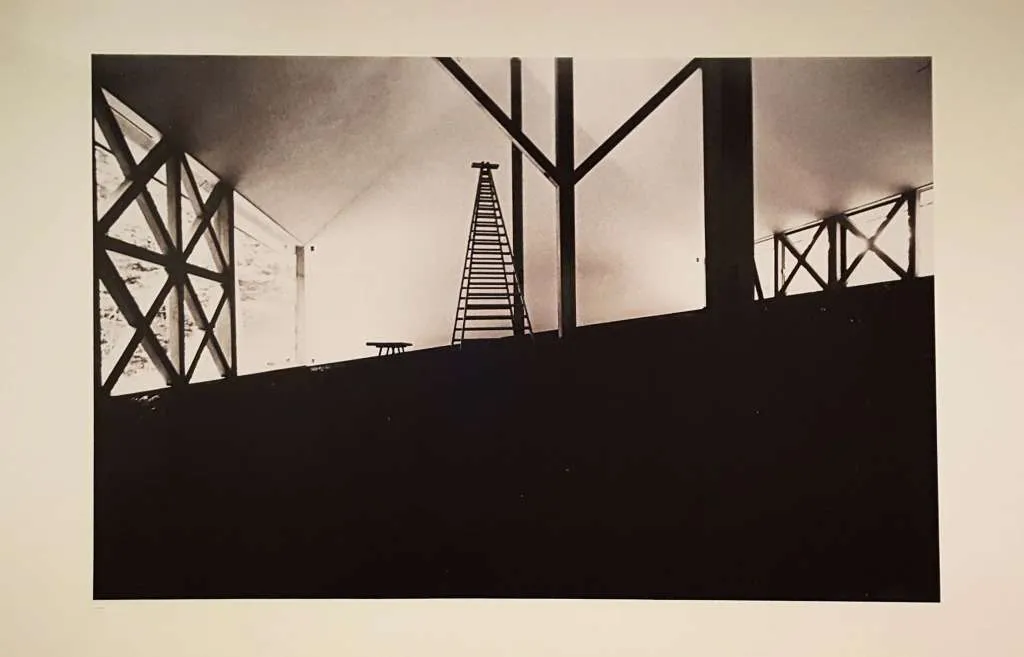
Shinohara responded. Built on a slope in mountainous area in Karuizawa, 3/4 of the Tanikawa house was dedicated to the “summer area.” The design was Shinohara’s interpretation of Japanese “doma” and had a dirt floor which embraced the natural slope as is. Shinohara furnished the floor with volcanic ash from local Asama-yama mountain, and designed a ladder inspired by the one he saw at Paul Cézanne’s atelier.

Reference
https://r100tokyo.com/curiosity/talk-art/230701/
https://casabrutus.com/categories/architecture/119514
Leave a Comment