

About Mirei Shigemori
Mirei Shigemori was born in 1896 in Okayama, Japan. After studying and practicing ikebana (traditional Japanese art of flower arrangement), tea ceremony and art, he moved to Kyoto when he was 33 years old to start independent research on traditional Japanese landscaping and gardens. He visited 500 gardens throughout Japan to conduct a thorough analysis, including taking precise measurements of each garden. He also started designing Japanese gardens, notably karesansui (Zen rock garden) style by blending traditional and modern, innovative elements including bold compositions or liner patterns such as checkers. Many of them still exist today and hailed modern karesansui masterpieces.
You can visit 重森三玲庭園美術館 (Mirei Shigemori Garden Museum), which was created based on his own house in Kyoto, by appointment.
About Tofukuji Karesansui Gardens
東福寺 (Tofukuji) was founded in 1236 as a prestigious Rinzai school temple. Rinzai belongs to Zen, which was ardently supported by samurai leaders back then. The temple was affected by fires multiple times, but it still maintains a couple of facilities, including the gate, that were built during or before 15th century.


Mirei Shigemori Design Philosophy for Tofukuji Karesansui
Tofukuji’s 方丈 (hojo – residential area for priests) burnt down in 1881 due to a fire and was reconstructed in 1890. In 1938, Shigemori surrounded the hojo with four gardens. They are based on Buddha’s life-journey to eventually reach nirvana and used to be called 八相の庭 (gardens with eight stages Buddha went through).
Tofukuji South garden
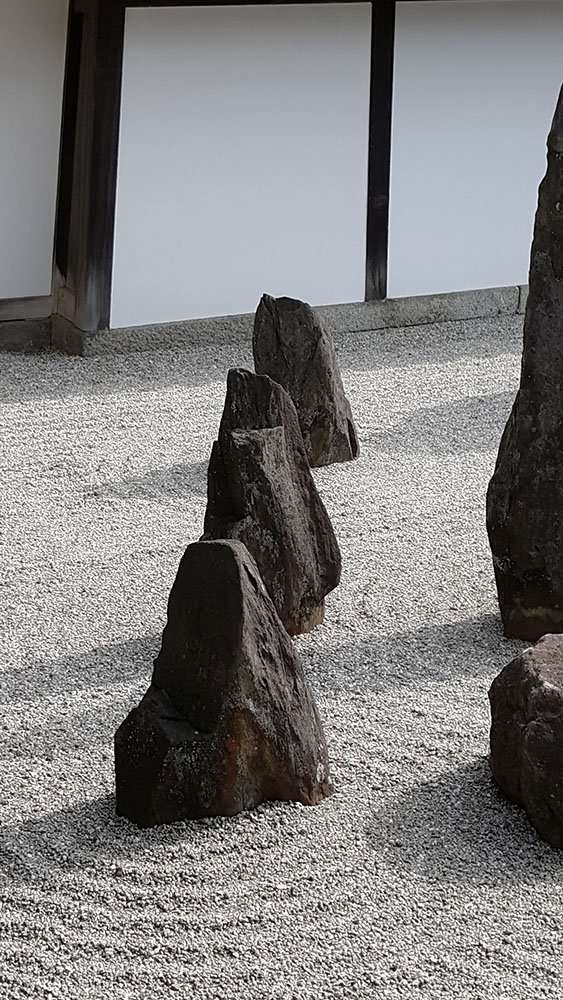
The South Garden is the largest of the four, and uses immense dark rocks, one of Shigemori’s signature elements. The rocks here describe the four islands inhibited by Chinese mythological hermits in a rough ocean. On the other side are mounds which represent the five major Zen temples in Kyoto.



Tofukuji East garden
Following Zen philosophy, Shigemori was asked to reuse waste materials generated by the renovation process. So he re-used parts of the old pillars to express the Big Dipper. The ground represents clouds in the sky. Double-lined hedges between kare-sansui and the residential architecture are the Milky Way.


Tofukuji North garden
The north garden is probably one of the flagship designs by Shigemori. Since crisp checkers were not part of Japanese traditional pattern, they provide a fresh perspective when blended with traditional design. The mosses growing around squares provide a powerful sense of what “living things” are about, even though they are small. The contrast of inorganic, silent stones and the eagerness of the growth created by the mosses is thrilling.
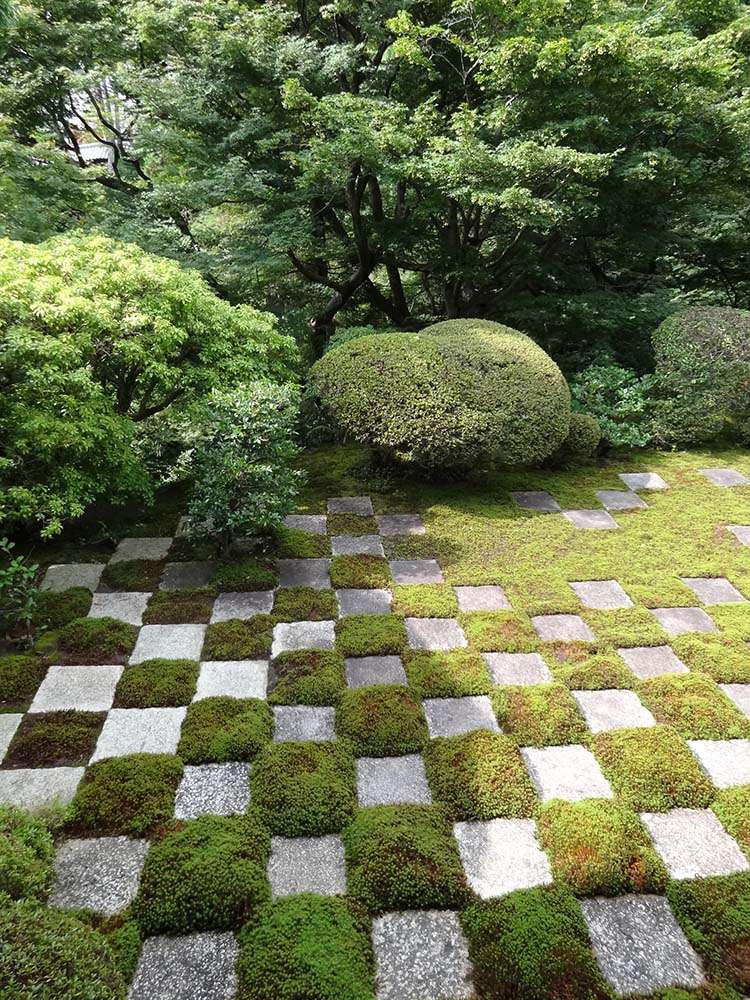


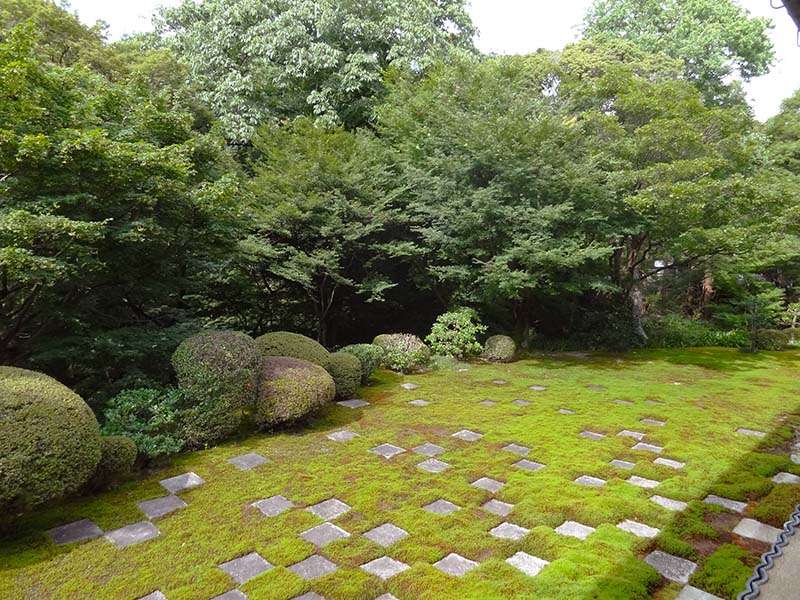
Tofukuji North garden
This is another checker pattern Shigemori introduced to the Kare-sansui garden, this time using shrubs. In general, a Japanese traditional garden attempts to minimize human intervention on the bushes and greenery, so it’s unusual to see the trees so meticulously trimmed . They are in a great harmony with the surrounding architecture which is defined by fine vertical and horizontal lines to give fresh and clean impression.




Leave a Comment