
About Yoshiro Taniguchi
Japanese architect Yoshiro Taniguchi was born in 1904 in Kanazawa, Ishikawa Prefecture, Japan, the cultural/political center of the Northwestern part of the country. He grew up in a highly cultural environment as he was born into a family of highly regarded potters of the 九谷 (Kutani yaki), one of the most recognized traditional Japanese porcelain styles.
Since his childhood, Taniguchi was exposed to a variety of traditional Japanese culture such as craftsmanship, haiku, Noh theater, and traditional Japanese tea ceremony. After studying architecture at the Tokyo Imperial University (the current Tokyo University), he started his teaching career focusing on structural engineering. He stayed in Germany from 1938 to 1939 to work on the Japanese Embassy renovation project. While designing traditional Japanese garden for the Embassy, he also explored German architecture and became inspired by Karl Friedrich Schinkel who led the Neoclassical movement. As he grew up surrounded by traditional Japanese culture, Taniguchi shifted his focus to incorporate traditional Japanese aesthetics in modern architecture. His son Yoshio Taniguchi, is also a renowned architect who designed the futuristic waste incineration facility featured in the Oscar-winning film “Drive My Car” directed by Ryosuke Hamaguchi.
Yoshiro Taniguchi’s design philosophy
Josenji Temple was completed in 1965. At the center of the 14,000 square meters premise is a small cloister-like area surrounded by corridors, which connect the main fall for worship, lecture hall and offices.
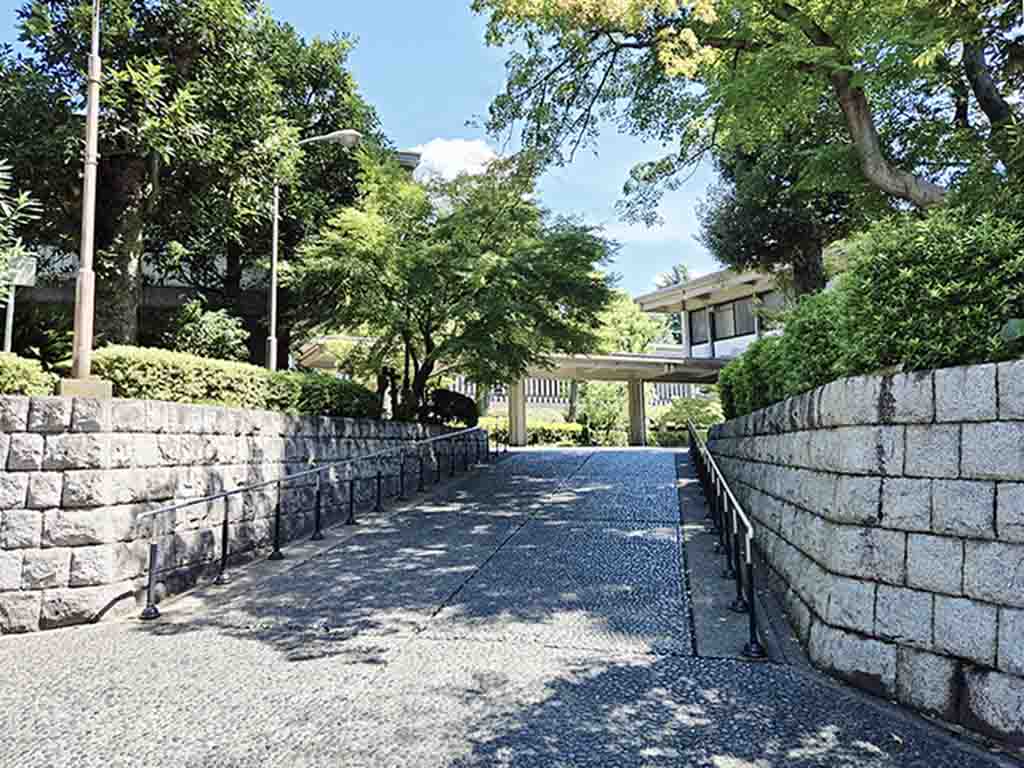
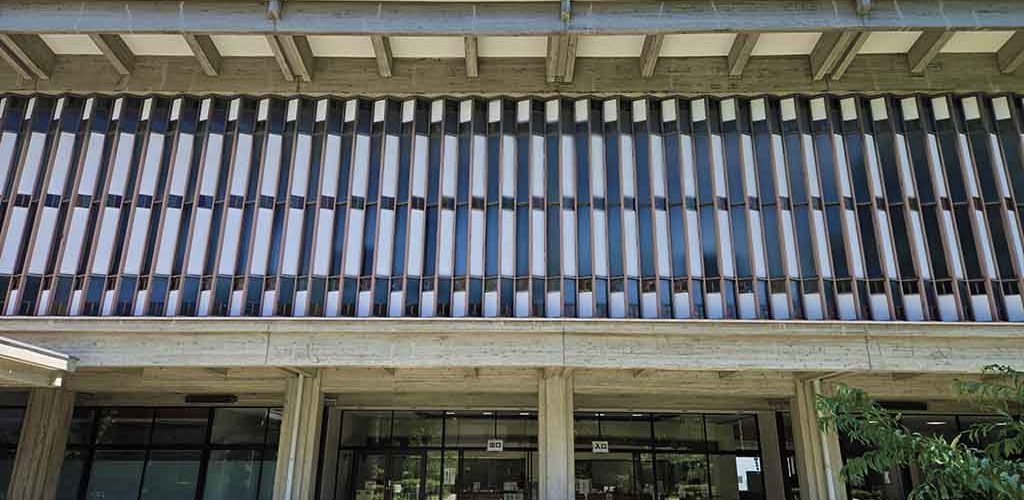
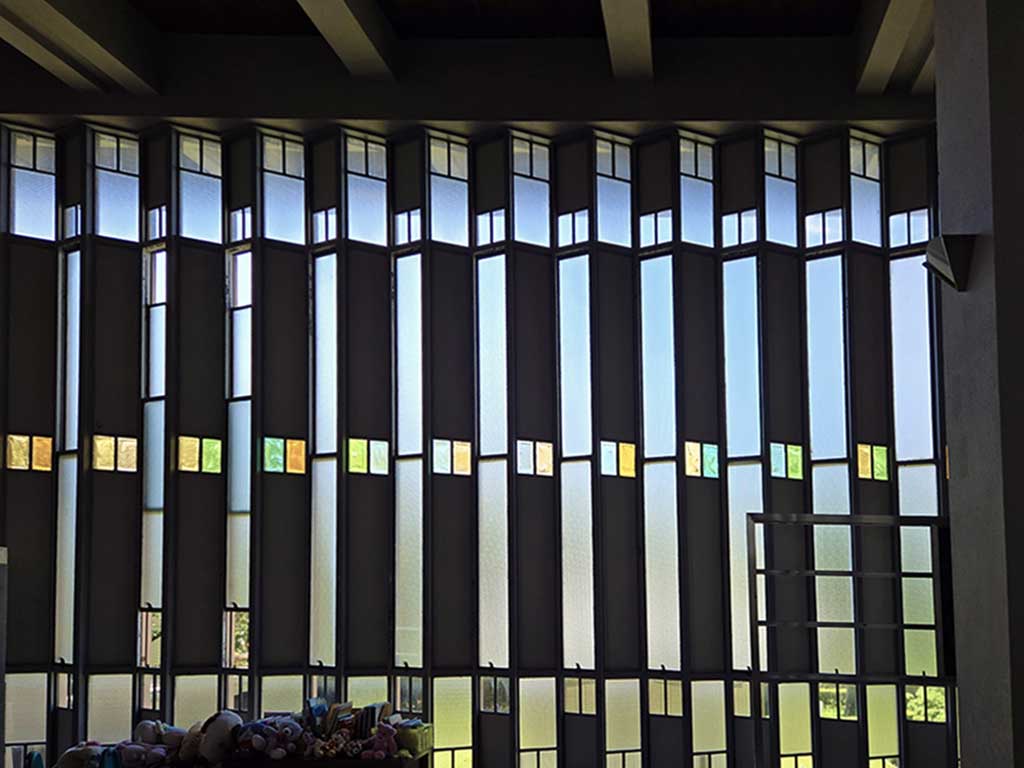
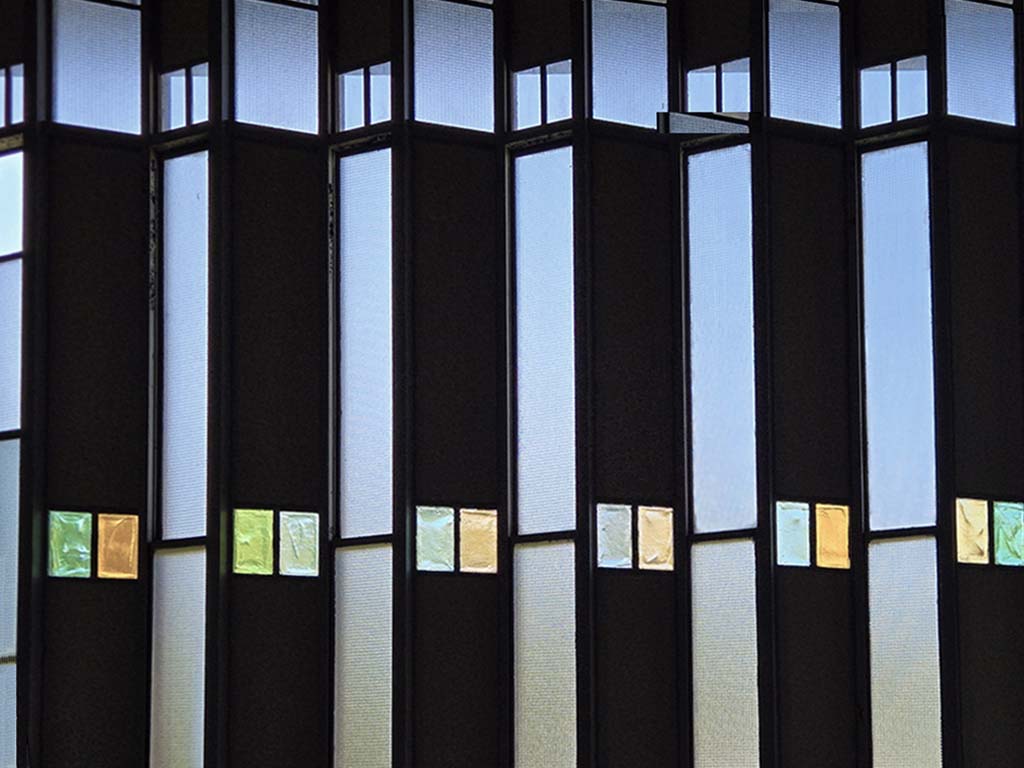
The buildings are supported by reinforced concrete, which is exposed in many areas. The main hall is defined by fine vertical lines of the windows on the second floor. Taniguchi focused on clear design and leveraged materials such as cement, glass, tiles and iron and celebrated their qualities as is. Such clarity and absence of excessive frills were intended to provide worshippers a pure place for prayer with no distraction.
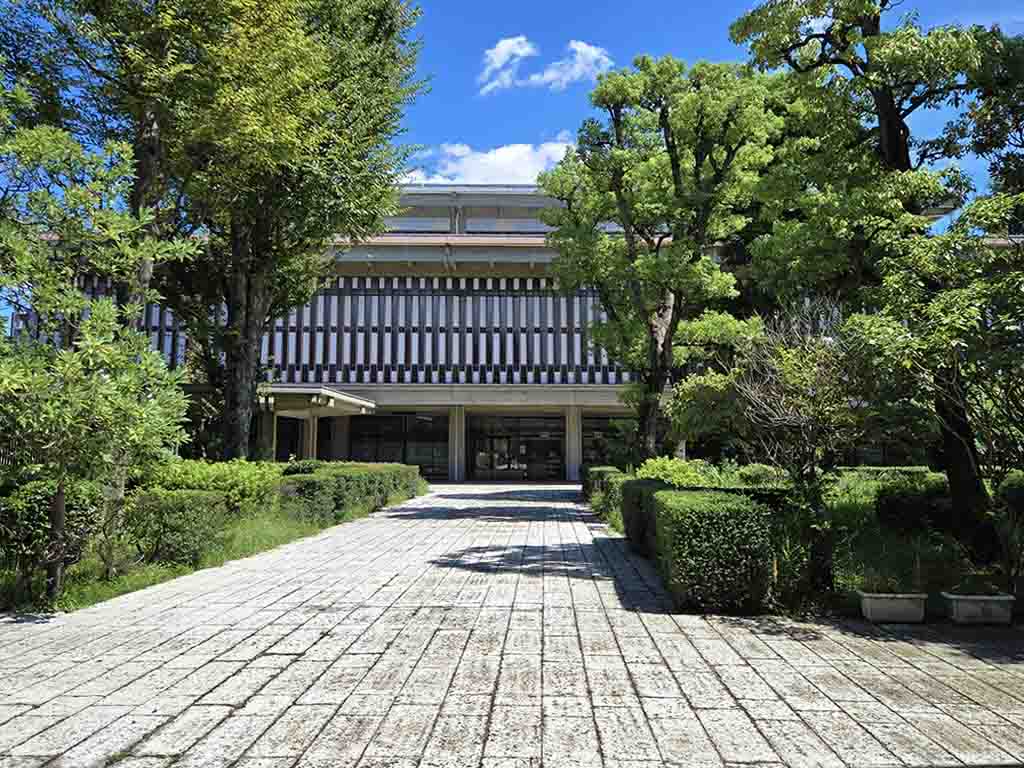
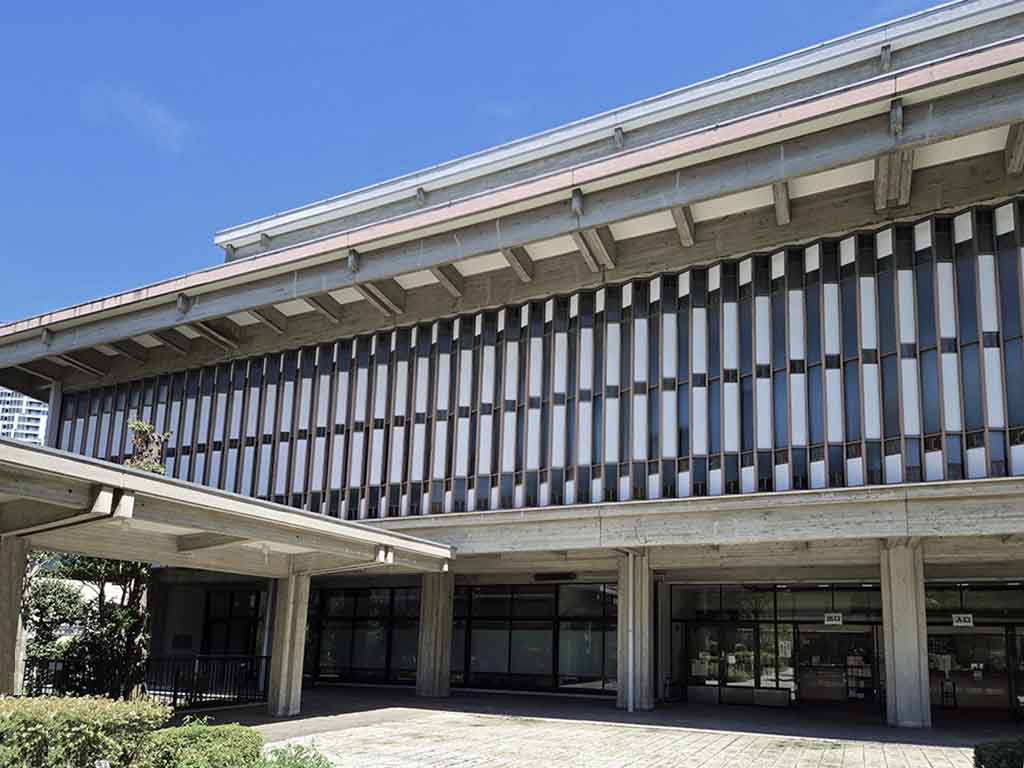
The windows of the second floor of the main hall used a combination of frosted and stained glass. The zig zag patterns provide modern feel while preserving tranquility needed for a place for worship.
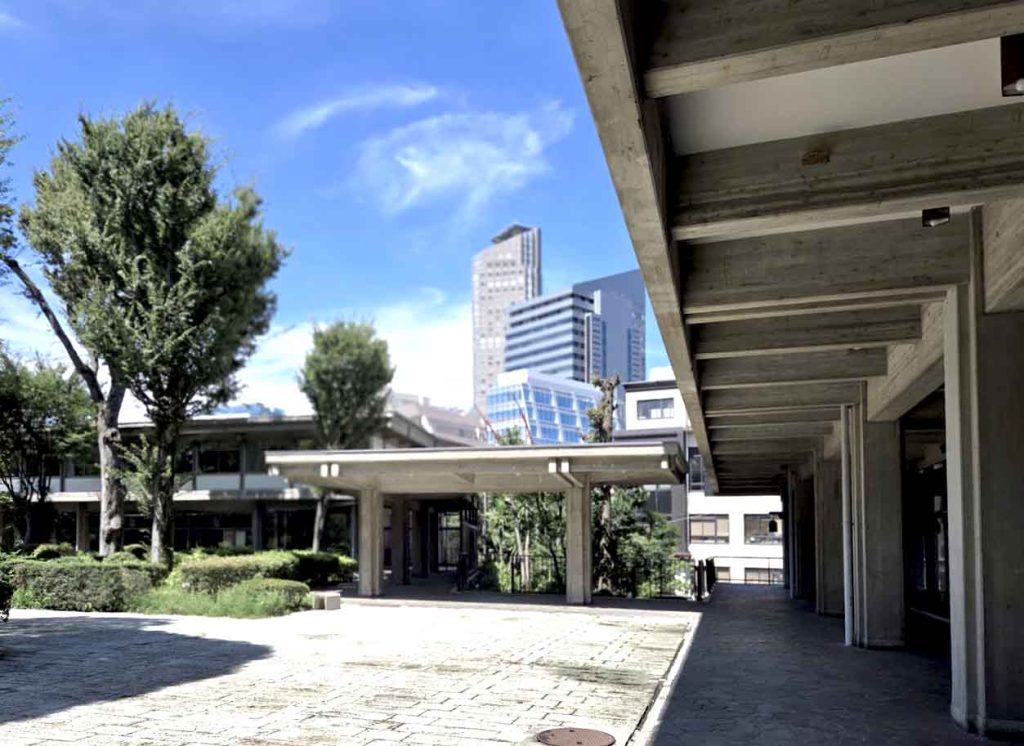
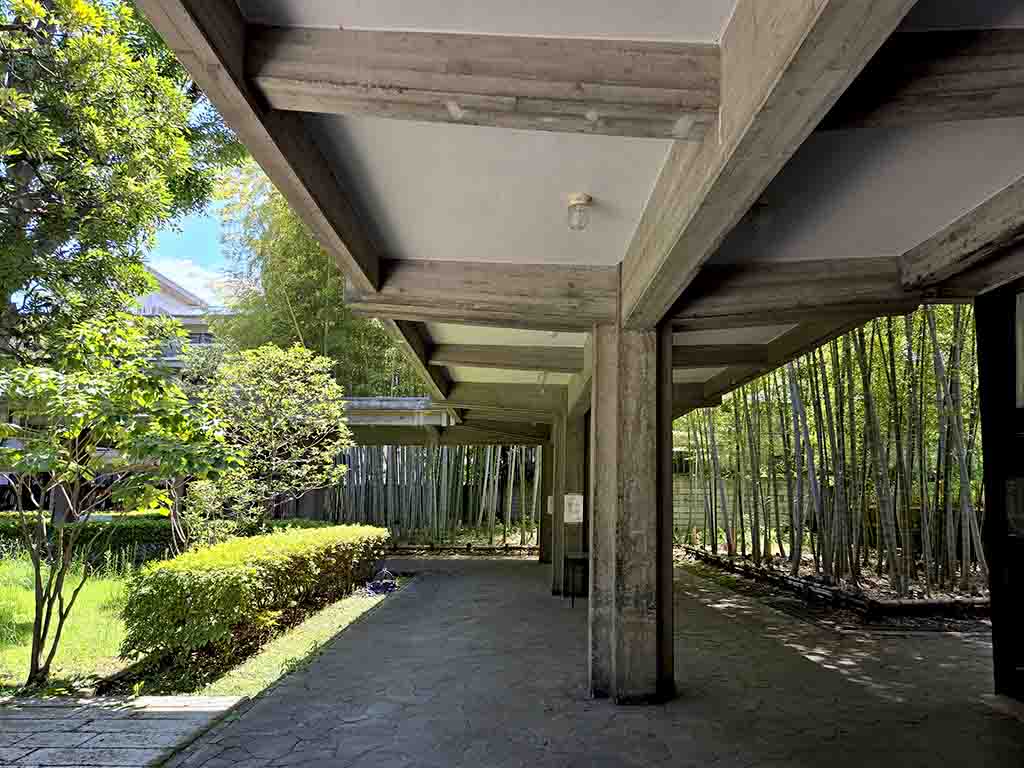
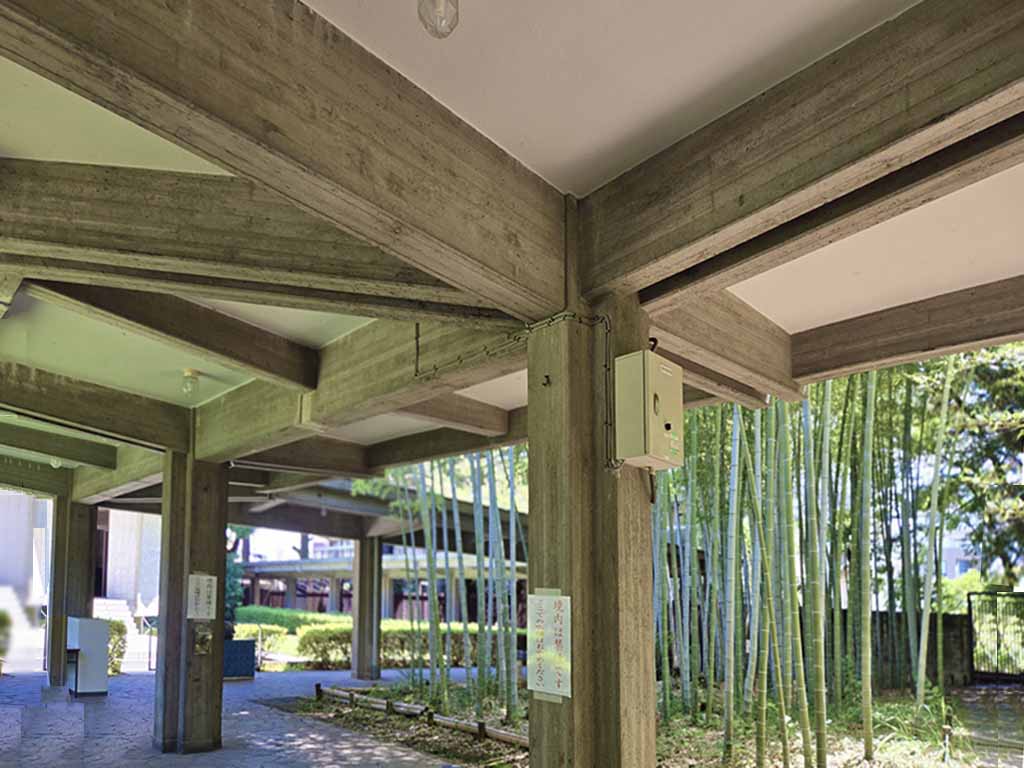
Throughout the property, the pilotis made of exposed concrete are providing open and modernist atmosphere, which is complemented by some Japanese elements such as small bamboo groves. (It is unknown if Taniguchi chose bamboos, but they are adding additional fine, clean vertical lines to the place.)
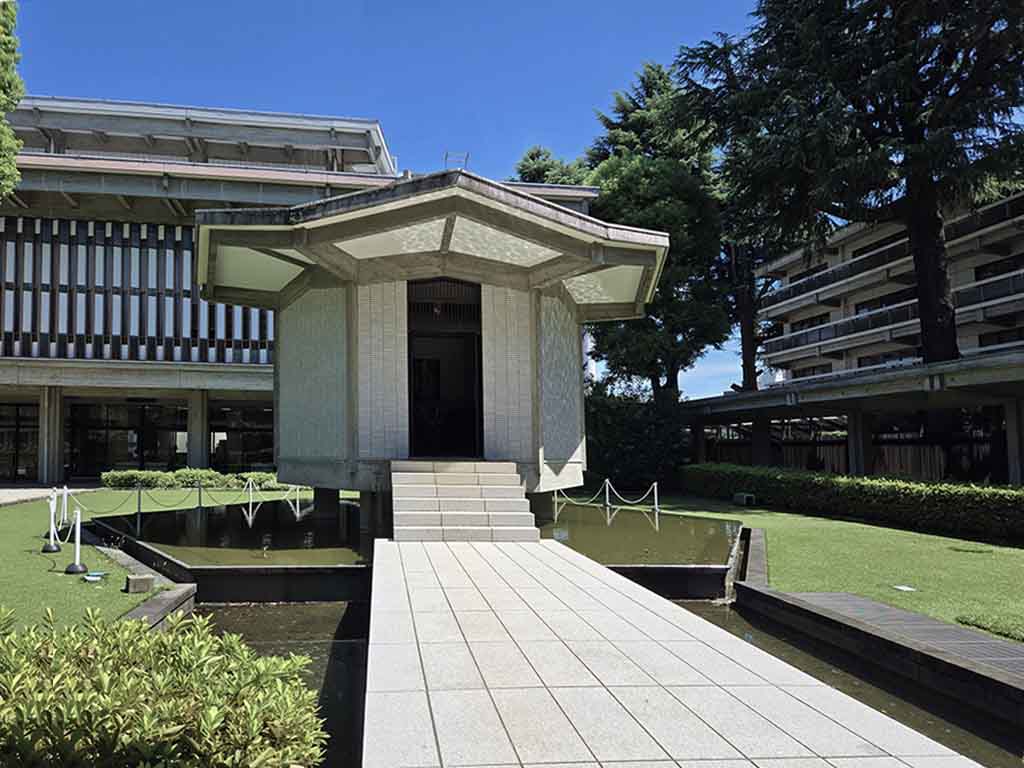
In the cloister-like area at the center is a small pond accompanied by a small hexagonal shrine. Hexagon is also linked to turtle shells, which have been used as design patterns in Eastern Asia for thousands of years. As some turtle species live longer than a hundred years, they have been regarded as a symbol of long or sacred life. Taniguchi often used hexagonal patterns in his design.
Leave a Comment