
About Seiichi Shirai
Japanese modernist architect Seiichi Shirai was born in 1905 in Kyoto, Japan. At the age of 19, he enrolled in school of engineering and design in Kyoto. While studying architecture, he also joined the school theater group and became interested in philosophy. Upon graduation, he went to Germany in 1930 to study philosophy/art history where he was also drawn to Gothic architecture. During the stay, he visited Paris a couple of times to help his brother-in-law, an artist living in there. Full of intellectual curiosity, Shirai’s interests extended beyond architecture, which influenced his design approach.
It is not easy to define Shirai’s style because it is often a mixture of different elements from different styles. According to Japanese architecture historian Terunobu Fujimori, Shirai intentionally mixed them to celebrate “dissonance” among them. He possessed unique ability to create aesthetic coherence out of dissonance that could stand the test of time. Japanese architect and Pritzker Prize laureate Arata Isozaki guessed that Shirai was trying surrealism in architecture. (When he visited Paris, Shirai met some surrealists including Andre Malraux, so Isozaki might have been correct.)
About the Shoto Museum of Art
The Shoto Museum of Art is a public facility in central Tokyo operated by Shibuya Ward. It was designed by Seiichi Shirai and completed in 1980, three years before he passed away in 1983. It is one of the only two museums Shirai designed, and one of his few remaining projects in Tokyo.
The museum is located in the posh residential neighborhood in Shoto, Shibuya. Because of the zoning requirements, the building had to be under 10 meters high. Shirai designed the facility to be only two-story and additional two stories underground. The exterior is finished with with special granite imported from Korea. It has a striking orange/pink-ish bright color. (Shirai named it “pink cloud stone.”)
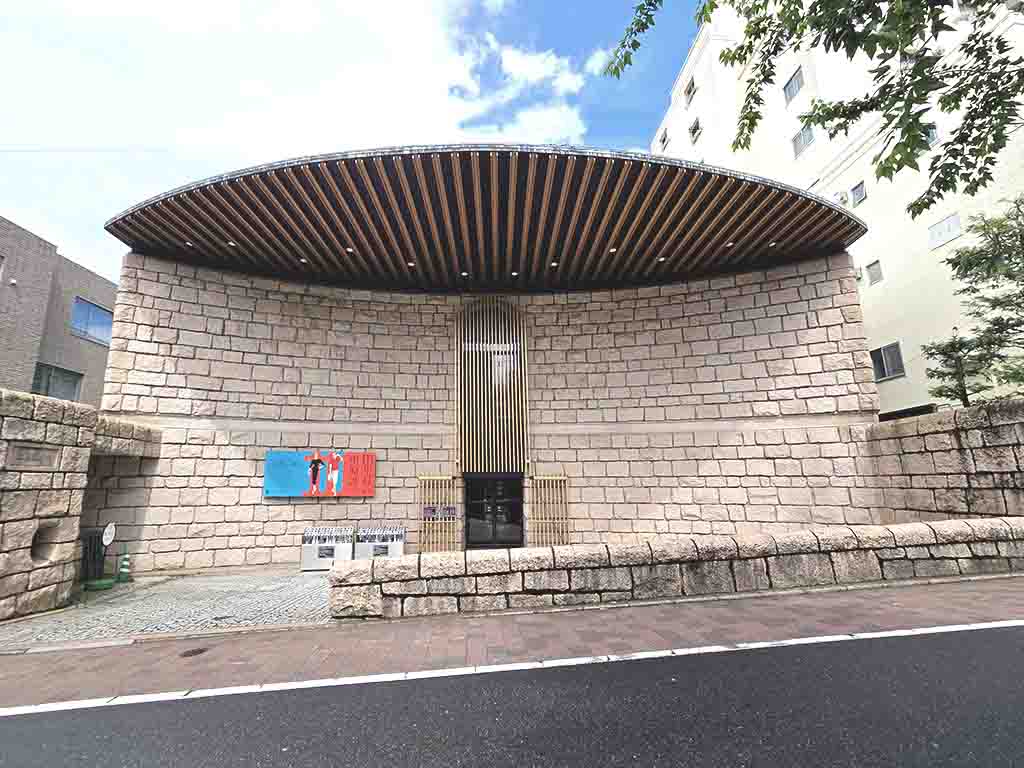
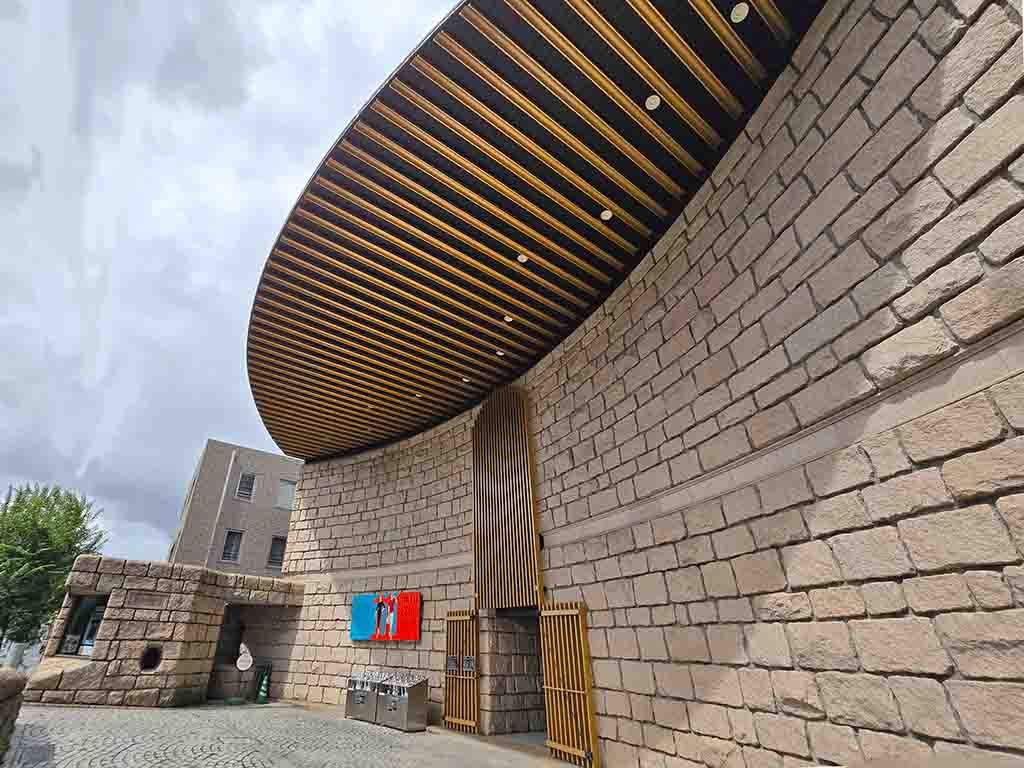
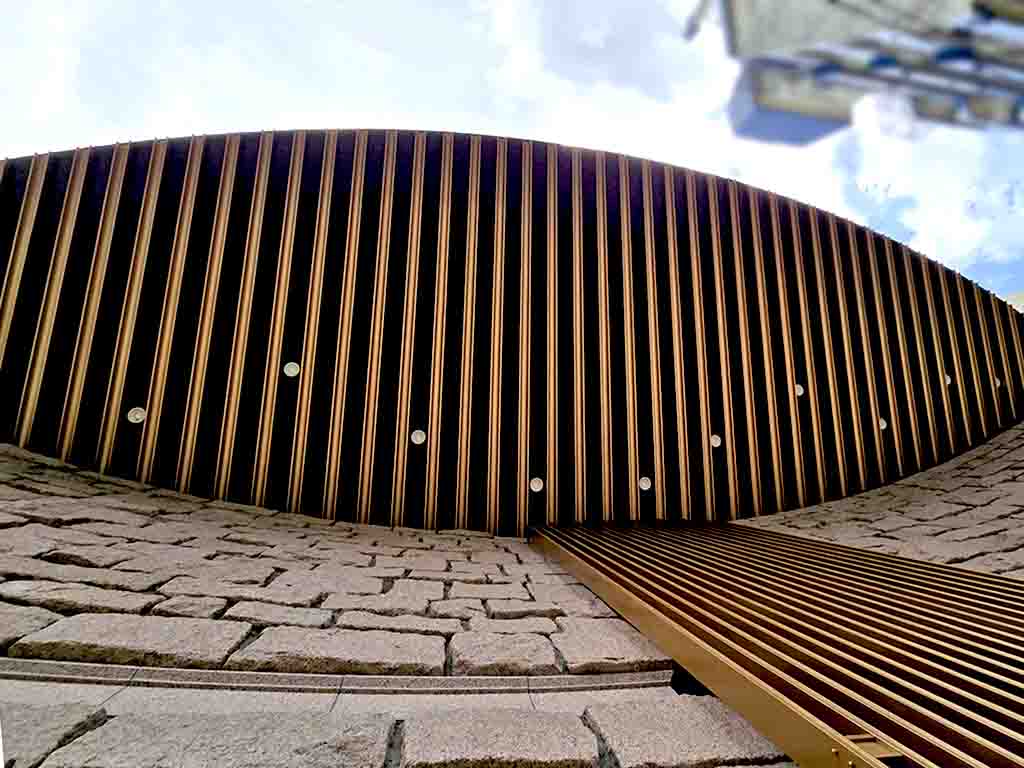
Architectural details of the Shoto Museum of Art
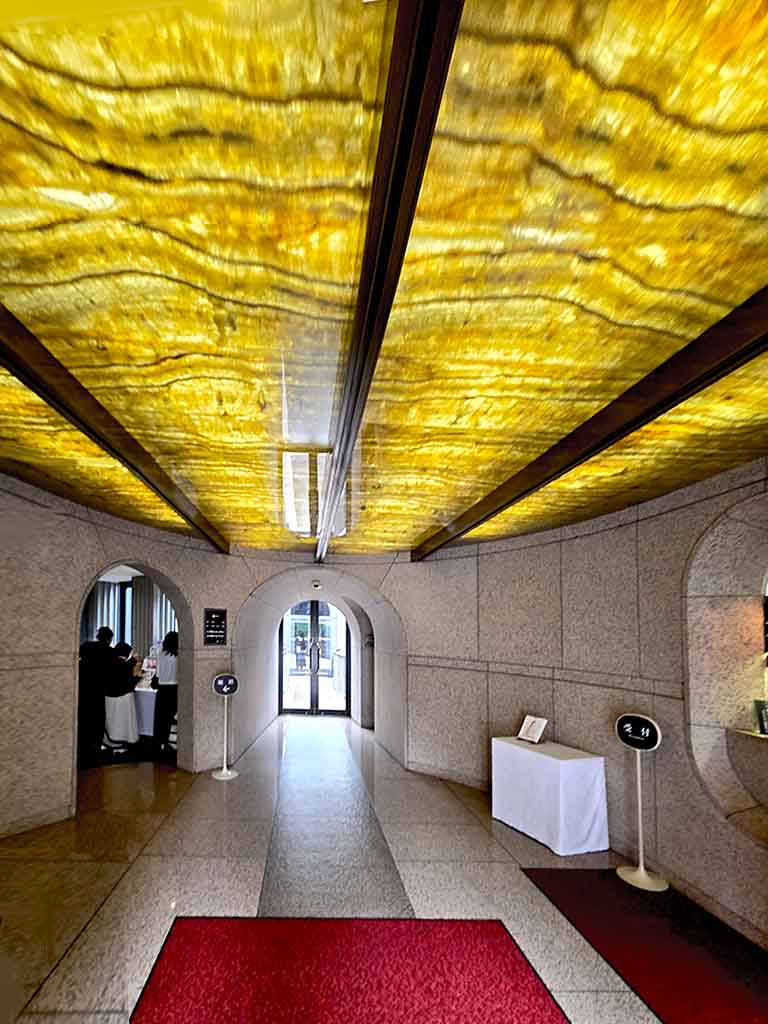
Once you enter the building, your eyes are caught by the bright yellow ceiling that uses onyx, which lets the sunlight come through.
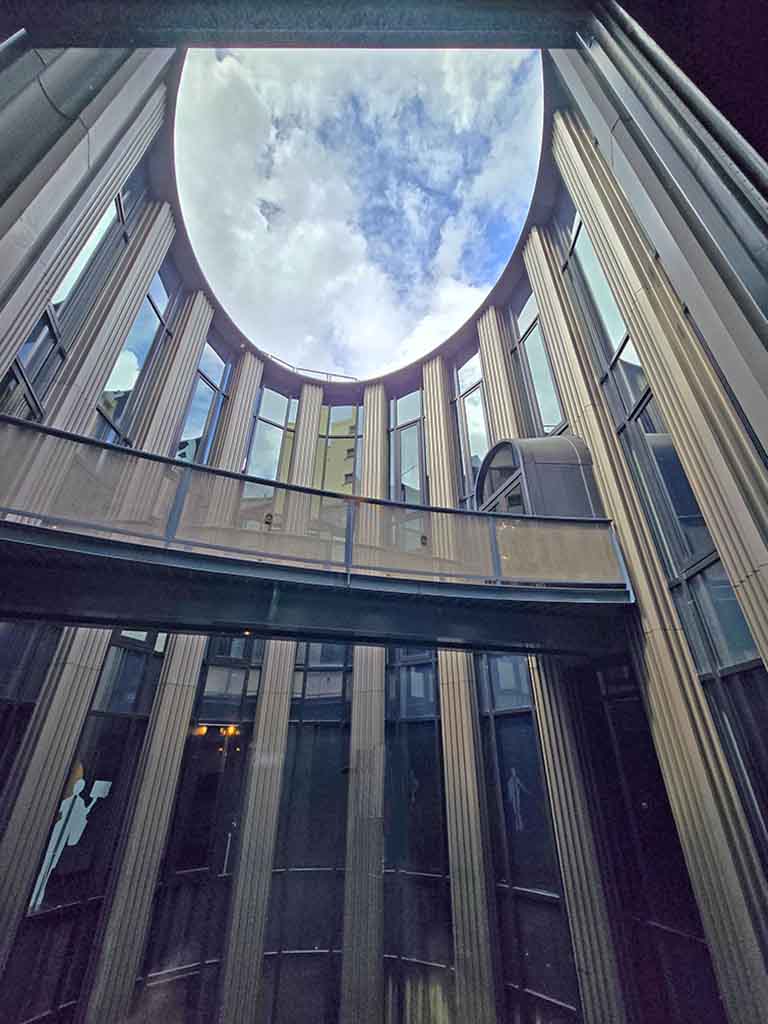
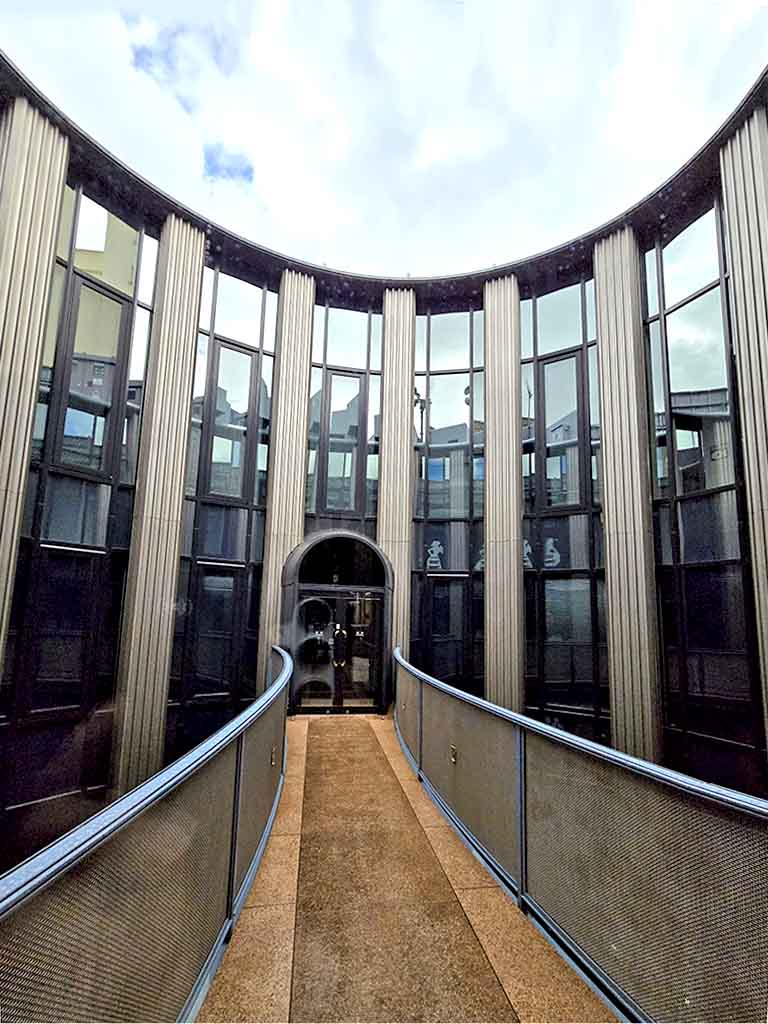
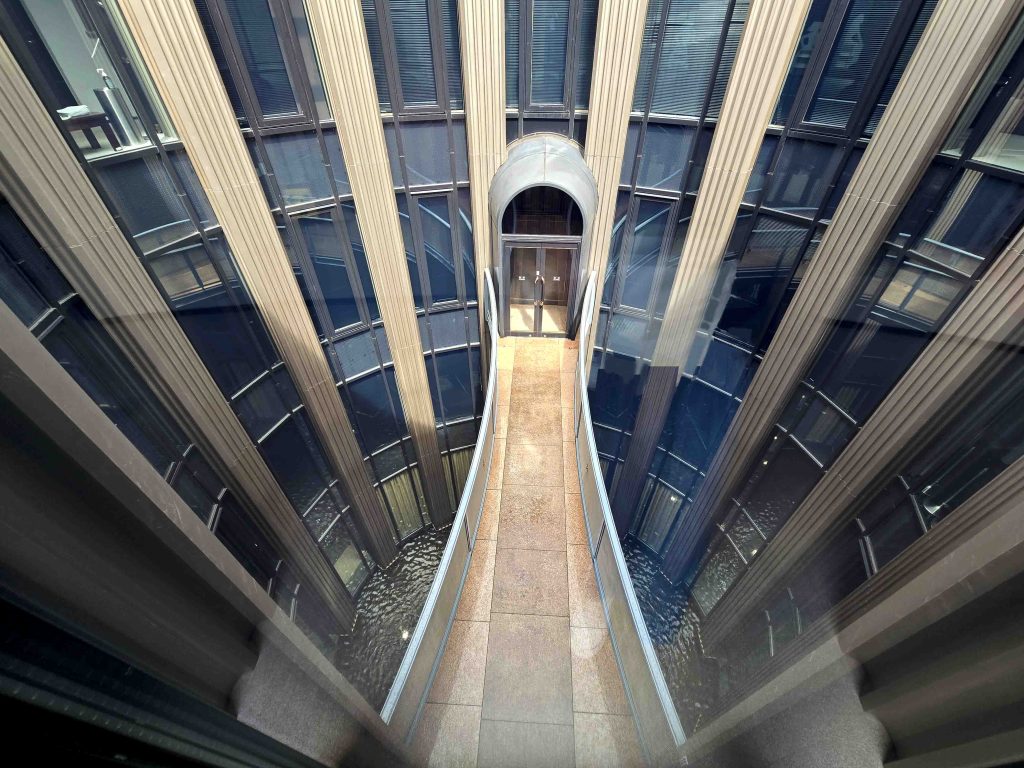
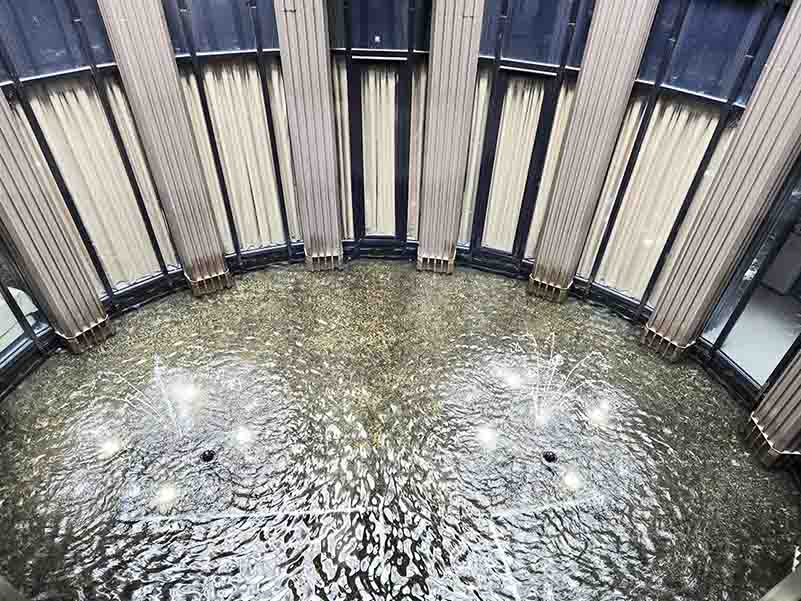
The facility has a unique shape with a circular fountain at the center. Exhibition rooms surround the fountain, and a skyway connects one side with the other (although it doesn’t look like it’s in use.) As the fountain area embraces natural elements (the sky and water), the building doesn’t feel as compact as it actually is. Circular and curvy lines are everywhere, which also helps the place look like a maze or more expansive.
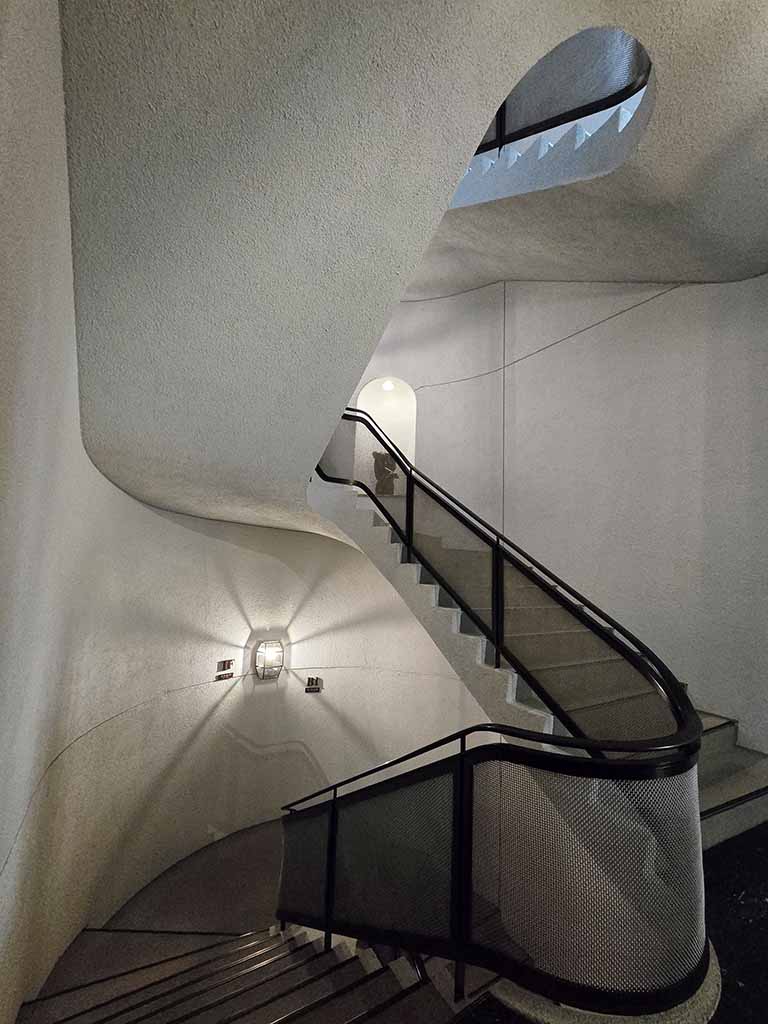
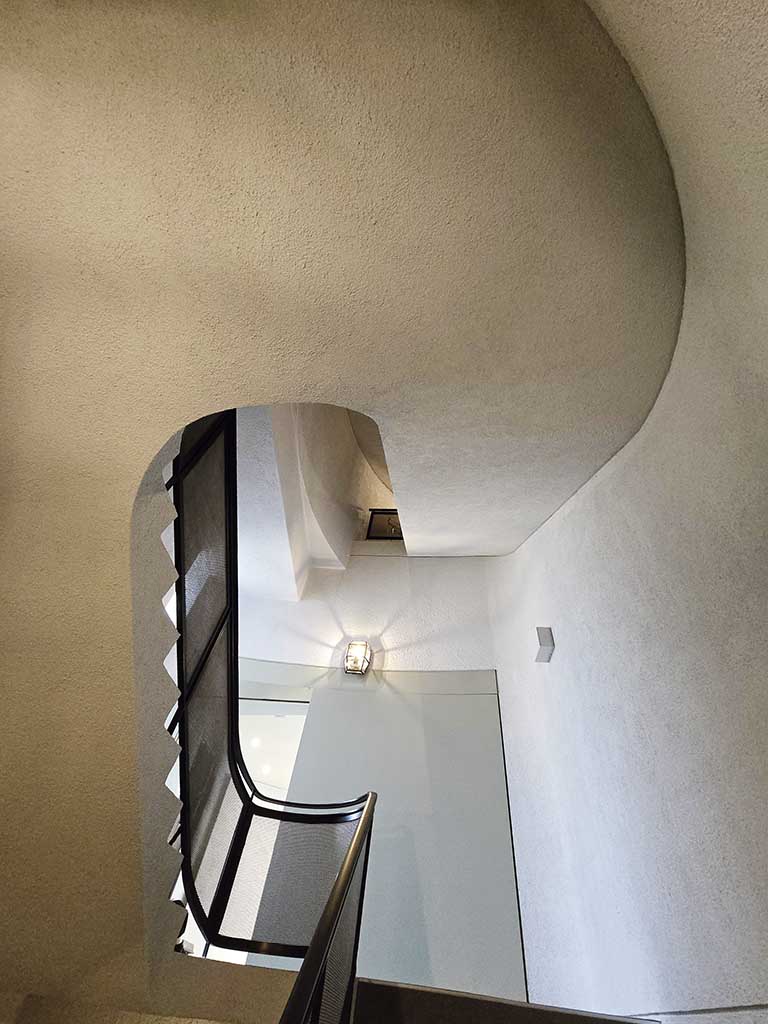
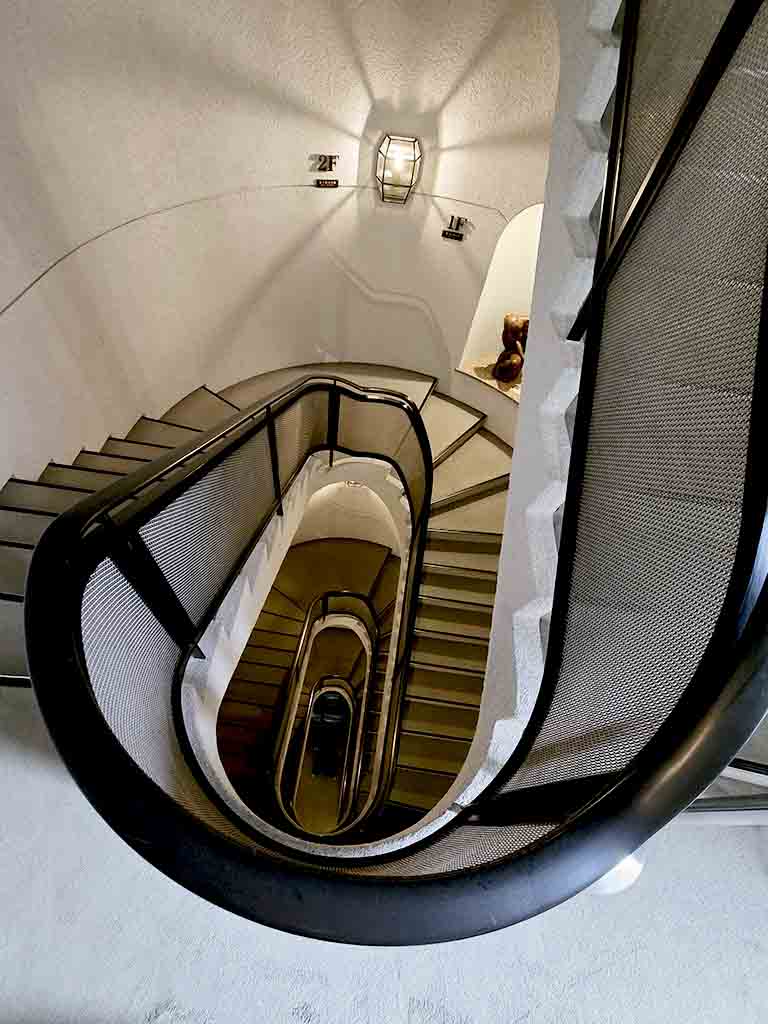
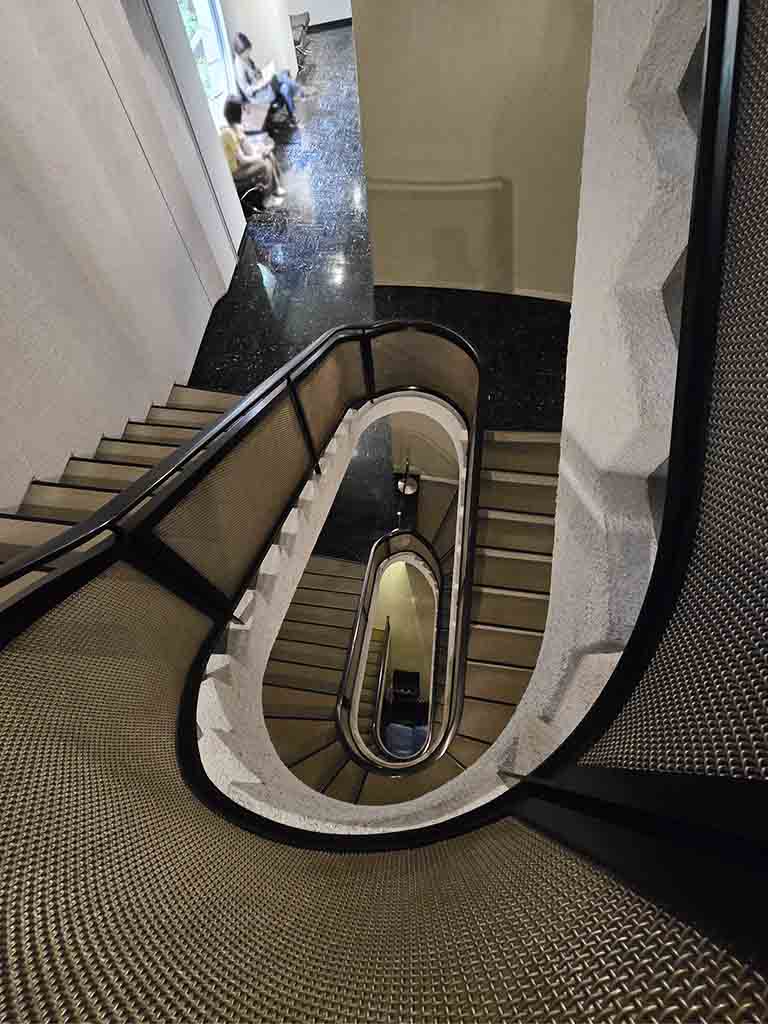
Beautiful staircases contribute to the mysterious atmosphere. To match his stye, Shirai also designed the lighting. (He designed it to be on a dimmer side for aesthetic effects, but today it is brighter to ensure safety.)
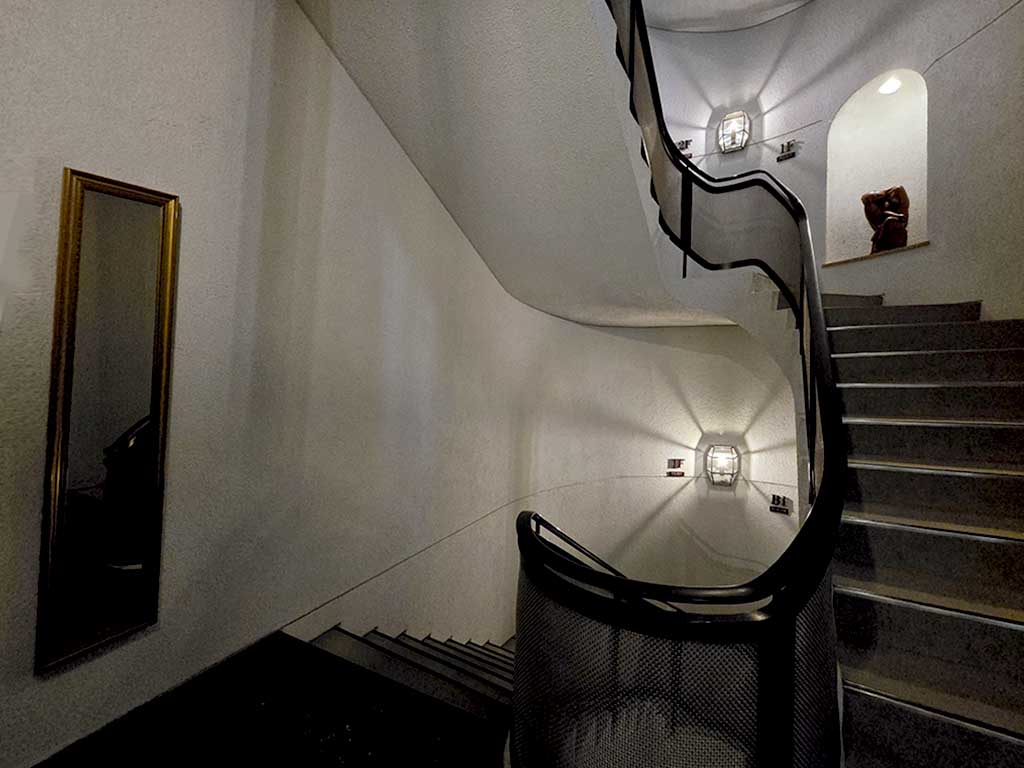
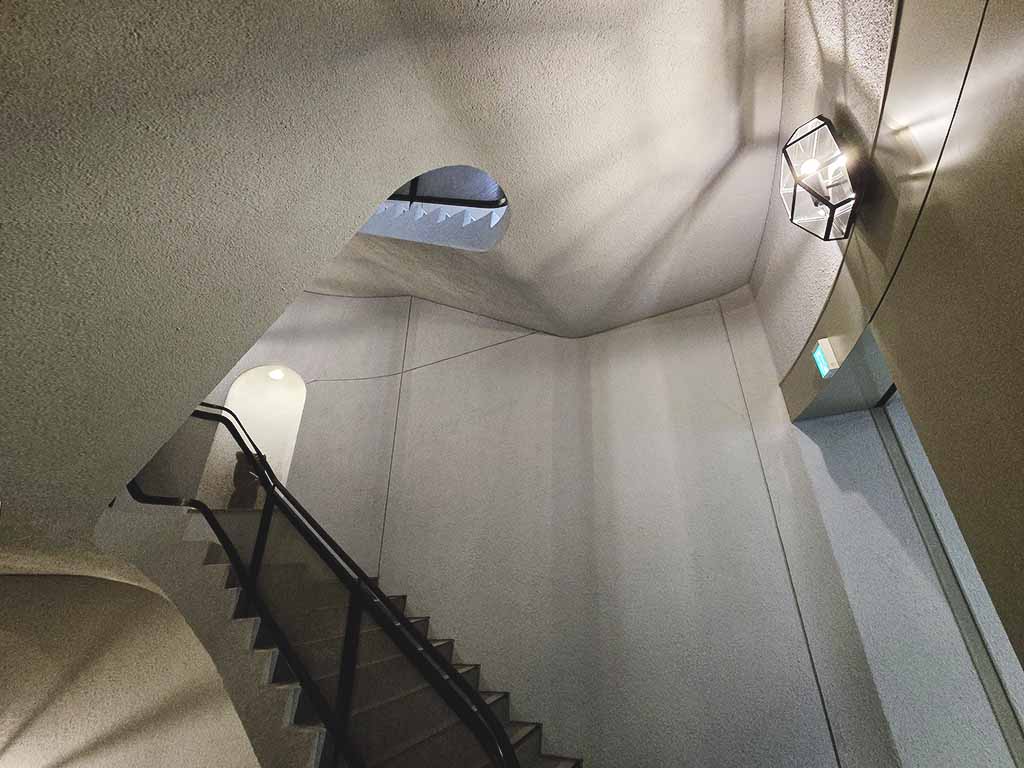
When the lighting was dimmer, it would create beautiful patterns of shades on the white walls. (It still looks beautiful with brighter lights.)
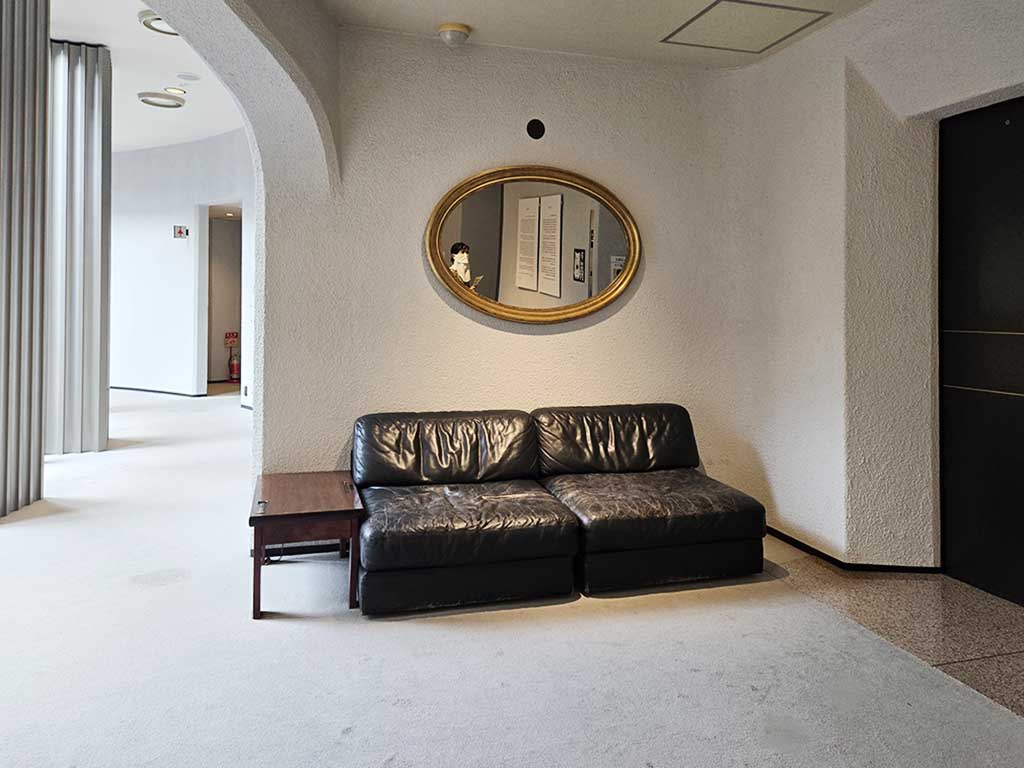
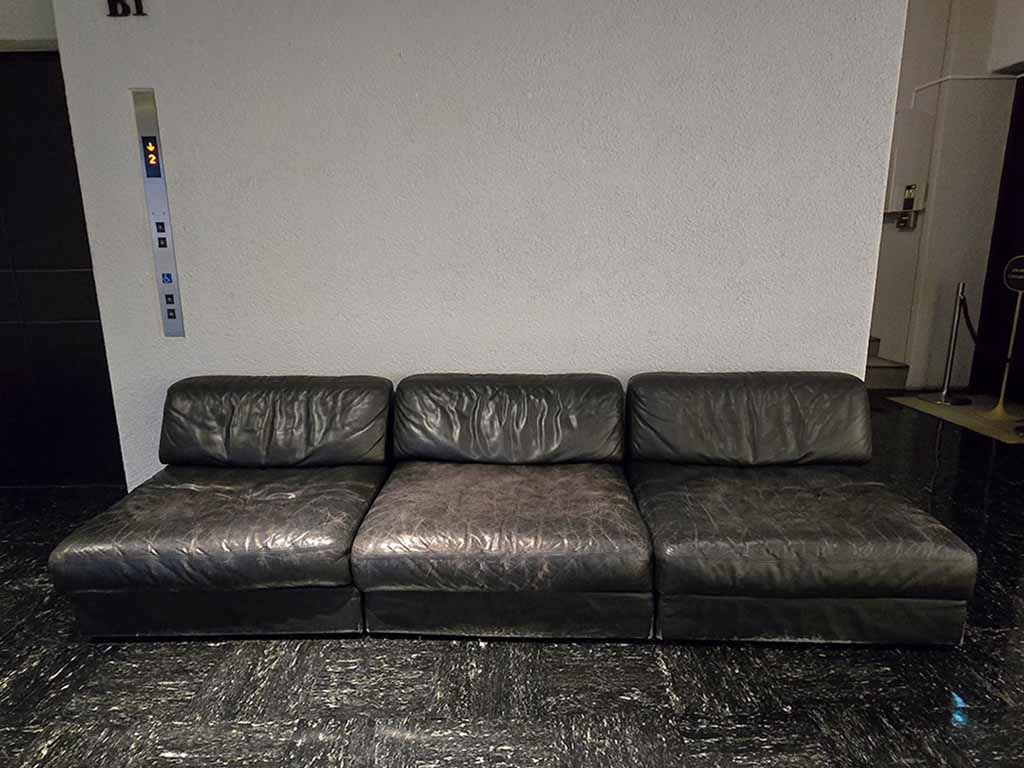
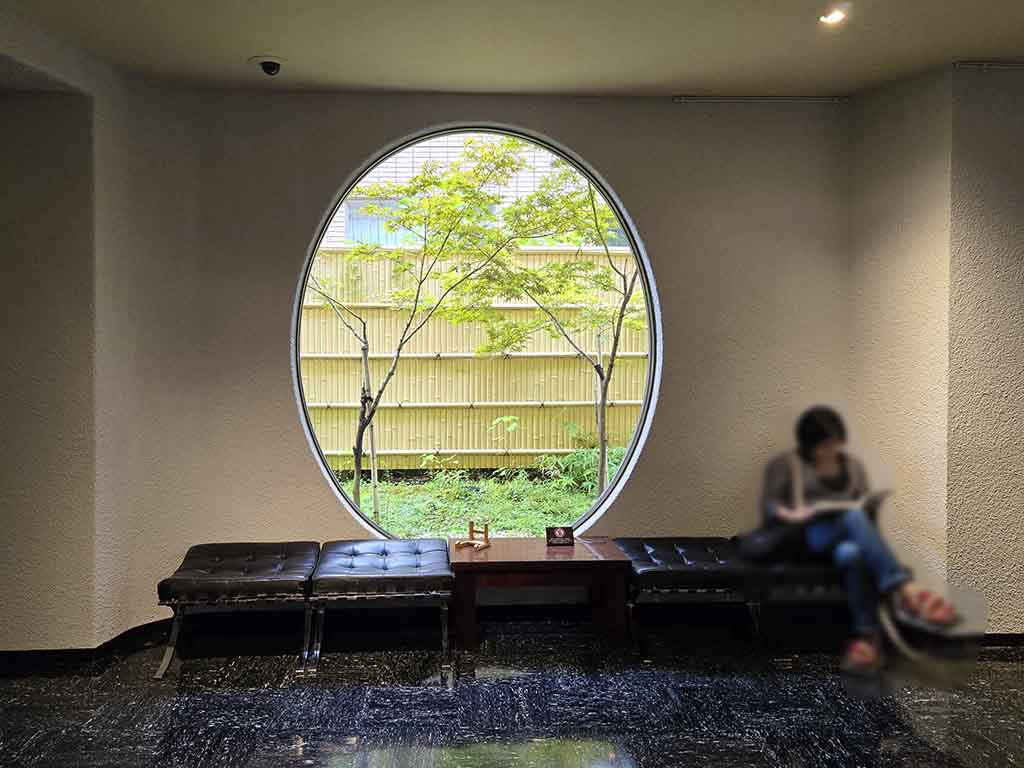
For other pieces of furniture, Shirai picked products mainly from Europe including the Barcelona ottoman by Mies van der Rohe, sofa designed by de Sede, Switzerland, tables by TECHNO, Italy.
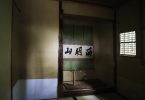
Shirai also added some traditional Japanese details. One of the circular window looks over a small tubo niwa-ish garden, and there is also a chashitsu (traditional Japanese tea room) which is not open to public.
Leave a Comment