
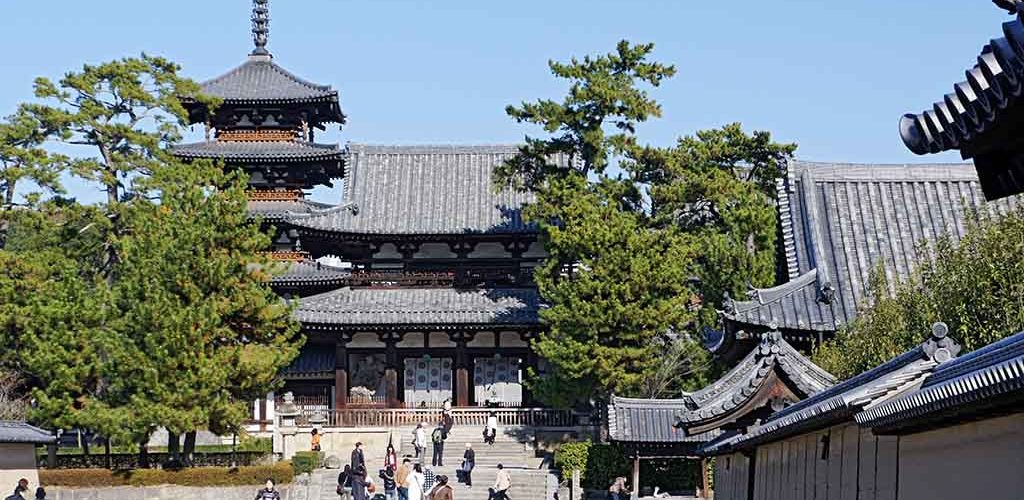
When we see great ancient ruins, we wonder how our ancestors were able to pull off such extraordinary projects. We somehow automatically assume people today have more knowledge, skills, tools and technologies. But is it really true? Take a look at 法隆寺 (Horyuji), world’s oldest surviving wooden structure. 西岡常一 (Tsunekazu Nishioka), the late great (and the last) 宮大工 ( miyadaiku) chief who was involved in Horyuji’s great restoration in the 20th century, knew how knowledgeable and skillful Horyuji carpenters in the 7th century were.
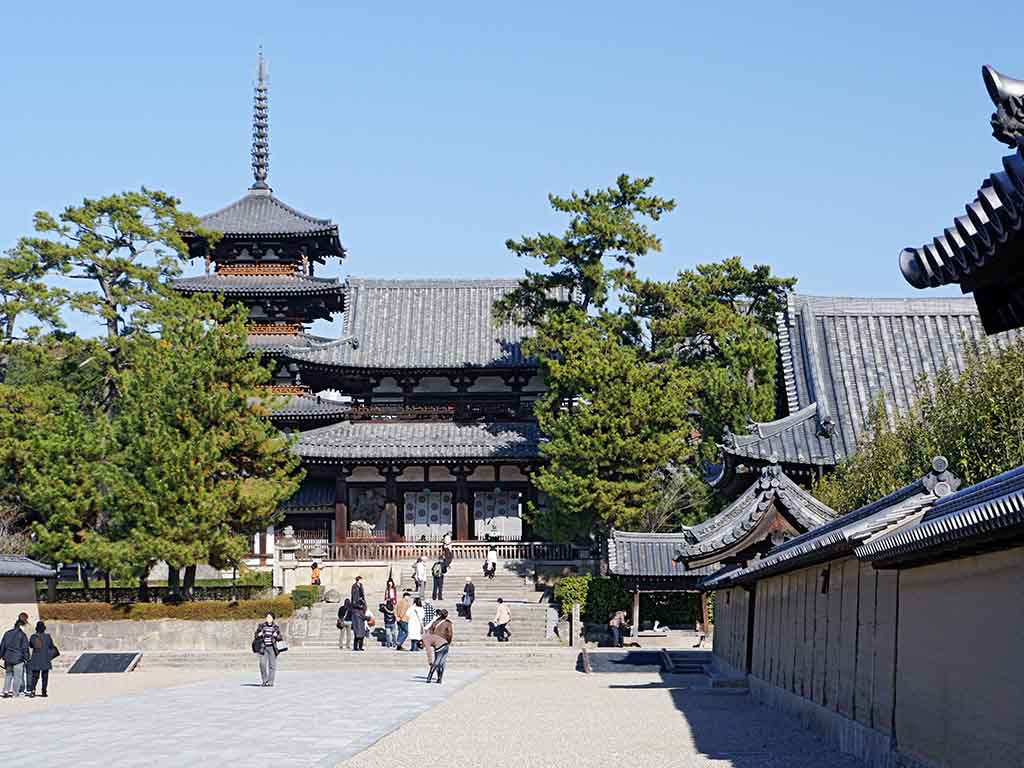
Japan in 7th Century: The Arrival of Buddhism and Construction of Horyuji
When Buddhism was first introduced to Japan from China via the Korea Peninsula in the 6th century, it blew away Japanese. They have never seen such a highly philosophical teaching nor intricately designed, gold and shiny Buddha statues. Realizing how advanced Chinese culture, art and craftsmanship were, Japanese leaders were overwhelmed and couldn’t agree on what to do: pro-Buddhist groups believed Japan had to incorporate it to advance their own society, but the opponents sought to prevent foreign influence. They fought over hegemony, but pro-Buddhists eventually prevailed. 聖徳太子 (Shotoku Taishi, 574-622), a big Buddhism supporter, emerged as the leader. He was the visionary who built Horyuji temple in 607 in current Nara (the ancient Japanese capital) as part of a new capital community based on Buddhism philosophy and Chinese-style governing system.
By the way, Shotoku Taishi is a legendary, almost a super human-like intelligent who still inspires peoples’ imagination. (Popular anecdote tells that he could listen to ten people simultaneously.) Not only did he create a new capital and built a temple that survived 1,300 years, he wrote Japan’s first constitution and created the first government system. Shotoku Taishi and Horyuji represent the great social and cultural leap the ancient Japan made.
Architecturally, Horyuji has been surviving for more than 1,300 years and has several important design details that are part of the foundation of traditional Japanese architecture. For more architectural details, read “”
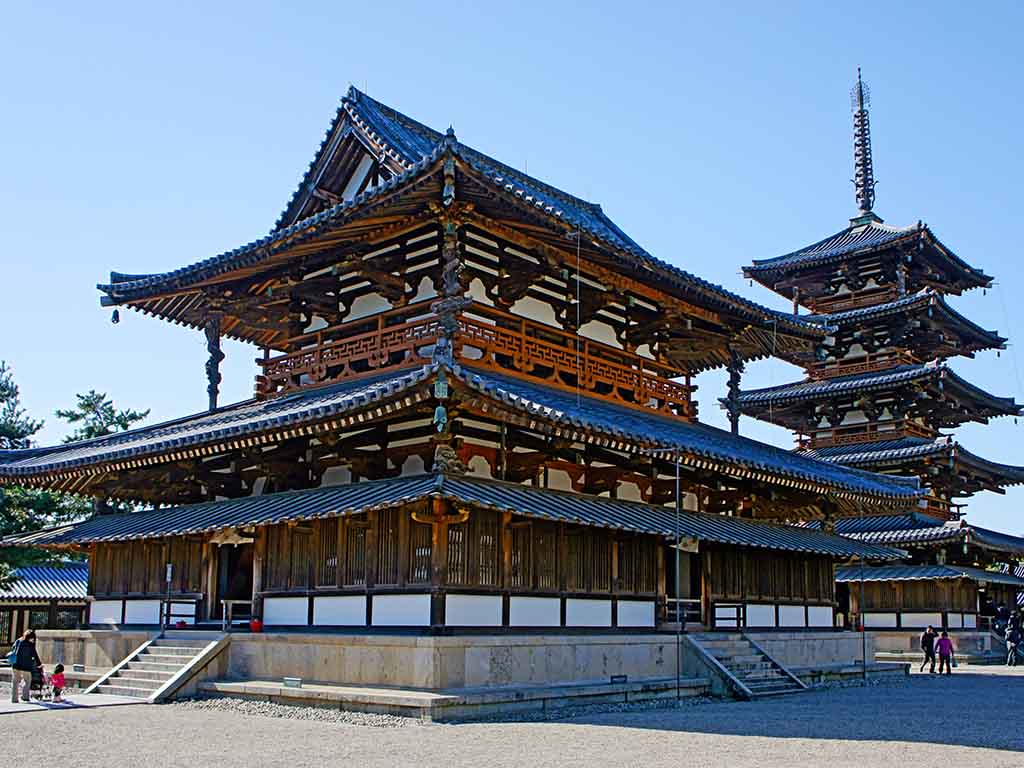
Tsunekazu Nishioka, the late great chief of Horyuji miyadaiku
As temples (and shrines) were big national projects that required significant resources, groups of highly skilled carpenters called 宮大工 (miyadaiku) exclusively worked on them. It is one of the traditional Japanese careers for which you need to commit your entire life. As expertise is handed down verbally through apprenticeship, you need to learn every skill by watching your boss and trying by yourself. It can take years just to learn how to properly sharpen and use each tool. Heritage sites such as Horyuji pose additional layers of challenges, because you need to understand how the original buildings were made more than a thousand years ago, and figure out what materials and tools we can use today to retain the original value while ensuring structural strengths. It’s a daunting task that’s often not compensated for adequately. Miyadaiku is an endangered job today.
Because of its importance, Horyuji used to have a group of dedicated miyadaiku that lived next to it to take care of the facility. They would hand down their jobs to their sons through apprenticeship, and Tsunekazu Nishioka (1908-1995), who was born into a family of chief miyadaiku for Horyuji, started his training when he was only four years old.
Nishioka later became chief miyadaiku for Horyuji and played a crucial role in its restoration projects from 1934 to 1954. During major restorations, the buildings would be disassembled, examined, repaired or replaced as needed. Through the process, Nishioka learnt how previous repairs in the last 1,300 years were carried away. Each repair was a result of enormous efforts put into by the top-notch miyadaiku of the time overcoming unique challenges. The original pieces of columns and beams were repaired if possible. One of the critical challenges was the shortage of hinoki (Japanese cypress) almost exclusively used when the temple was originally built in the 7th century.
What kind of wood did they use for Horyuji?
法隆寺 (Horyuji) was built in 607 AD and is world’s oldest surviving wooden structure. It was constructed using 檜 (hinoki, Japanese cypress) that were roughly 2,000 years old. As the temple is 1,300 years old, it’s also been 1,300 years since the timber was cut down, but it still stands firm. “And they will be fine for the next 700 years,” said Nishioka. “2,000 year-old Japanese cypress is so robust yet resilient that it can maintain its great quality for another 2,000 years, even after it’s cut down.” He also guessed that “people who initially build Horyuji in the 7th century knew about it. They knew that the building would last for another thousands of years, so they built it accordingly.” (Find reasons why hinoki is so resilient and long-lasting, but is difficult to procure today. [insert article title])
Secret to build a wooden structure that lasts 1,000 years
Based on Nishioka’s read of the original construction, the carpenters in the 7th century had extraordinary skills to use hinoki timber so that it would last another 2,000 years, including the ability to “read” wood.
As an organic material, wood is not uniform in terms of size and age. It also expands or shrinks depending on individual timber’s moisture content. In addition, each piece bends toward a certain direction, depending on the angle at which the tree grew relative to the Sun. Slow growing trees are sturdier than fast growing ones. When in use, each wood piece degrade and rot at a different rate. So many factors affect individual timber’s quality and performance. It should also be reminded that the original carpenters had a very limited number of tool. For example, as there were no sawmills cut the wood, they had to rely on froes or shake axes to cleave wood, by splitting or riving it along the grain. If it wasn’t enough, ancient carpenters had to live with what they were able to find in their vicinity because there was no effective transportation method for large and heavy timber.
All those factors had to be taken into consideration BEFORE each piece of lumber was to be used: no mistakes were tolerated because they could cause the building to collapse. It is an enormous amount of information to process at once.
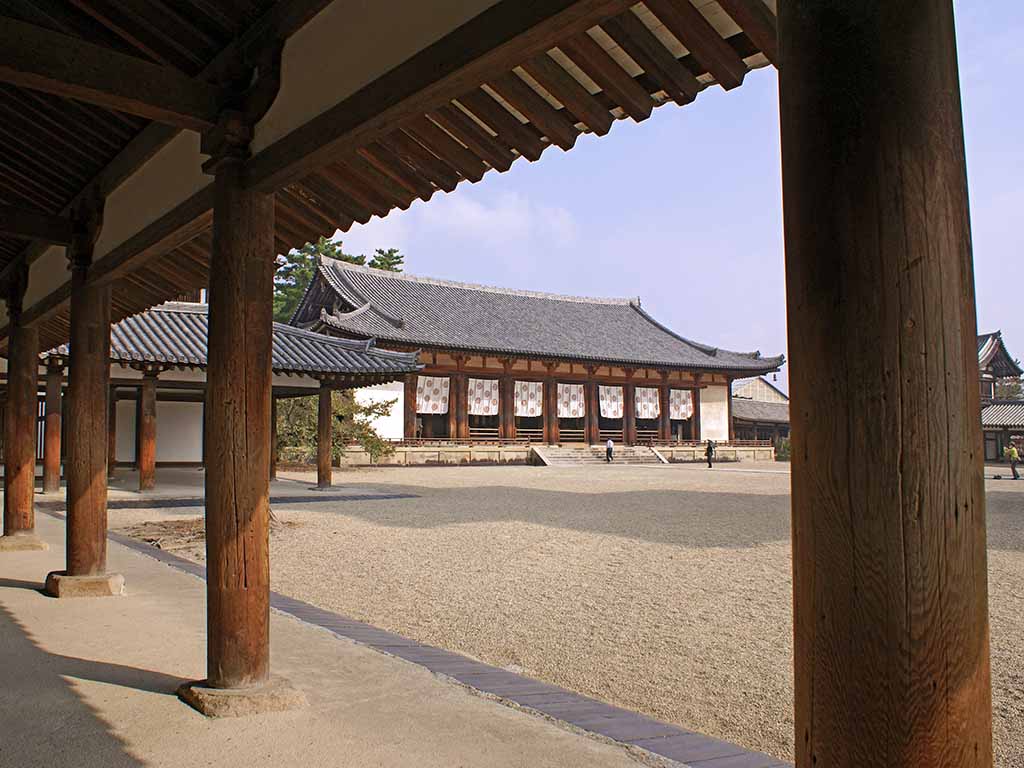
According to Nishioka, we’ve lost these great skills of tree “reading” over time. Not only that, it is said that there are only less than one hundred miyadaikus in Japan today. While technology continues to thrive, we are on track to losing our own skills that made so many impossible possible.
Reference: Tsunekazu Nishioka (1978), 法隆寺を支えた木(The timber that has been supporting the Horyuji building), NHK Books, Tokyo, Japan
If you are interested, check on his book: 法隆寺を支えた木 (The Building of Horyu-ji), available via Kindle.
Leave a Comment