Introduction
Japanese modernist architect Kunio Maekawa (1905-1986) built his own house in 1942 in central Tokyo in the wake of WWII. Called the “Maekawa House,” it is considered one of the most iconic houses that represent Japan’s unique modernism era. Japanese architect/historian Terunobu Fujimori calls it the masterpiece of Japanese “wooden modernism.” After Maekawa passed away in 1986, the house was restored at the Tokyo Tatemono en (Edo-Tokyo Open Air Architectural Museum) using the original materials. It is open to public.
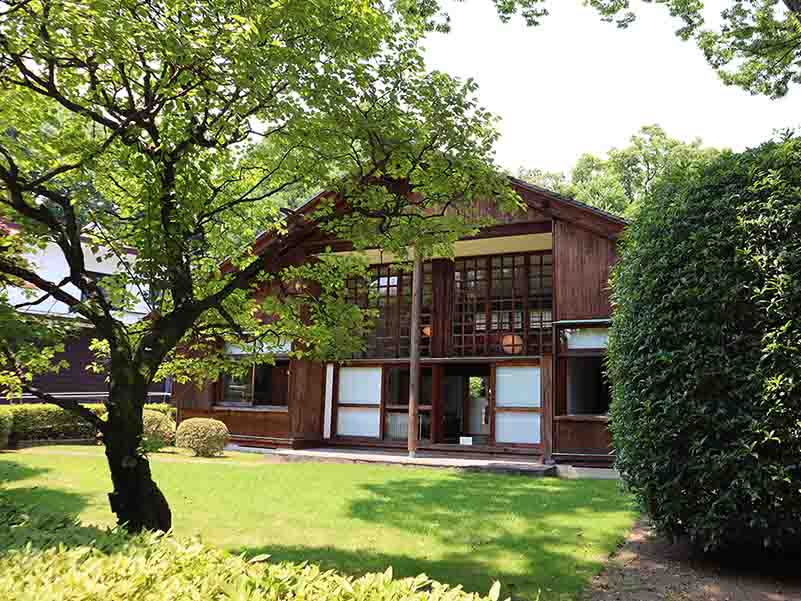
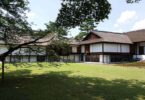
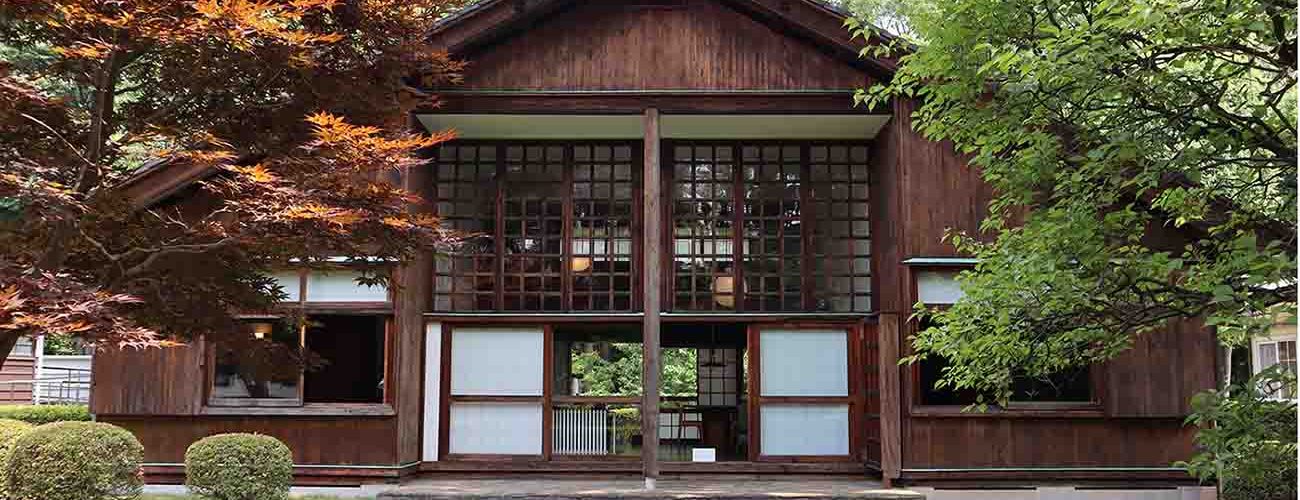
The Maekawa House at the Tokyo Tatemono-en.
The Maekawa House: Overview and History
Japanese architect Kunio Maekawa was born in 1905 amidst rapid social change. Ever since the “samurai” era ended in 1868 due to international pressure, the country pursued aggressive modernization and Westernization to catch up with industrialized countries. As Maekawa grew up experiencing drastic social transformation, he decided to study architecture – which was still a new discipline for Japanese back then – at Tokyo University from 1925 to 1928. Upon graduation, he took the Trans-Siberian railway and went all the way to France to work for Le Corbusier. (He was the first Japanese architect to do so.) After spending two years in Paris, he came back to Tokyo and joined Antonin Raymond’s atelier before becoming an independent architect. Raymond, who played a trailblazing role to help advance Japanese modernism by hiring many budding talents like Maekawa, originally came to Japan to help Frank Lloyd Wright design and build the Tokyo Imperial Hotel (completed in 1923).
Maekawa was one of most prominent early era modernist architects in Japan who fully embraced Le Corbusier-style modernism. He focused on applying Le Corbusier’s philosophy in Japanese context, and designed many large-scale public projects such as city halls, music halls, libraries and museums.
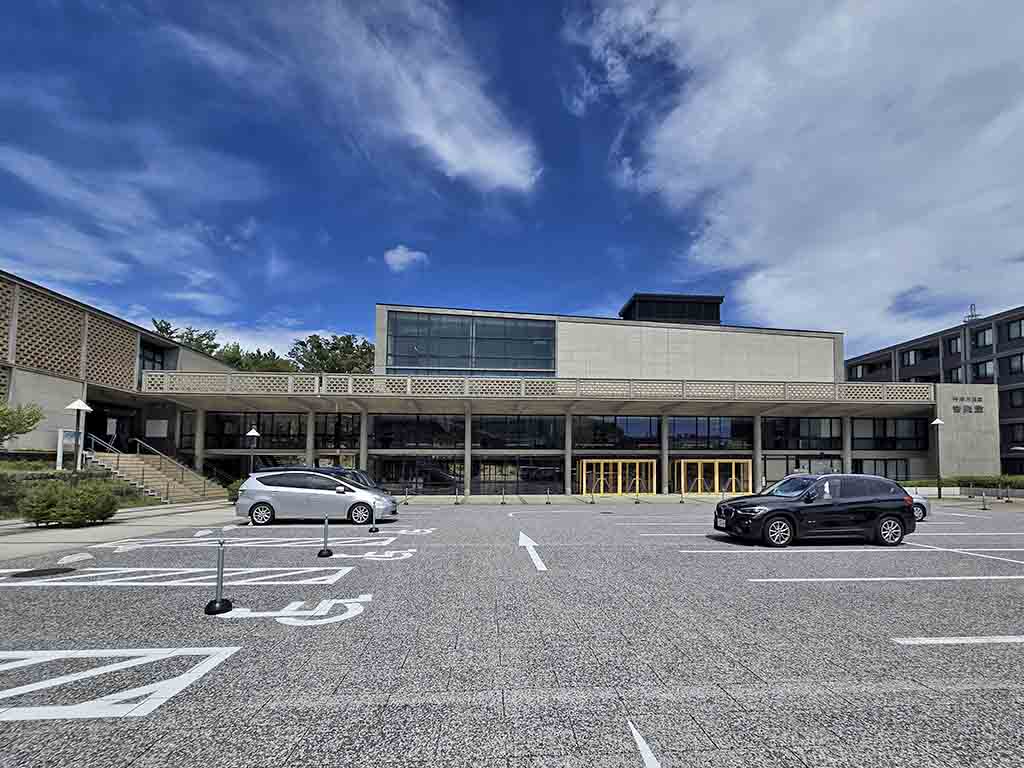
Kanagawa Prefectural Library and Music Hall (1954) designed by Kunio Maekawa.
You can see the influence of Le Corbusier.
Curiously enough, however, his own house, which was built in 1942, doesn’t quite look like his other projects. It exhibited more obvious traditional Japanese influences, rather than Le Corbusier-style modernism. How did his house become one of the most iconic houses in Japanese history of architecture?

The Maekawa House seen from the backyard.
WWII and the Maekawa House
When Maekawa built his house in 1942, Japan was already mired in WWII. During wartime, you have to show patriotism. Although he was the flag bearer of Le Corbusier-style modernism and universalism, it’s possible that he felt he needed to look to traditional Japanese architecture, instead of universal modernism, to build his own house. Maekawa tapped Kosaburo Sakitani, his chief staff architect, to design his house. When the project was about to start, Sakitani was stationed in China. On the way back from China to Tokyo upon request from his boss, Sakitani stopped at the Ise Shrine in Mie Prefecture. It is widely believed that the Ise Shrine, which maintains one the oldest traditional Japanese architectural styles for more than 1,500 years, inspired Sakitani to design large gable roofs with the central column that define the Maekawa House.

Maekawa also faced stricter building codes and serious material shortages as all the resources were used to support war, so his house had to be small and used whatever materials available. The central column you see in the picture was an old telephone pole. The combination of traditional Japanese-ness, universal modernism and limited space/material availability resulted in a totally unique wooden building that made wood look like different materials used in traditional-style Japanese houses.
It was a relatively small house (111.55㎡), but after his office was bombed in 1945, he also used it as his office. Maekawa, his wife and his employees crammed the space until he finally opened a new office in 1954, 9 years after the end of devastating war. It is believed that Maekawa loved this house so much that he saved all the original materials when he built a new house in 1974. He planned to use them for his second house, but he passed away in 1986 before he could work on the project. In 1997, people who recognized the importance of this house, including architecture historian and architect Terunobu Fujimori, worked together to restore it at the Tokyo Tatemono en (Edo-Tokyo Open Air Architectural Museum) using the original materials.