
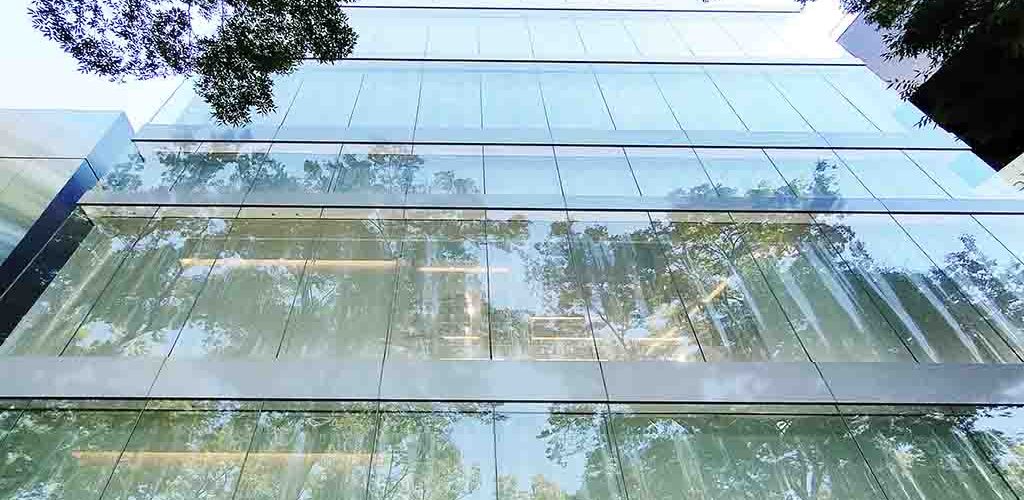
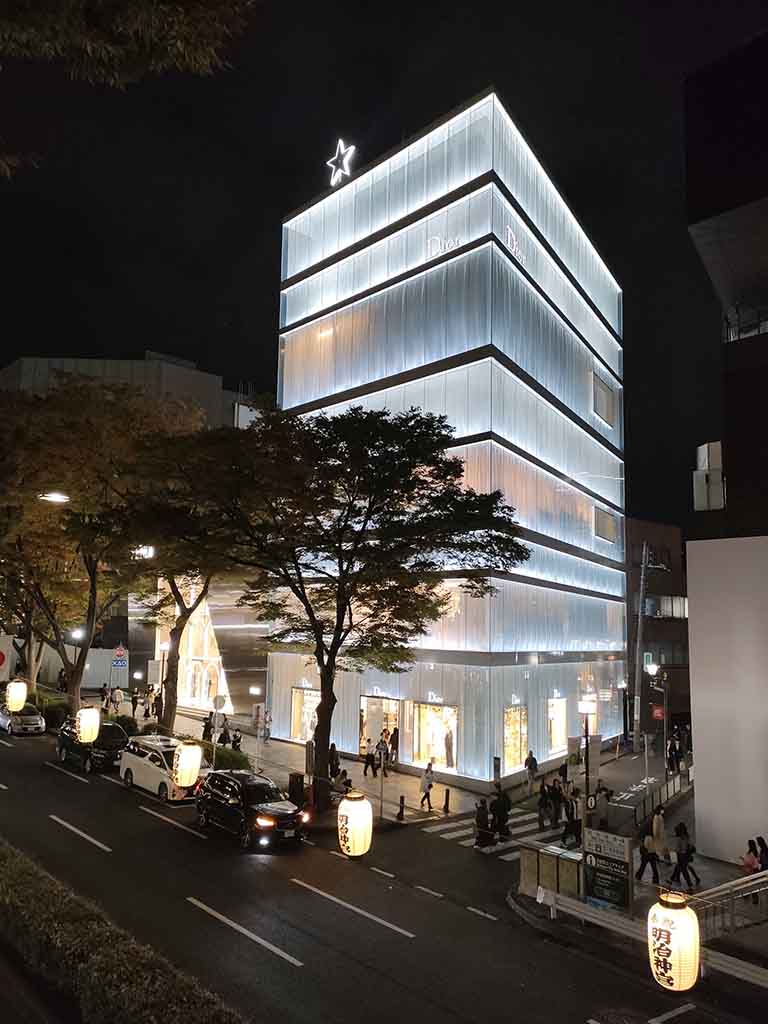
The Pritzker Award laureates SANAA (Kazuyo Sejima and Ryue Nishizawa) designed Christian Dior’s shop in Omotesando, Tokyo in 2004. After almost 20 years, the building is still as white and light as clouds or mists. What was Kazuyo Sejima and Ryue Nishizawa’s design philosophy? Find it from their lecture.
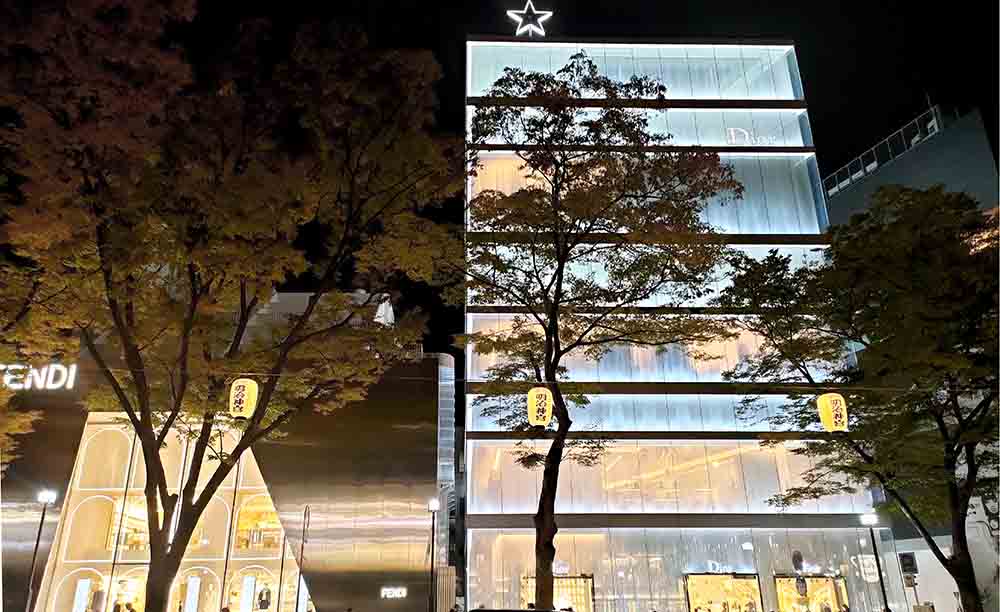
Sejima: Initially, we were asked to work only on structures, building system and appearance. Cristian Dior was going to take care of the interior design. But we still wanted to offer the structure/appearance that could organically interact with the interior. We came up with a design that used glass panels throughout the building.
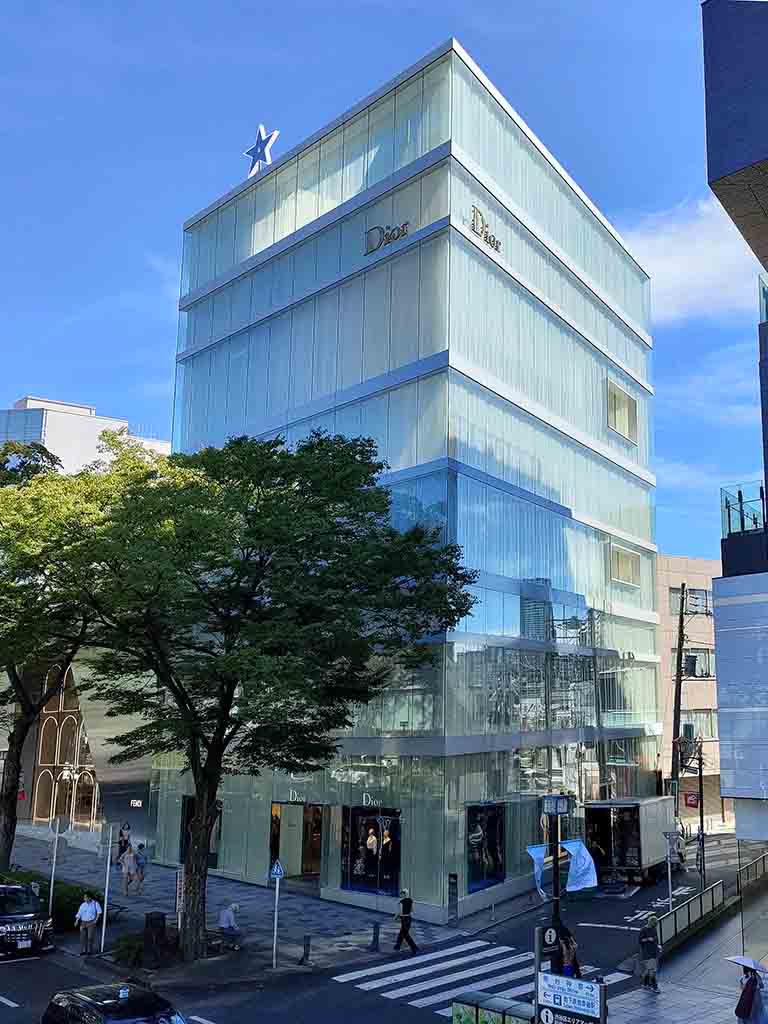
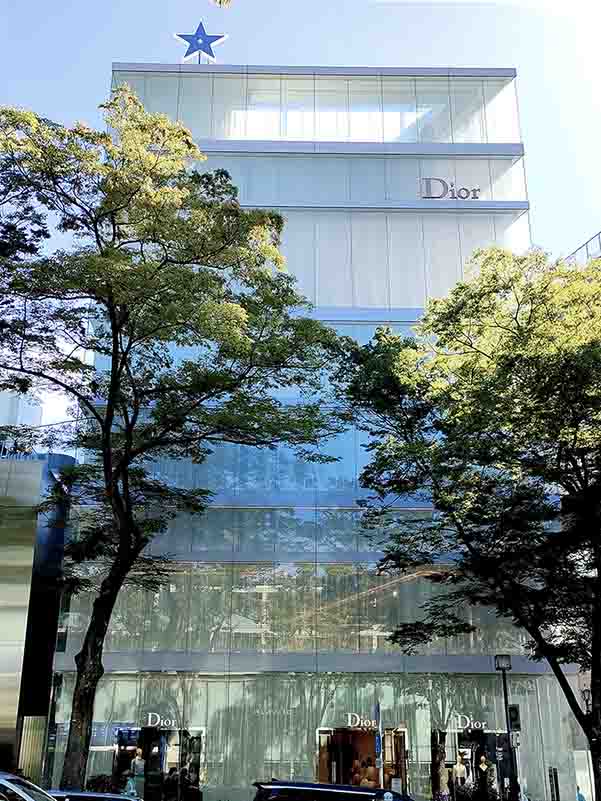
Nishizawa: The basic structure is simple. As the floors have no partitions, it’s vertical layers of boxes. The original request was to design a 30 meters high building with four floors. But we thought the ceiling heights would be too high with only four floors. So we inserted an attic for each floor, which had different heights. The walls are double-pane with glass and acrylic panels. We wanted to make the walls transparent so that the entire building was open toward the outer environment. It was also in response to the request from Christian Dior: they wanted us to incorporate design details that represent Dior-ism.
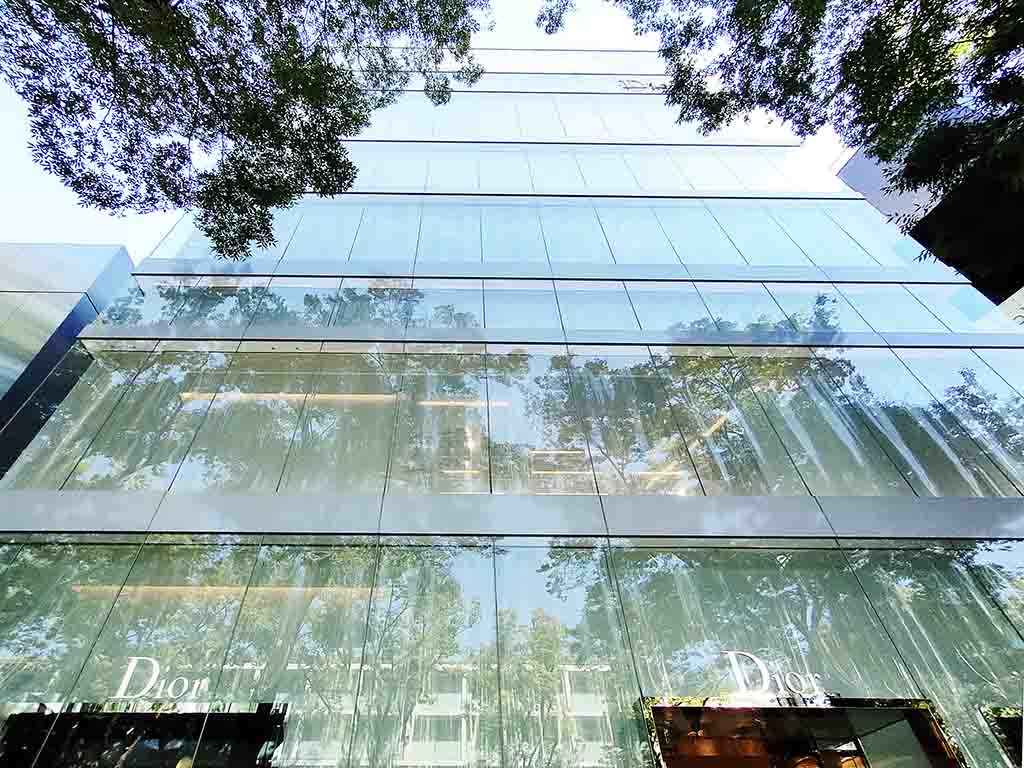
Sejima: It was not easy to figure out what Dior-ism was. Our interpretation was that it represented both classical and modern elegance and femininity. We came up with a design that softly connected the interior and exteriors. The entire area would look as if it was veiled by acrylic screens that looked like drapes. They also function as doors. It is for maintenance and cleaning, but it’s possible to leave some of them open as an accent. I think the building can become even more transparent that way.

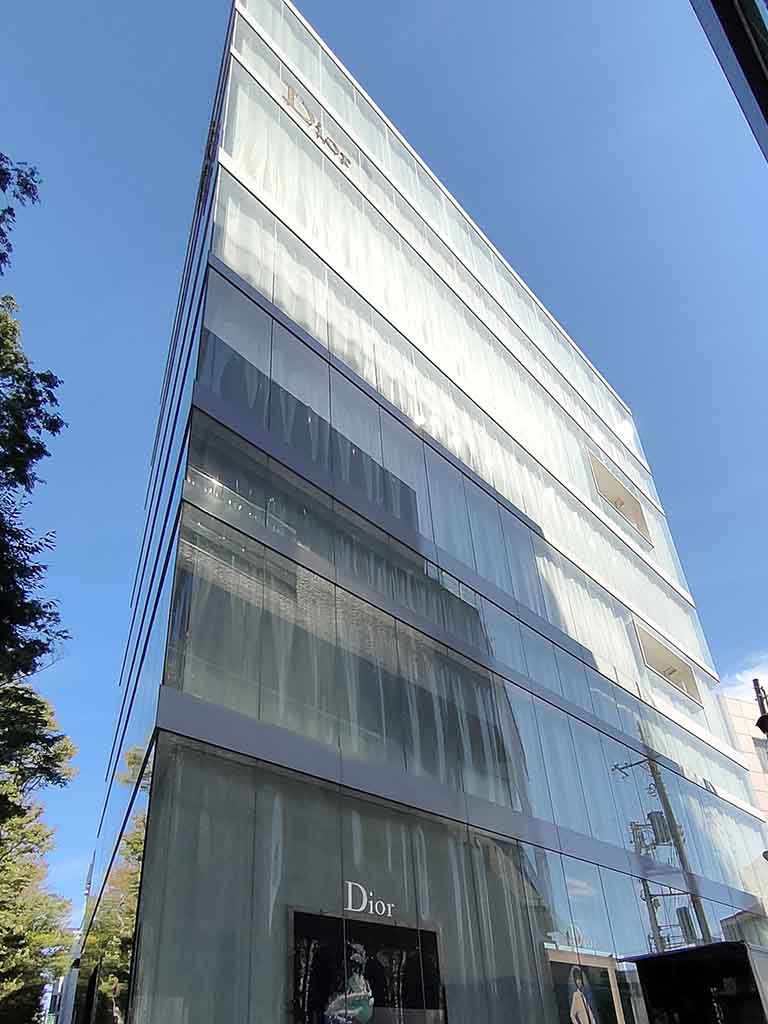
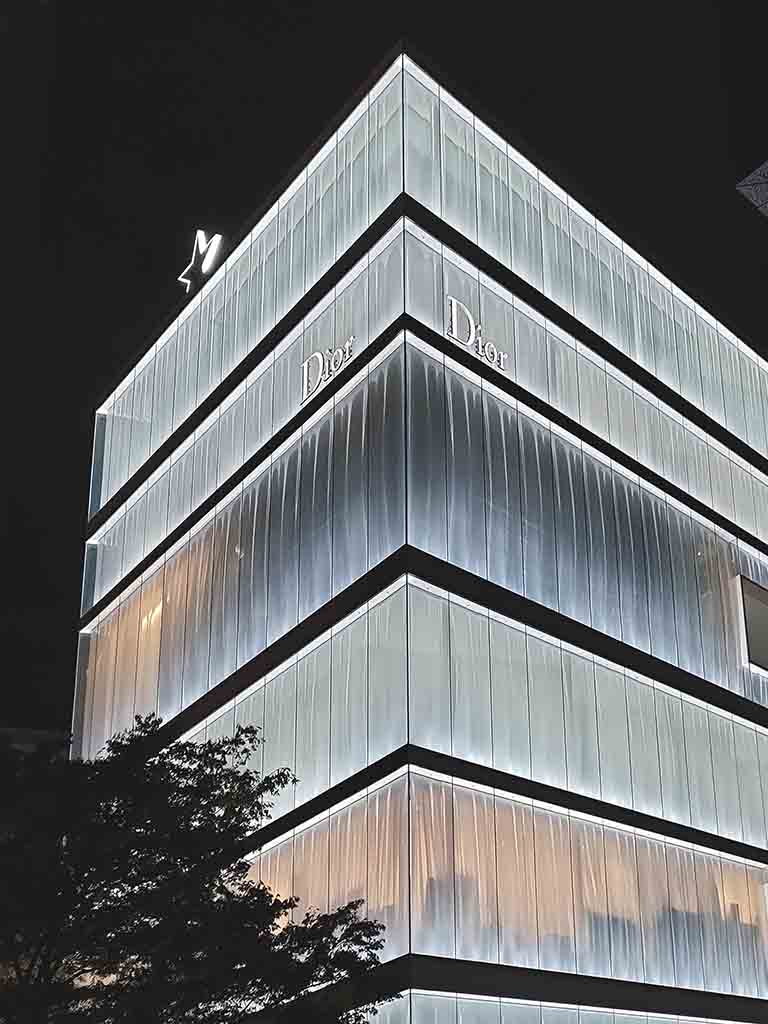
The acrylic screens were made using molds with mounds. Also, they were not completely transparent; if you look closer, you will see white stripes on them. We added the stripes to make them semi-transparent, but they also help reflect light. You can’t get reflections if the panel is completely transparent. The attention to acrylic panels (and lighting) were inspired by Christian Dior’s design. We’ve learnt that draped skirts were Dior’s signature design. So we attempted to represent soft and rounded appearances using a material that was not as hard as glass.
Sejima: The light is reflected on glass, and then on acrylic panels. We designed so that the reflections could blend in.
Nishizawa: I mean, so that the reflections would look as if a flare skirt moved.
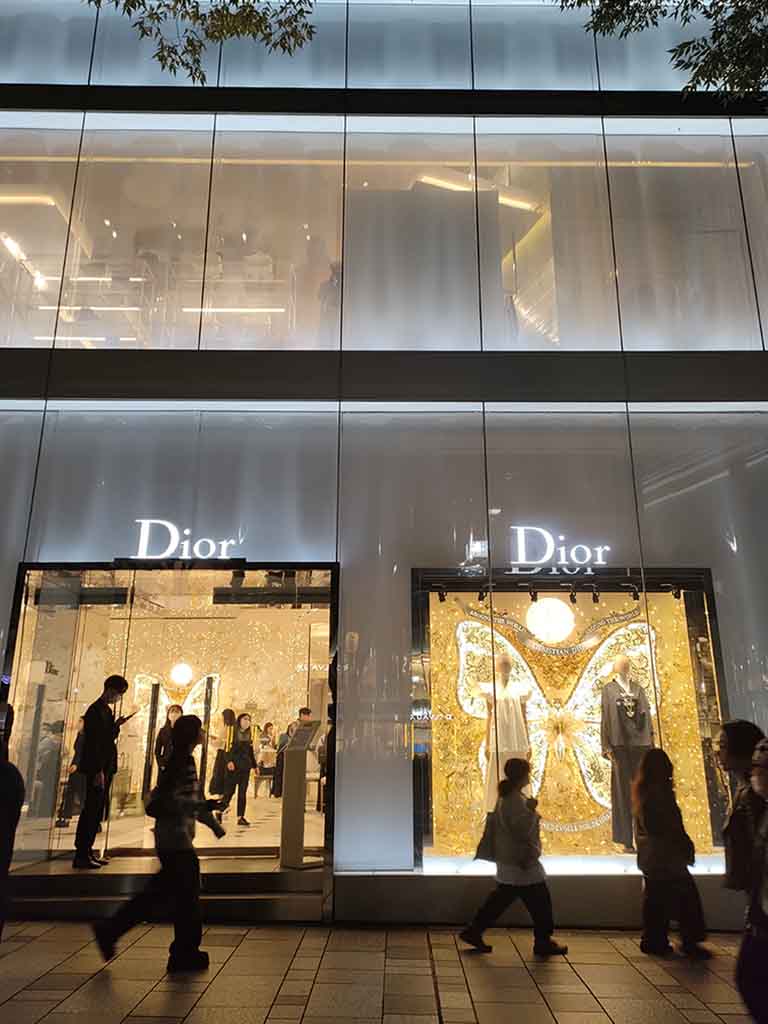
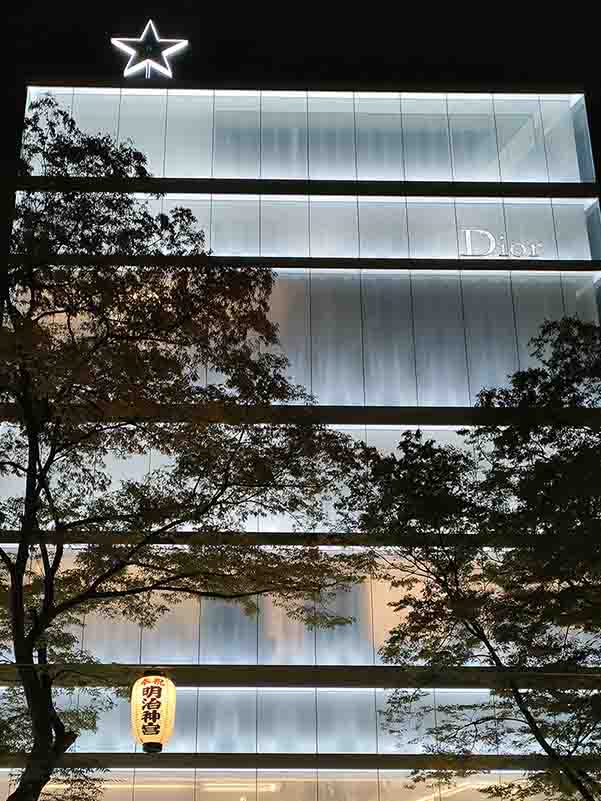
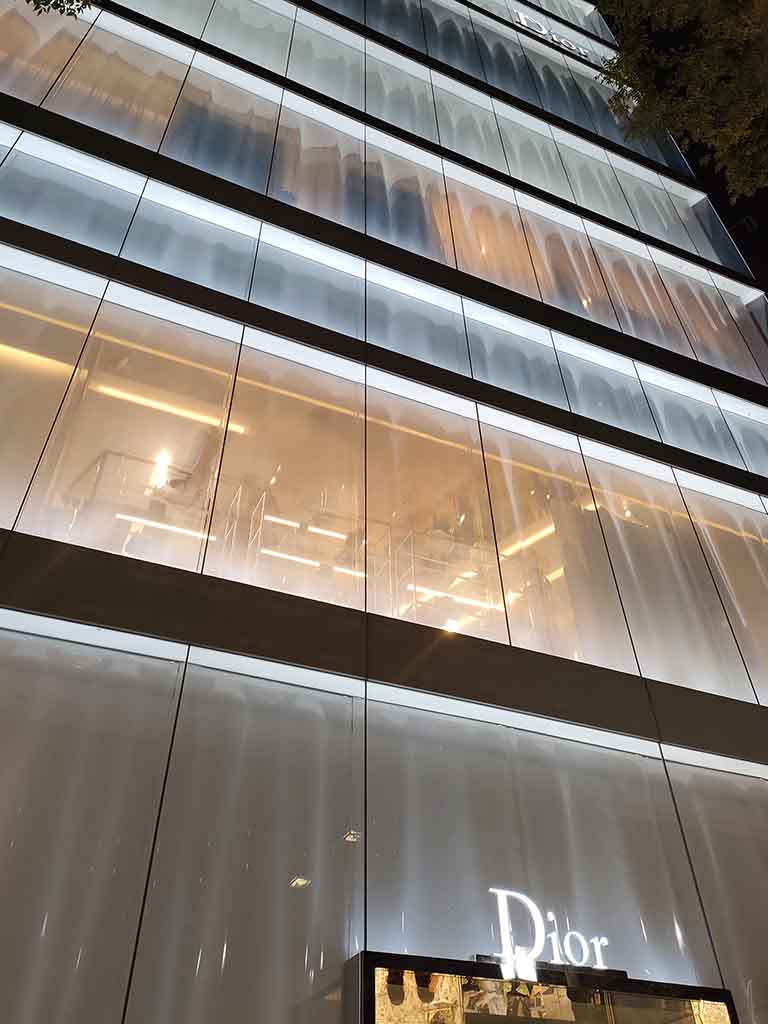
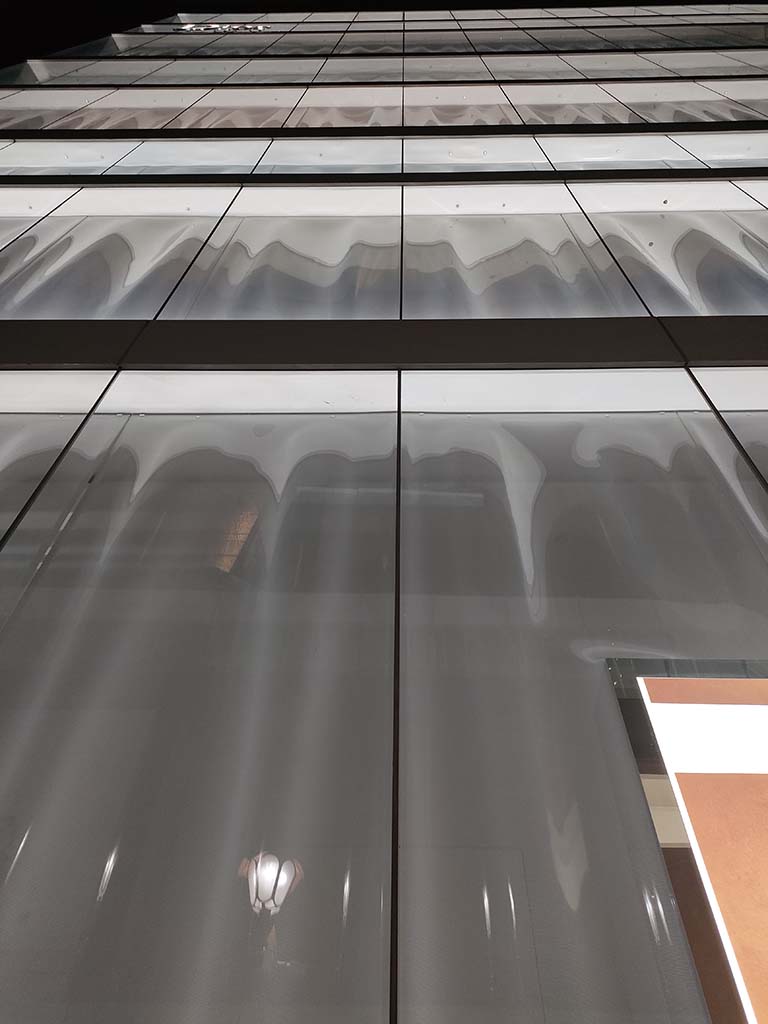
As to lighting, the emphasis was on making the entier buidling look white.
Nishijima: Usually, you use lights inside the buildig, which is what you see from outside at night. But when that happens, what’s on the surface of the building are in the shadow. You cannot see them. We wanted what’s on the surface to be white as well.
Sejima: In order to achieve it, we are using lighting from outside as well. Lights from both inside and outside are reflected on the acrylic panels, and that’s why it looks like as if the entire building is emitting light.
Reference





Leave a Comment