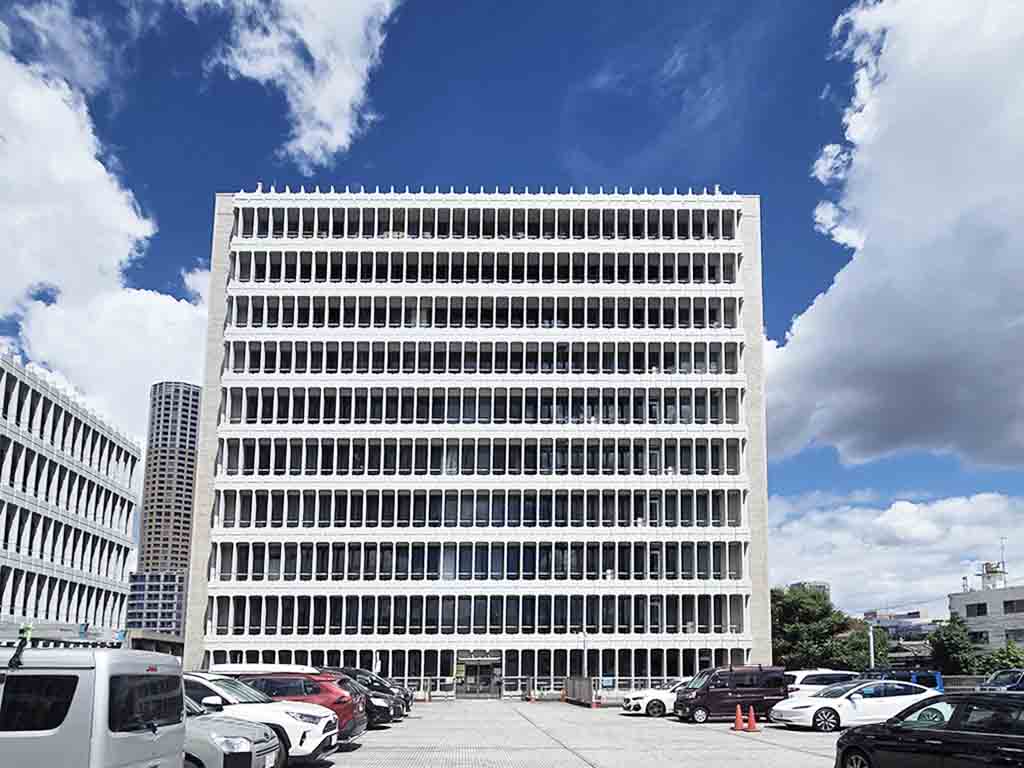
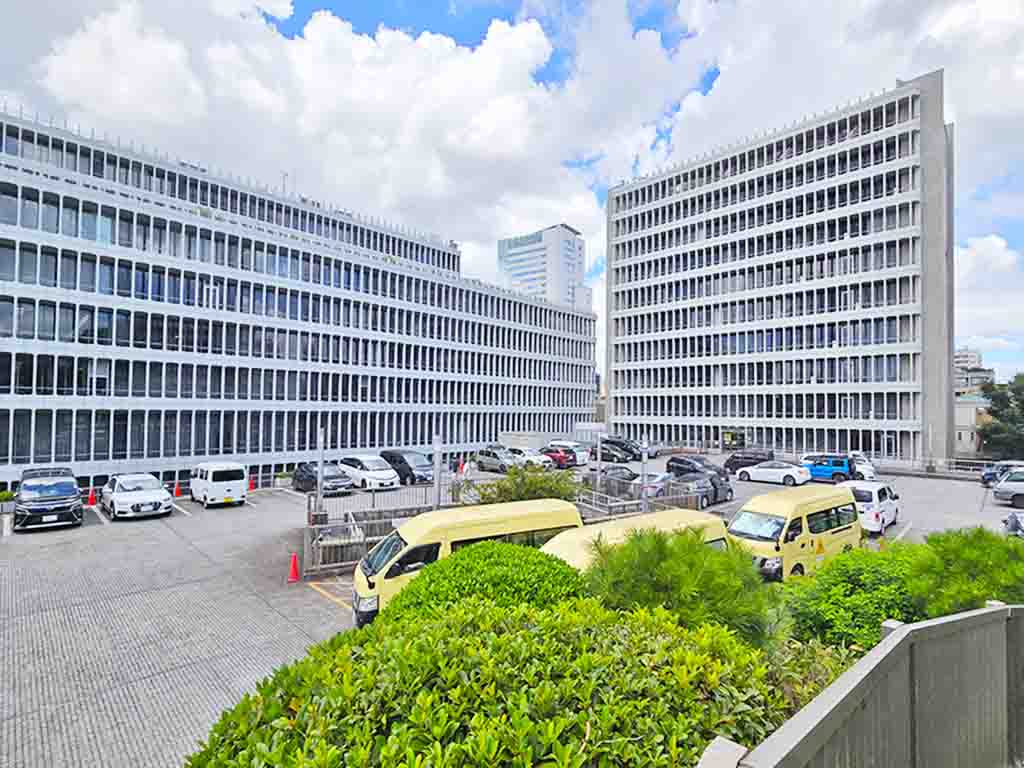
Architect Togo Murano designed Meguro Ward Office (City Hall) in 1966. Originally used as the headquarters of an insurance company, it is considered one of Morano’s major projects that represent Japan’s post-war economic boom in 50’s and 60’s. Meguro today is densely populated in central Tokyo, but in the 60’s it had ample open space. The building was built where there used be a ranch and an international school. Murano made many models to finalize the layout to take advantage of the spacious location.
Entrance Hall (South)
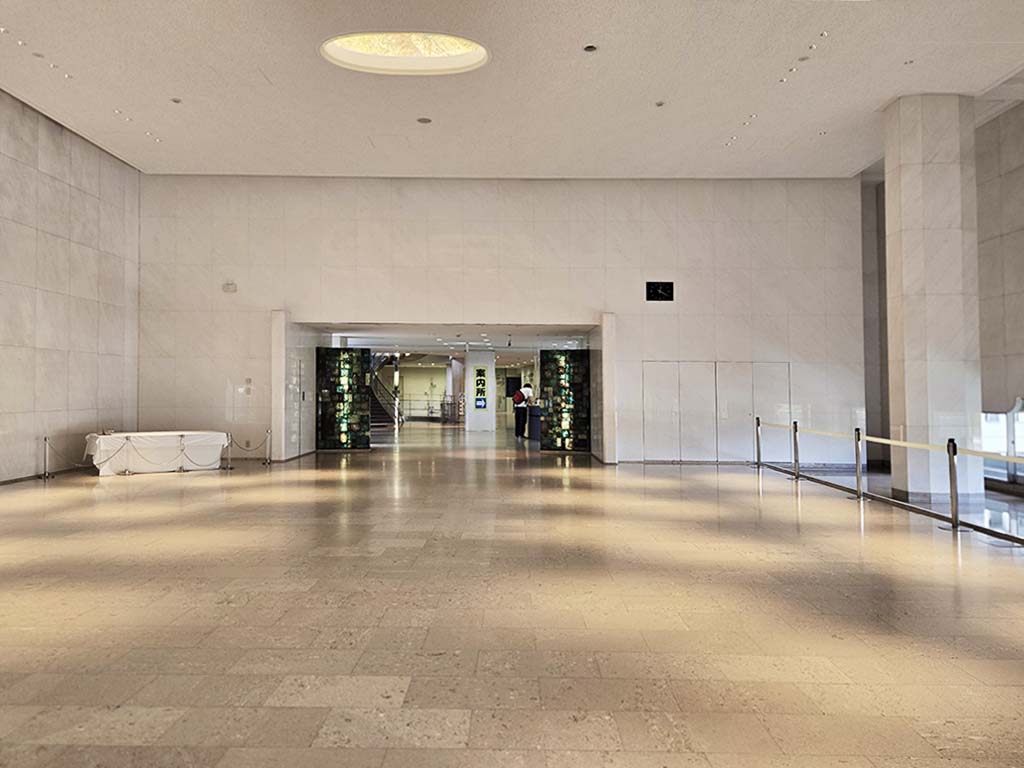
The entrance hall has clean looks as it’s finished with white marble and has high ceilings.
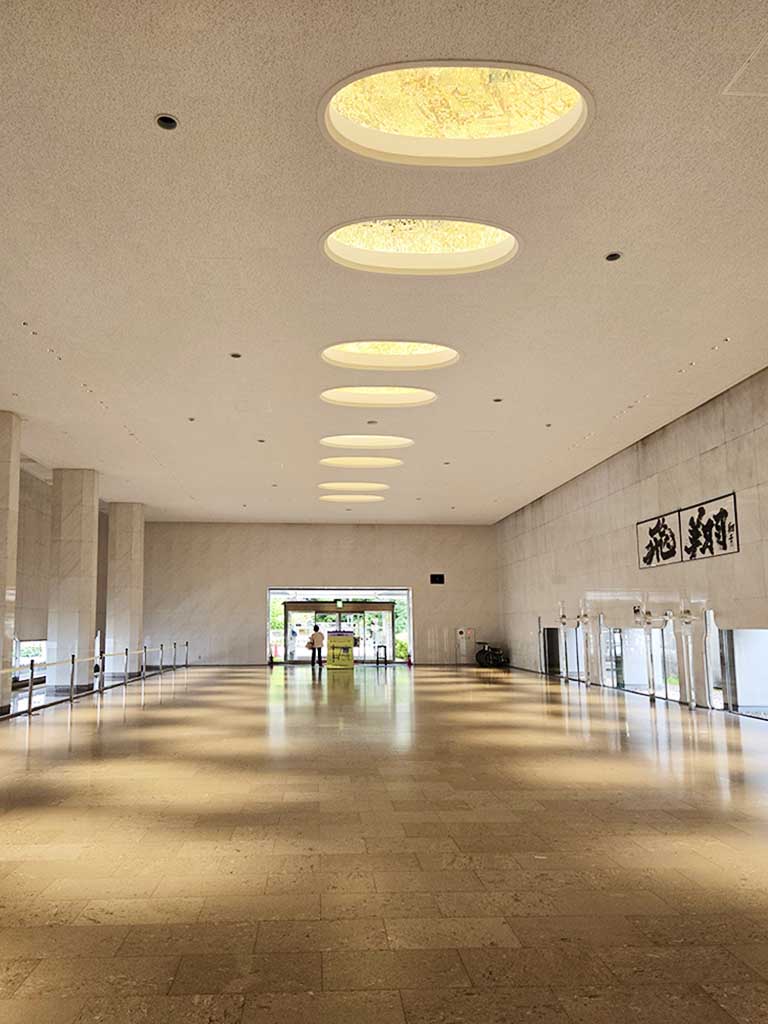
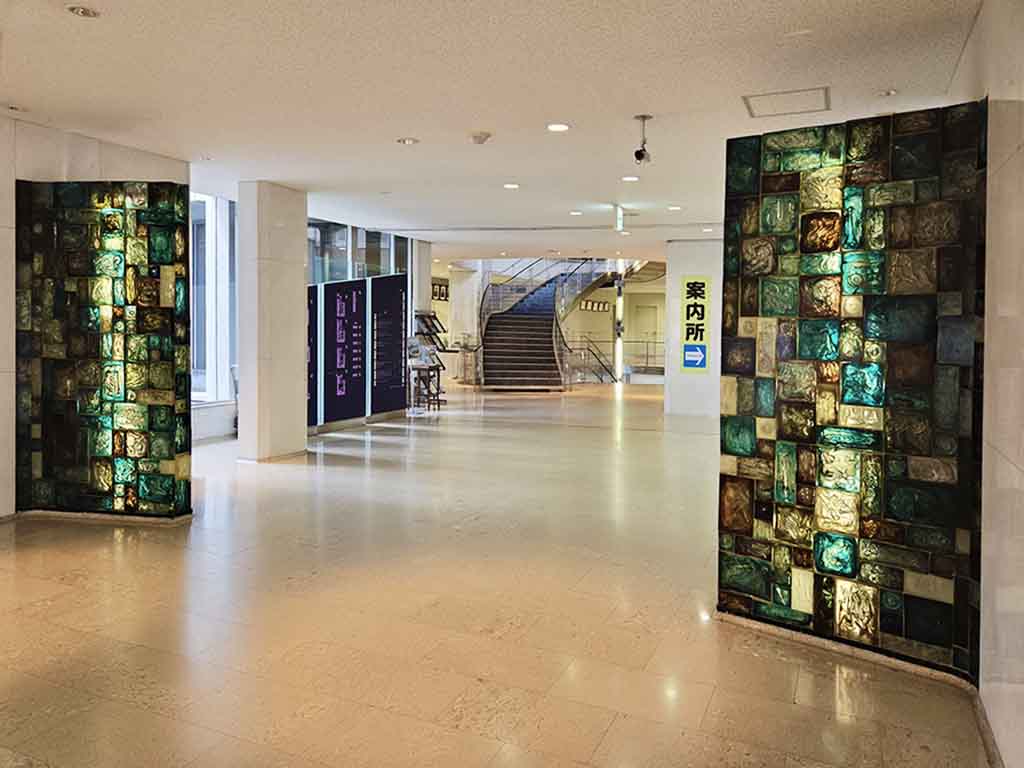
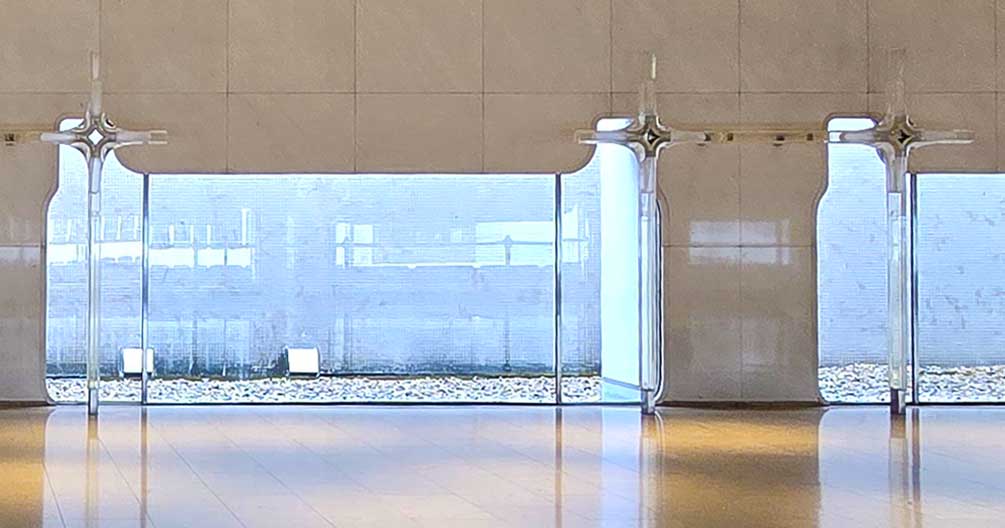
Windows are installed at the bottom of the walls. It is called 地窓 (jimado) in traditional Japanese architecture, and is used to enjoy restricted/ (controlled) view, typically traditional Japanese garden and subdued sunlight that comes through it. Cross-shaped acrylic objects are installed by the walls/windows on the West side, which originally had lights embedded in them. As Murano had unique ability to blend elements that belong to different styles, you can see traditional Japanese architectural details such as jimado and European elements such as marbles mixed together in harmony.
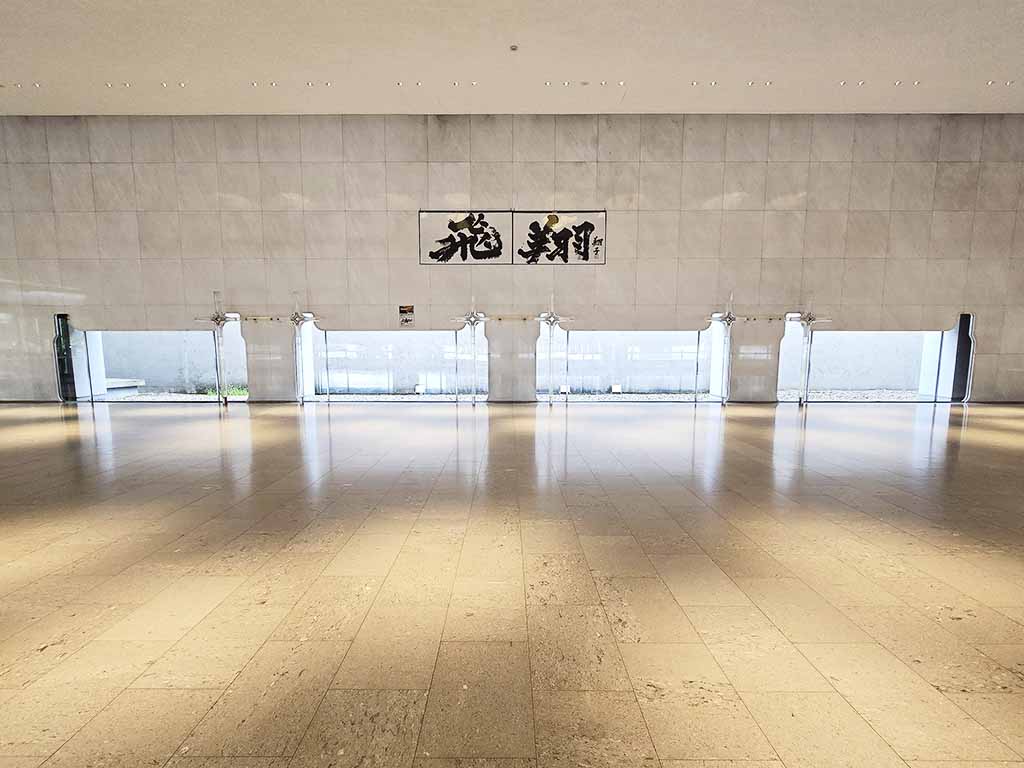
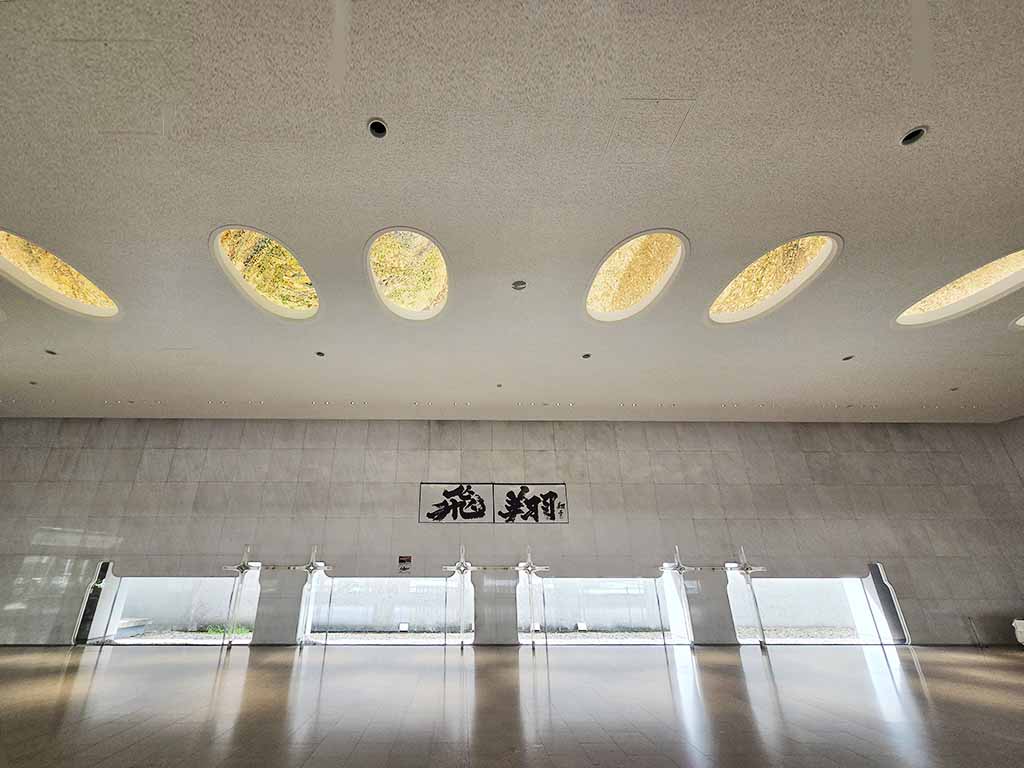
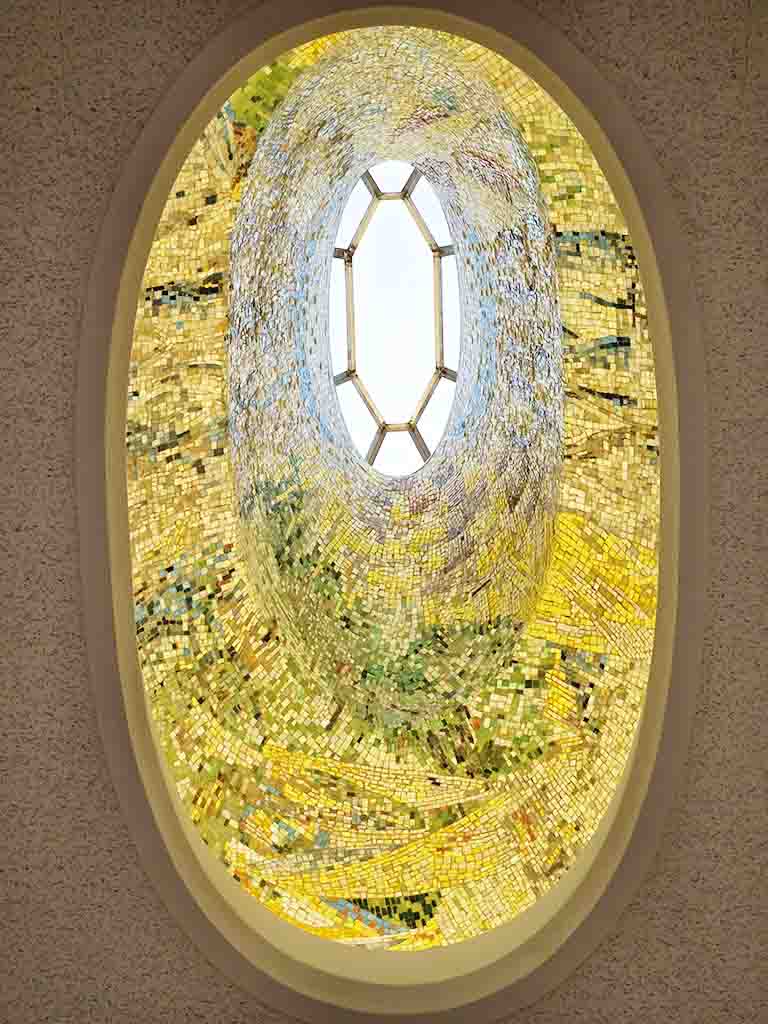
Meguro Ward Office’s Mosaic Skylight
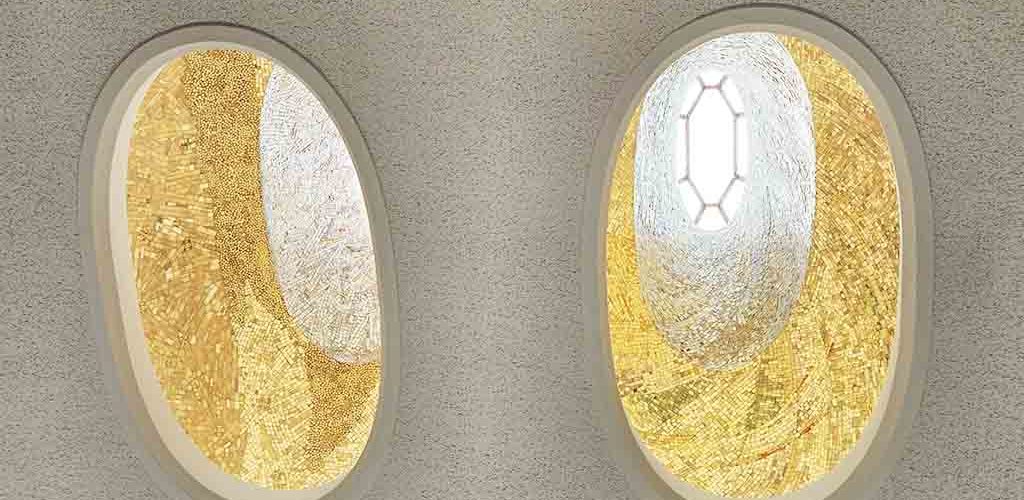
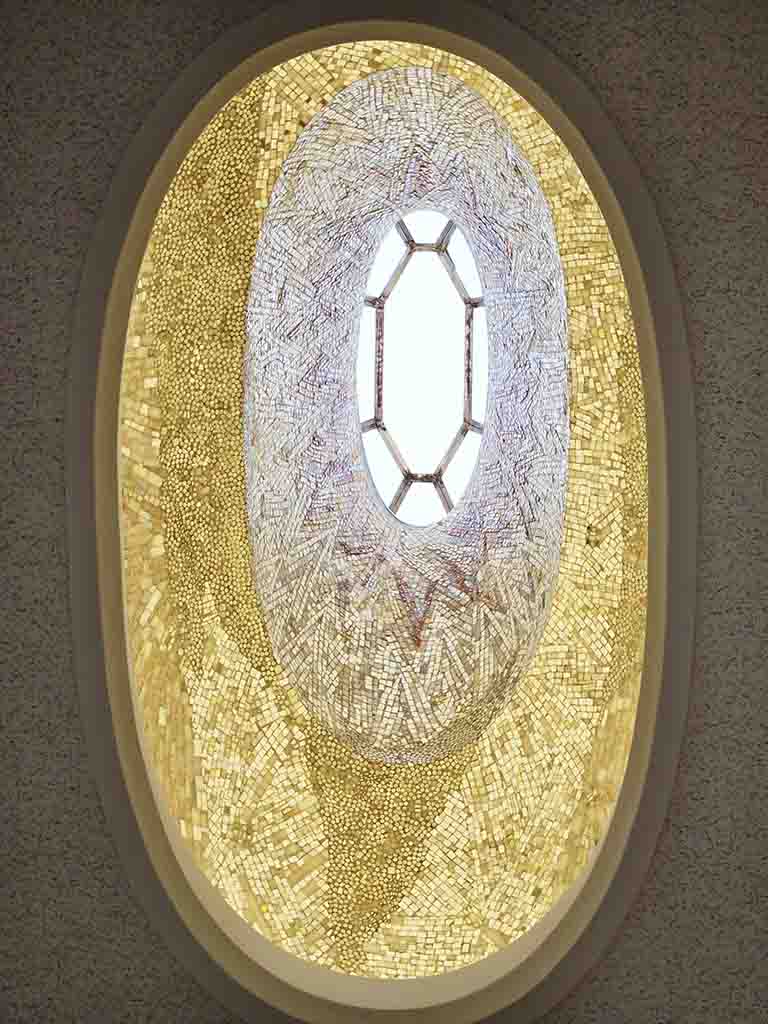
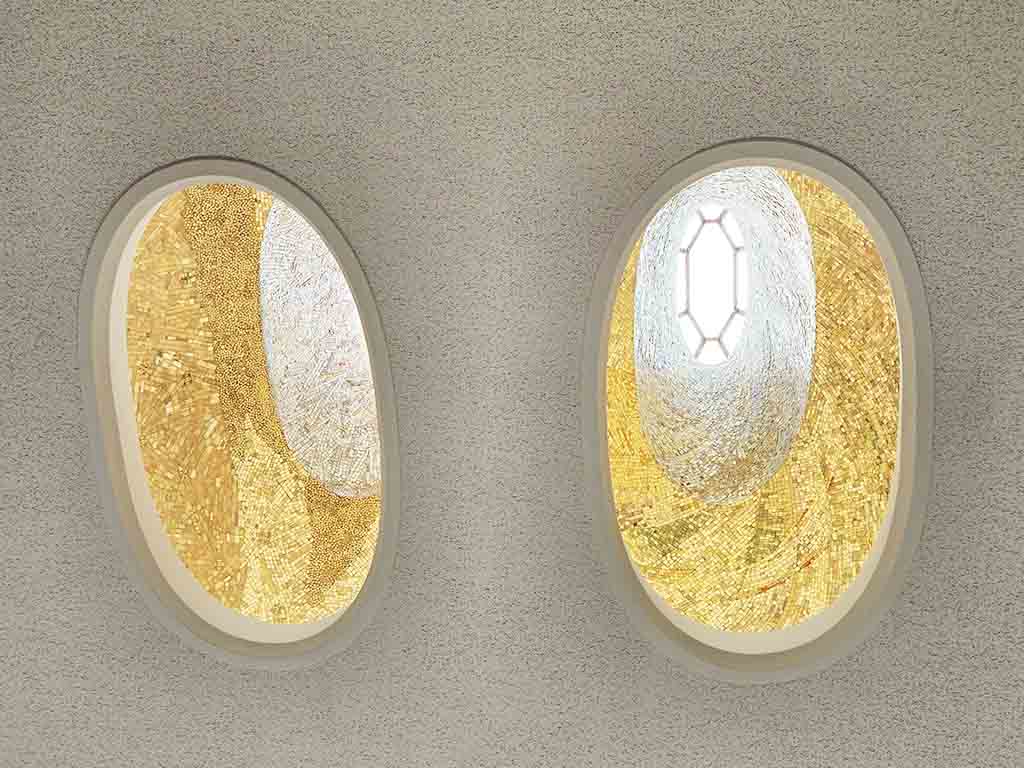
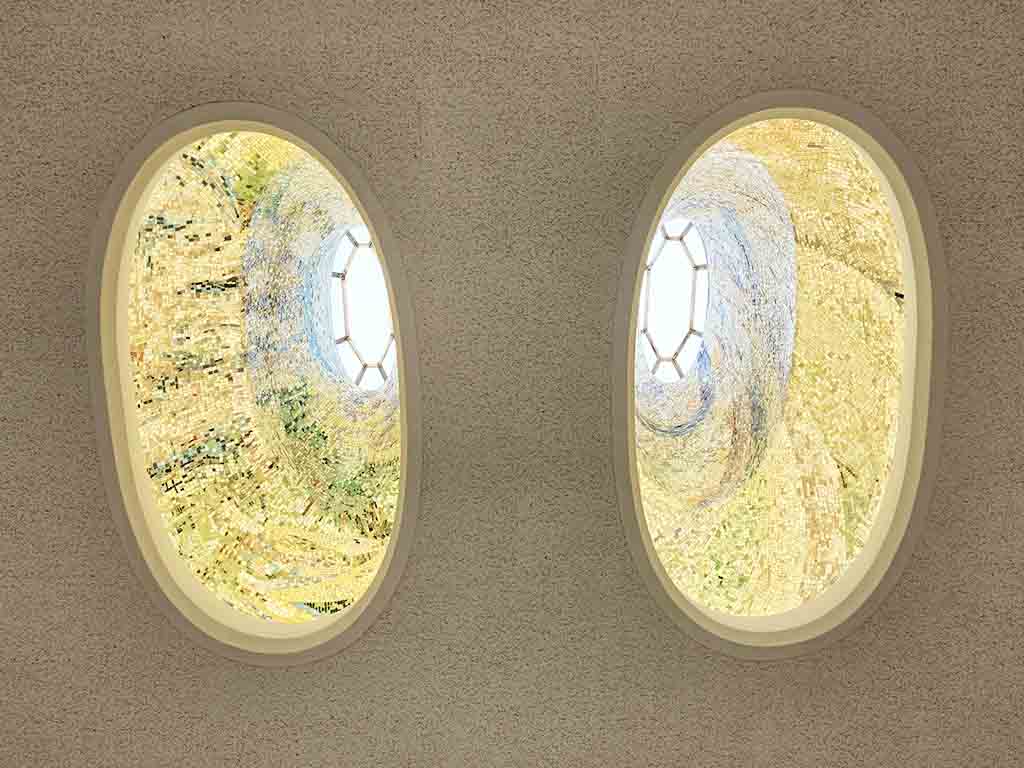
The ceilings have eight skylights with beautiful glass mosaic art by Tanpei Sakuno (1931-2000) that represented four seasons. Originally Murano wanted to rely only on the sunlight coming through windows at the bottom of the walls, skylights and minimum amount of electric lights to the entire entrance area. With a lot more subdued atmosphere, the effect of mosaic art and skylights must have been more stunning.
One of the interesting aspects of this hall is the fact that it’s asymmetrical. The right (East) side is more expansive compared to the left (West) side. The right side has columns whereas the left side does not. It is so because Murano shortened the left side and moved columns outside the walls. He balanced the entire area including the space outside the walls. Asymmetricity is a key feature of traditional Japanese architecture. It is unknown if Murano had it in mind, but he acknowledged that he focused on how the outside environment was introduced to the interior when designing this building. A seamless relationship of inside and outside was also an emphasis in traditional Japanese architecture.
Leave a Comment