
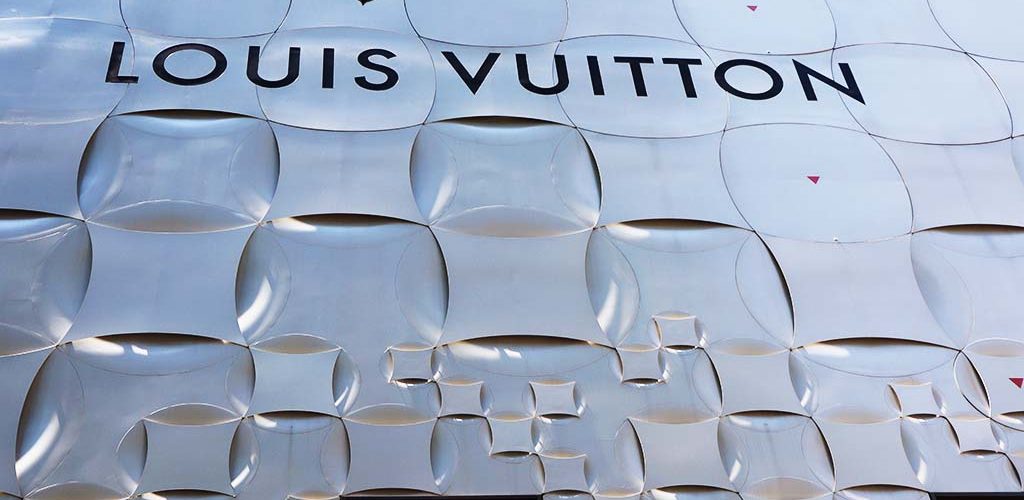
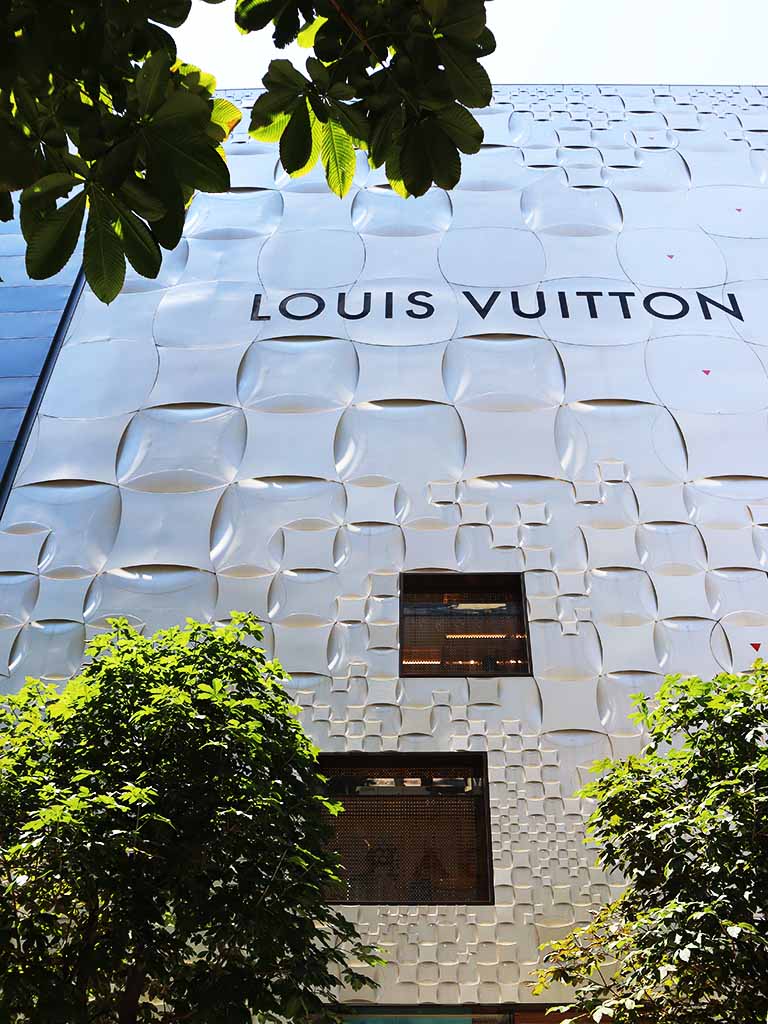
Japanese architect Jun Aoki designed the exterior of the Louis Vuitton Matsuya Ginza store in 2013.
Since early 20th century, Ginza was considered the coolest place in Tokyo and the entire Japan. (There still are a variety of high-end brand stores in Ginza that attracts tourists from all over the world.) To pay respect to Ginza’s long history as the epicenter of culture and fashion, Aoki got inspiration from Edo komon, which is design patterns used for kimono by Edokko (Tokyoites) during the Edo era (17th to 19th century). As the name suggests (Edo is the old name for Tokyo, “ko” is “small,” and “mon” is “pattern”), Edo komon uses very small-scale patterns. They are so small that the kimono can look plain color from afar. Edokko found iki (cool) in such subtleness.
Speaking of patterns, Louis Vuitton has been using d’Amier for a long time. Aoki connected Edo komon and d’Amier through Art Déco. When Japan first modernized the country in later 19th to early 20th century, Art Deco was one of the most popular styles in Europe, which often used repeated geometric patterns. Ginza in early 20th adopted the Art Deco design while blending in traditional Japanese design styles. For the store façade, Aoki added some Art Décor flavors to A’amier and used it as repeated patterns like Edo Komon.
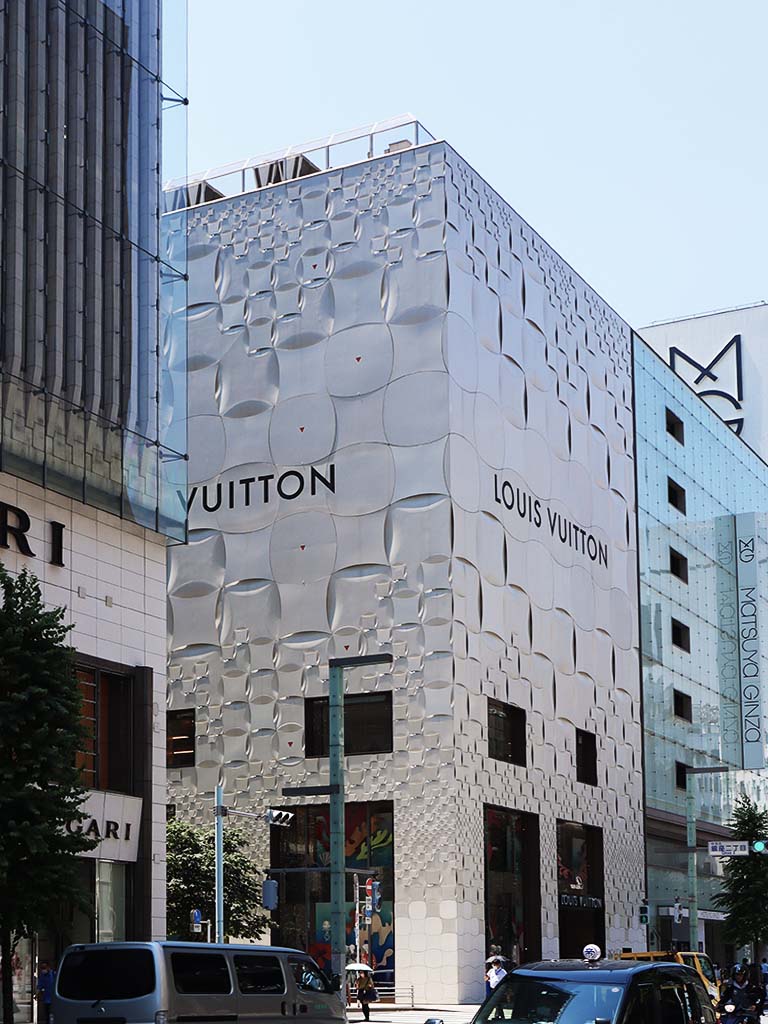
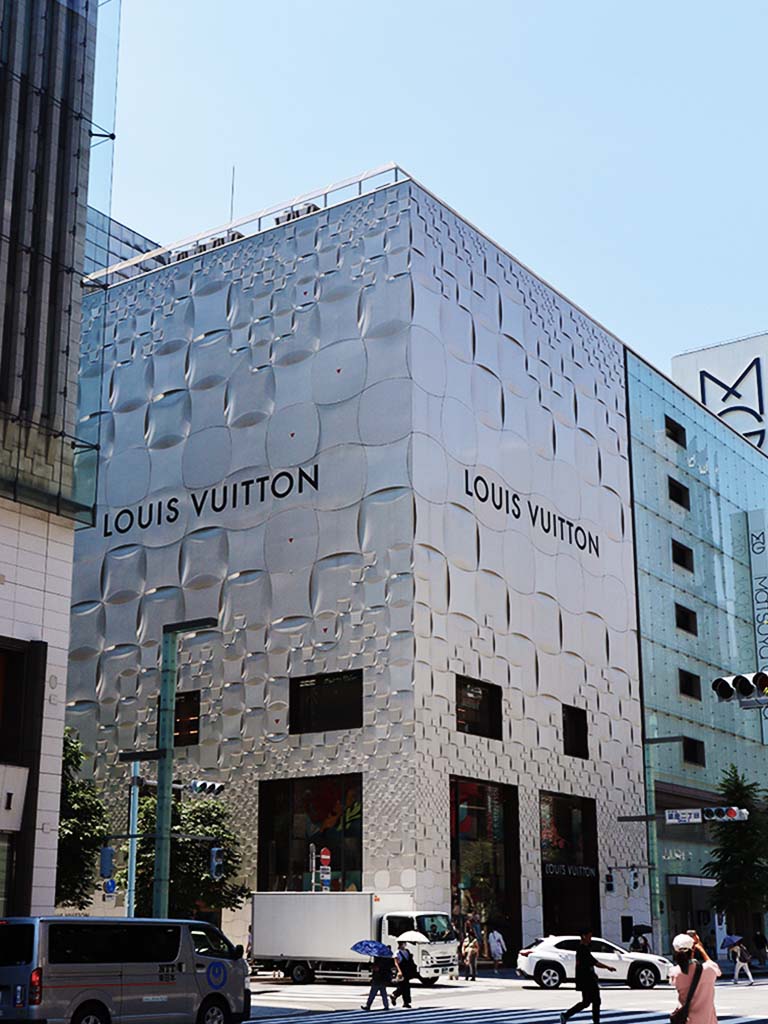
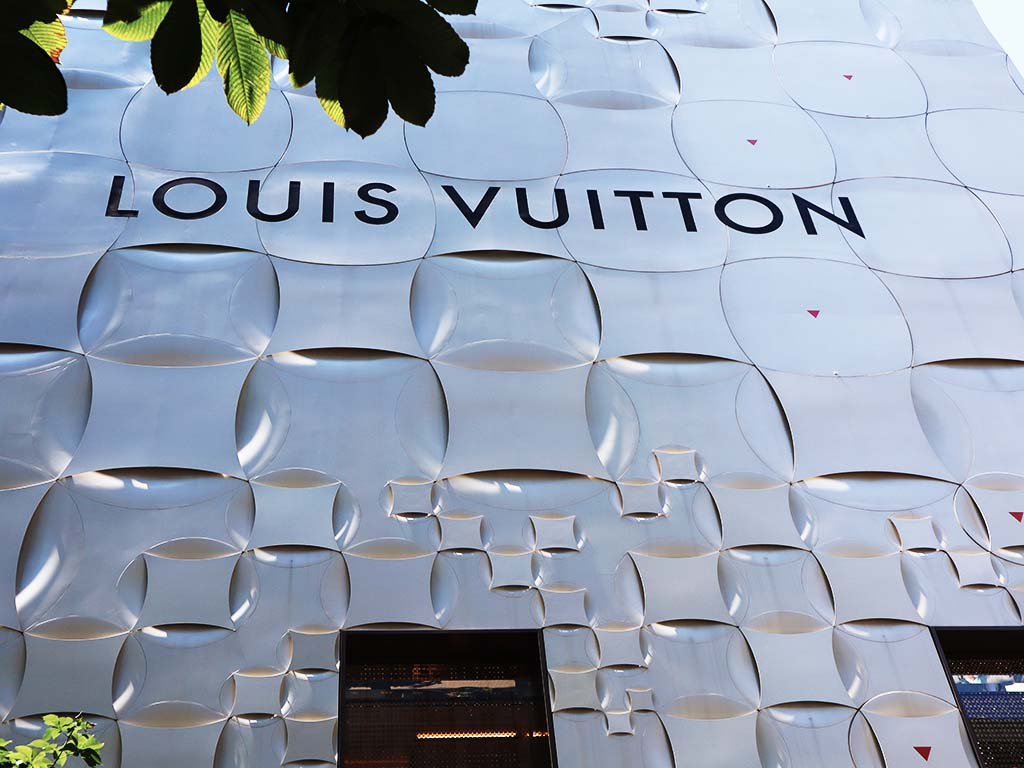
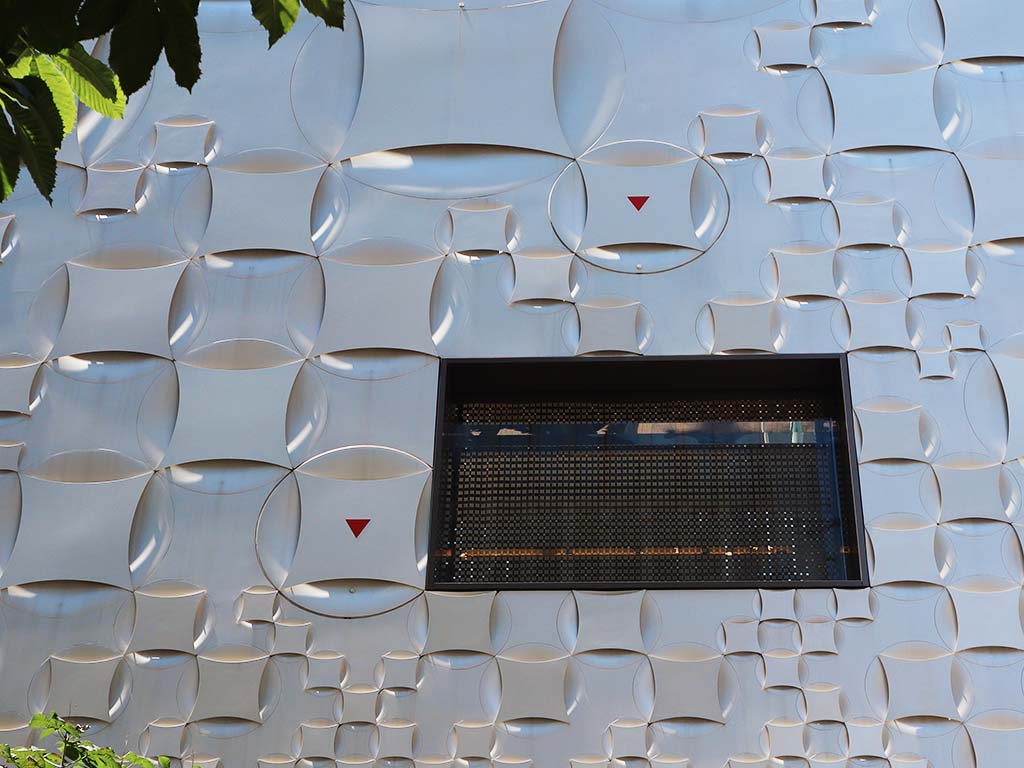
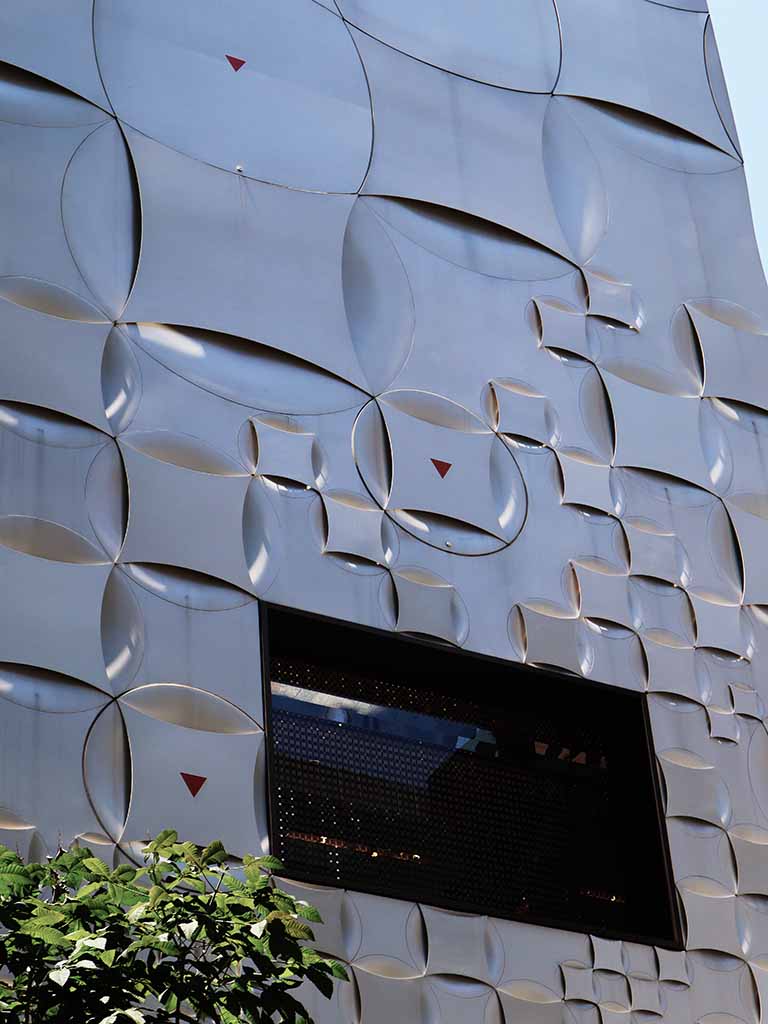
Aoki covered the exterior with opal/beige colored plates with elegant curves that came in different sizes. He called them the “soft D’Amier,” which combined Edo komon and D’Amier via Art Deco. During the day, the plants change their expressions reflecting the sunlight. At night, LED lights under the plates give the facade a different look that resembles the signature Monogram.




Leave a Comment