About the Kadokawa Culture Museum
The Kadokawa Culture Museum (KCM) opened in Tokorozawa, Saitama, Japan in November 2020. As Kadokawa is one of the largest publishers in Japan, the museum features books, which is intellectual wonderland that has been fascinating readers for thousands of years. Even though easily forgotten in this digital era, written text has long been our source of knowledge, wisdom, imagination, creativity, entertainment, and communication. Seigow Matsuoka, the Director of the KCM, who is one of the intellectual leaders in Japan, says that the museum offers a variety of contents to unleash visitors’ imagination and “anima” to actively feel, think, and enjoy. Check out fantastic ideas, designs, exhibitions and events that the KCM offers.
The Architecture of the Kadokawa Culture Museum
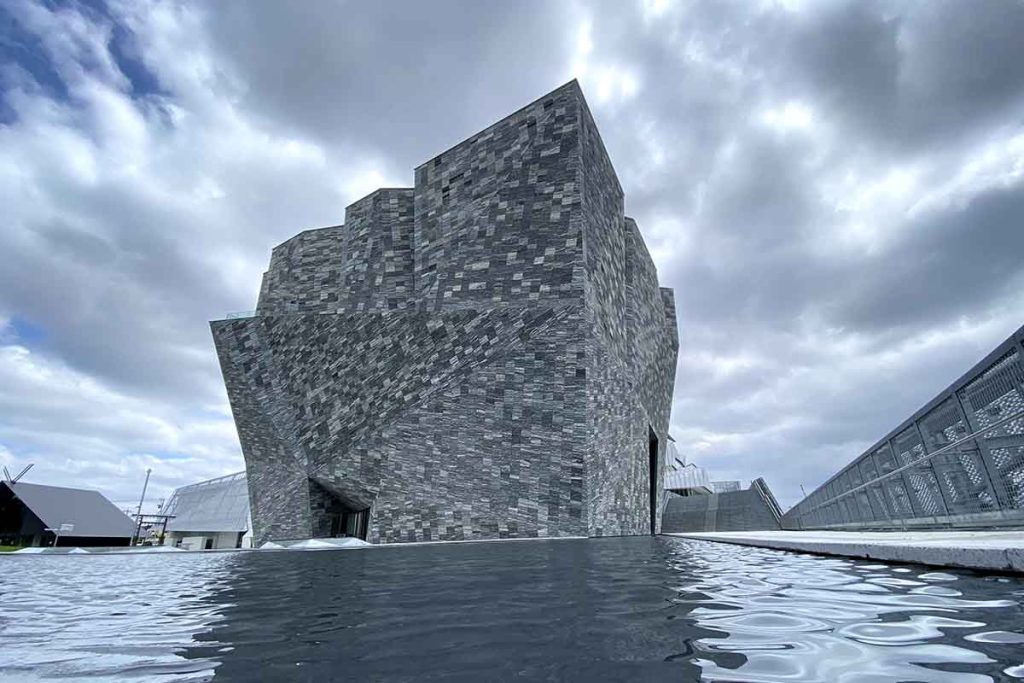
The KCM was designed by architect Kengo Kuma. Well known for leveraging natural materials, he chose to use stone for this project. The 30-meter, five-story building is clad by 20,000 granite slabs with almost no openings. It looks like a natural geographical outcrop rather than a man-made building. Kuma believed this would be a fitting landmark to represent the Musashino area where the museum is located. Because the land was rather arid, people struggled to survive. Since hundreds of years ago, people planted trees to develop small forests in order to grow any crops and make ends meet. Such history inspired Kuma to mimic raw, forceful geographical formations.
The Bookshelf Theater
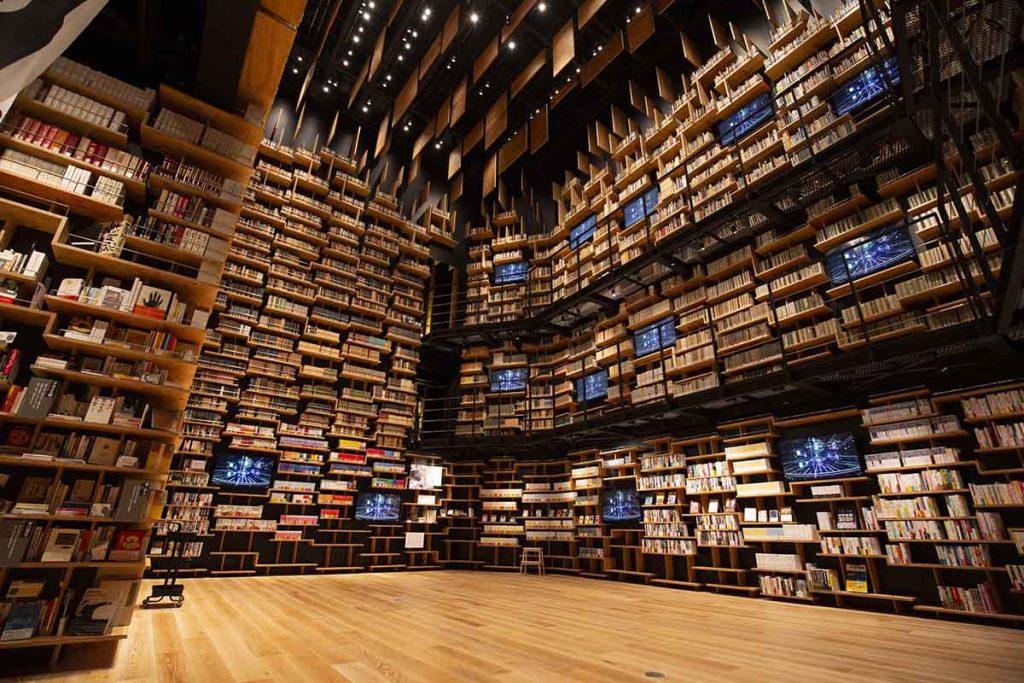
When the exterior of a museum represents the harsh side of nature, what can you expect of the interiors? Kuma wanted to make it a space filled with primitive atmosphere where visitors could directly experience books and artworks by fully unleashing their natural instincts and senses. The floors do not follow a conventional layer system that merely divides the building horizontally; it feels more like a labyrinth or a cave.
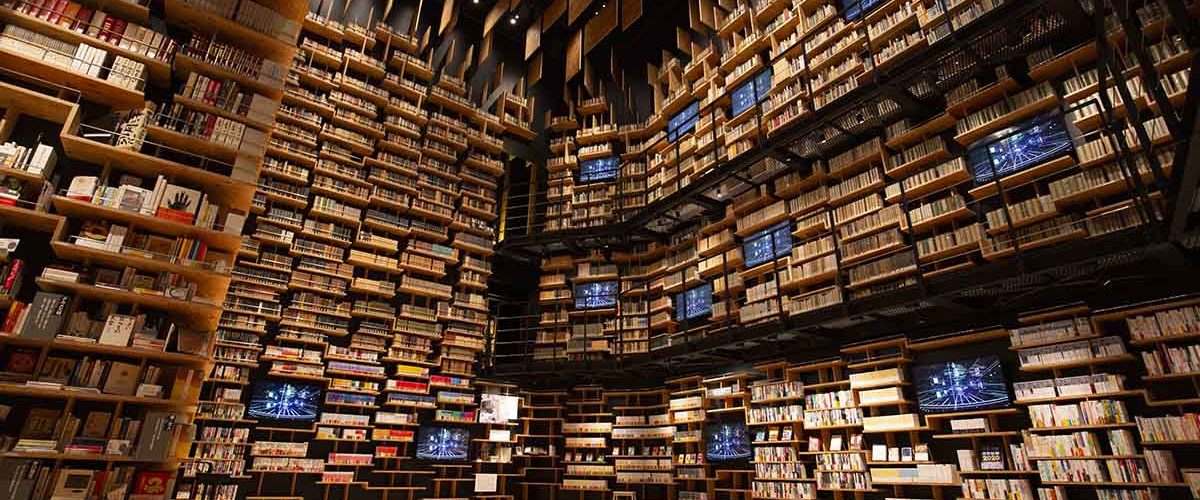
One of the most breathtaking areas is the “Bookshelf Theater” on the 4th floor which is completely surrounded by towering bookshelves as high as 8 meters. They come in different sizes and are intricately organized as if the whole area looked like our brain – a space that fluidly and incessantly processes information that is stored in different areas at different times. The shelves are occupied by about 30,000 books that used be owned by the founder of Kadokawa and other intellectual leaders in the past. The theater conducts projection mapping under the theme of “Play with Books, Interact with Books.”
The Edit Town

If the Book Theater represents our brain, the “Edit Town” on the fourth and fifth floors represents a town/community made from books. The KMC Director, Seigow Matsuoka, supervised the area by creating nine categories in the “Book Street” to house 25,000 books. Instead of relying on conventional classification systems, Matsuoka created nine areas such as the “Forest of Memory (that hosts books about mythologies or nature)”, ”Japanese Identity (includes everything that helped shape Japanese culture such as Shintoism and/or Buddhism, ancient society and/or modern politics, haiku and/or anime culture)” and “Success through uniqueness (that includes books about genius, extraordinary, exceptional, unusual or crazy people that changed the world).” This is the area where you can encounter all kinds of elements that constitute this world.
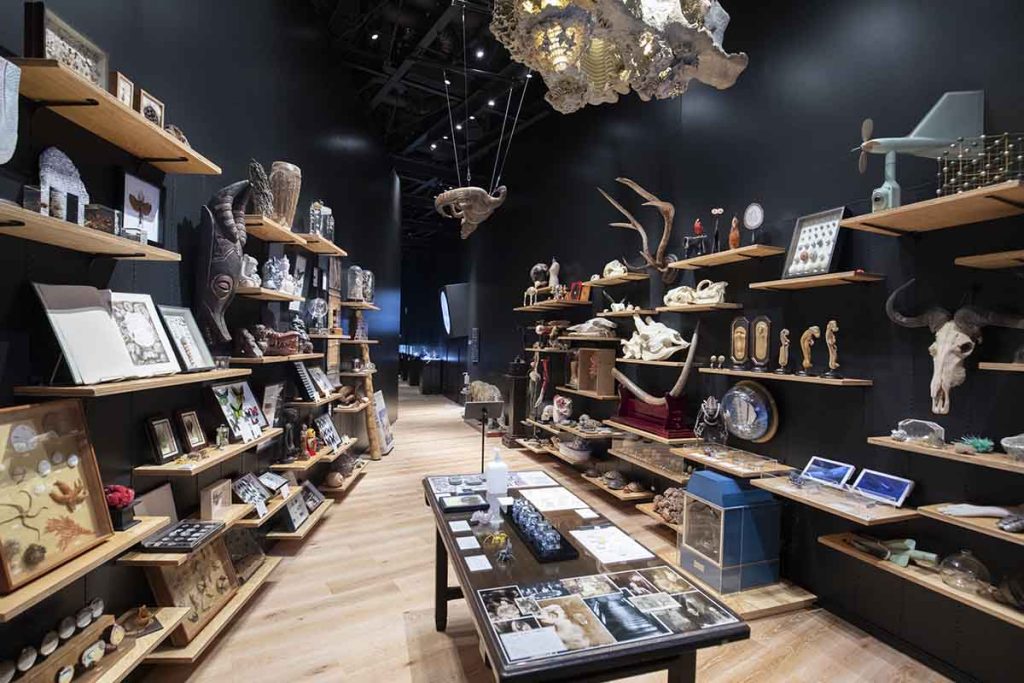
The ARAMATA Wunderkammer (Museum)
Hiroshi Aramata is one of the most influential intellects in Japan. Although he didn’t pursue research career in fantasy literature or natural history (his areas of expertise), he became recognized for his incredibly broad knowledge on many subjects from insects to yokai (Japanese folkloric ghosts) after writing several bestselling novels. As Aramata is good at intriguing people by exposing them to unexpected subjects, it is very fitting that he is part of the KCM’s board members and supervised the “Aramata wunderkammer (“cabinet of curiosities”) area which presents, in a unique way, people’s imaginations and representations of “anima.”
The venue offers a number of hands-on exhibits where visitors can experience all types of wonders – some curiosity-oriented, some extremely academic – using a mechanical zoetrope (a rotating device that produces the illusion of motion using images and a series of slits) and other creative exhibits covering themes such as the origin of life.
Other Areas
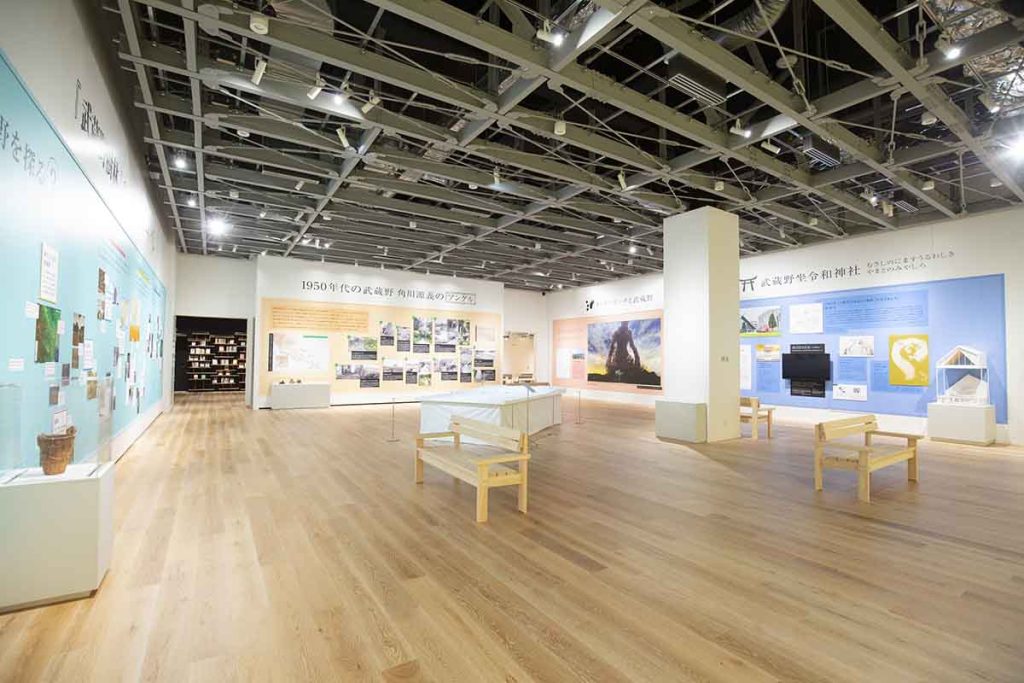
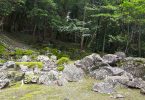
The Musashino area that surrounds the KCM is located on a rather arid plateau, a vast plain that has existed for thousands of years, making it difficult for people to settle and survive. It was often a battlefield in the medieval era. But hundreds of years later, the area produced some acclaimed artists during modern era. The KCM covers everything related to nature and humans and their relationships through universal perspectives but it also has a focus on local stories.
Leave a Comment