
The “Nakagin Capsule Tower,” one of the most iconic buildings of the Metabolism movement in the 1970’s, was demolished in 2022. The “中銀カプセルタワービル 最後の記録 (The last records of the Nakagin Capsule Tower)” was released just before the demolition. Here’s the link on Amazon. Out of 140 units, 23 were removed from the tower and preserved. They are leased through the 中銀カプセルタワービル保存・再生プロジェクト (Nakagin Capsule Tower Preservation and Restoration Project) for exhibitions or events. We were able to get a glimpse of the tower just in time. After 50 years worth of wear and tear, it still preserved its initial concept, which was novel and innovative when it came out.
Kisho Kurokawa and the Nakagin Capsule Tower
Japanese architect Kisho Kurokawa designed the Nakagin Capsule Tower in 1972. It is one of the most iconic buildings of the “metabolism,” a rare movement that originated from Japan during the 60s-70s. The tower was conceived as a living environment that would literally metabolize: rooms, designed as small capsules, were assembled in a factory, shipped to the site, and then attached to the stem of the tower. Kurokawa envisioned that each individual capsule would be replaced by a new one when it reached the end of life. The cycle could continue and the building would metabolize. Kurokawa even imagined scenarios where capsules would be detached and delivered to a vacation site. He though it would be doable if we had towers that used the same building standards across the country. Just like today’s tiny house or nomad movement, Kurokawa imagined the capsules as flexible and mobile, minimal units that would enable a free and nomadic lifestyle. It is impressive that he initiated such a novel concept 50 years ago.
But 50 years is a long time. The building, which sat in the swanky Ginza district in central Tokyo, was getting old. And unfortunately the “metabolization” never happened as there were multiple management issues to allow the owners to replace their capsules. They were never transported to other locations either, because no other capsule towers were built.
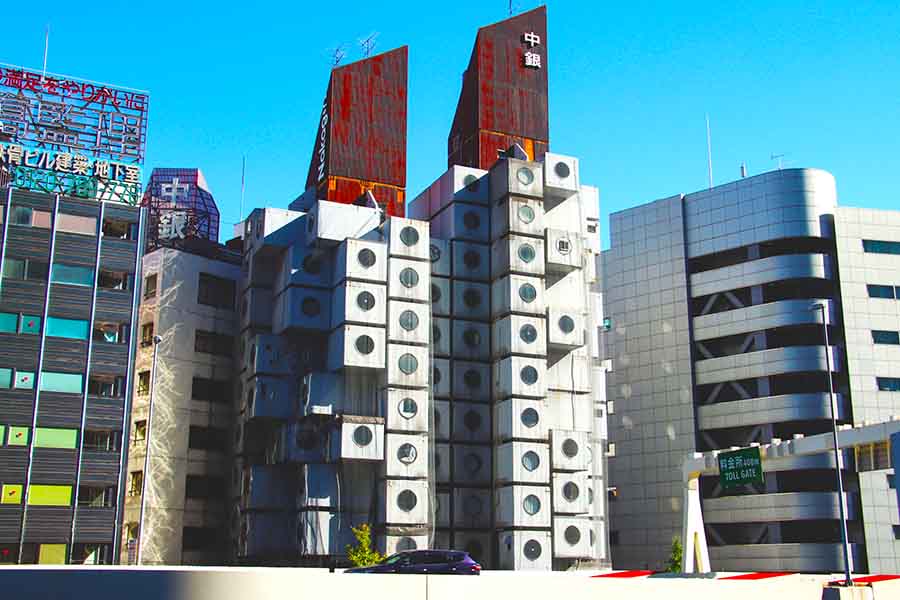
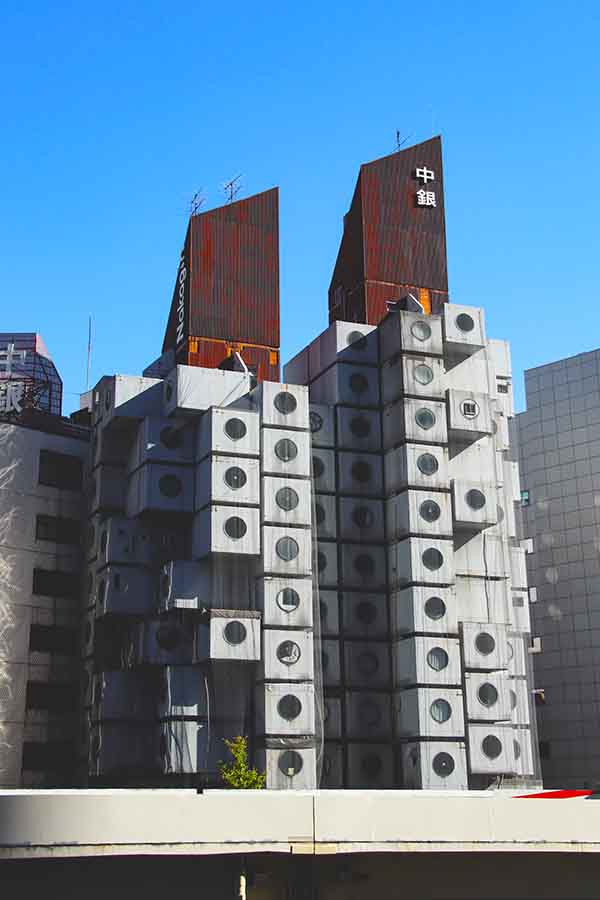
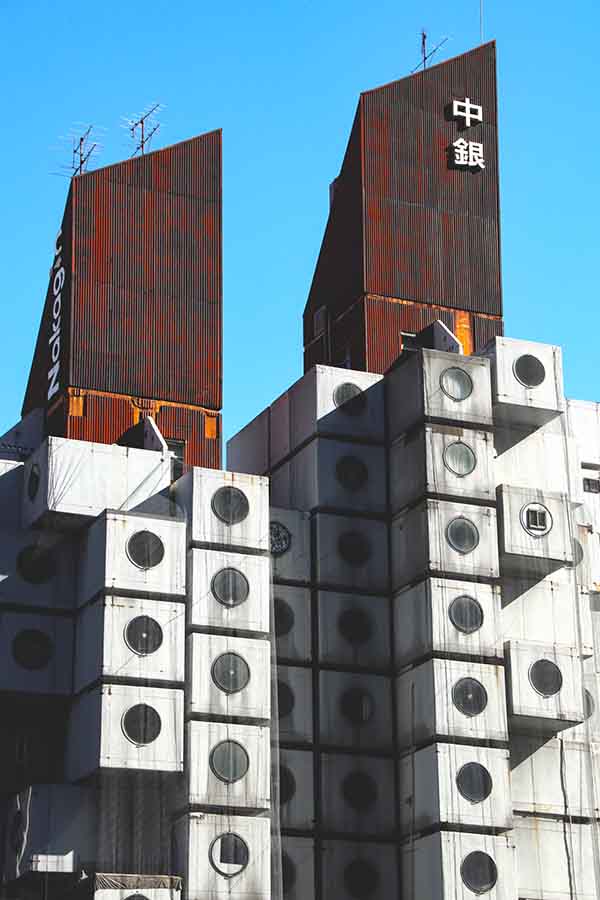
Nakagin had twin-towered structure: there was Tower A (the interior originally painted pink and orange) and Tower B (the interior originally painted blue and emerald green). They must have looked almost psychedelic when they were new. Indeed, it seems like Kurokawa imagined the capsules to be used by young and hip white-collar workers (which must still have been a very new concept in Japan in the 70s) who wanted to enjoy cool urban night life. The tower would function almost like a hotel: rooms had no kitchens nor washing machines. Concierges, available 24/7, would take care of your life from doing laundry or making photocopies while you worked or socialized. The entire experience must have felt so transformative to Japanese who were going through a mesmerizing social transformation from pre-modern/pre-war society to a modern/cyber urban life.
Reasons why the Capsule Tower never “metabolized”


In each tower, the capsules were attached from the lower to the upper levels using four bolts. Kurokawa’s plan was to replace capsules every 25 years. He also designed them at a specific size, 2.5m × 4m (10m2) – so that they would fit on conventional trucks and on regular roads, although none of them had chance to be transported. The reason why no capsule replacement ever happened was both technical and administrative. You can see the technical issue in the picture above right: due to the design, there was only 30 cm (!) gap in between capsules. There was no way for anyone to squeeze in to detach individual units. The lack of the space also made any repair – water/gas pipes or cables – almost impossible. After 50 years, there are rooms that have leaking ceilings, without hot water, or no air conditioning. This fundamental mistake has made the lives of some capsule owners really difficult, but many are determined to sacrifice their comfort in order to preserve the tower.




The interior of the Nakagin Capsule Tower
The interior looks like a ship cabin. The window is double-glazed (the building stands by very busy highways). As you cannot open it, the tower is completely shielded or detached from the outside environment, although the concept of “metabolism” implied it would function like an organic matter.

It is notable that the tower offered a TV, radio and audio system as options even though it didn’t provide a kitchen or a washing machine. It was so because the tower was for young people who wanted live in the city and enjoy social life. The equipment looks mid-century, but you can feel the momentum of emerging Japanese tech companies. Japan, especially Tokyo, went through mesmerizing growth during 60s and 70s, making an almost revolutionary transition from a pre-modern/pre-war society to the modern, cyber city in just a couple of decades. New companies such as Toyota, Honda and Sony represented a new era of technology-driven growth and affluent life styles.

Sony was founded in 1946 just after the war, launched Japan’s first tape recorders in 1950 and first transistor radios in 1955. Their music player “The Walkman” was released in 1979 and became a social phenomenon. The Nakagin Capsule Tower was built in 1972, right before the big leap for Sony that made it a global brand.


As the rooms are pretty minimalist, it’s not surprising that there was an owner who had MUJI renovate their room (MUJI runs a home and renovation business in Japan). But as each room is still owned by individual owners, you cannot see it (all the pictures in this post were taken in a room that preserves the original design and furnishing). As a matter of fact, the fact that there have been so many owners for this tower is another reason why capsule replacement never occurred: at least 80 percent of the owners had to agree in order to carry out a significant renovation which has never happened. Kurokawa and owners were often at odds.


Japanese housing market has a term “unit bath,” which means that bath, toilet and sink are all nested in a small area. The Nagagin Tower must be one of the first residential project that introduced “unit bath.”


Leave a Comment