
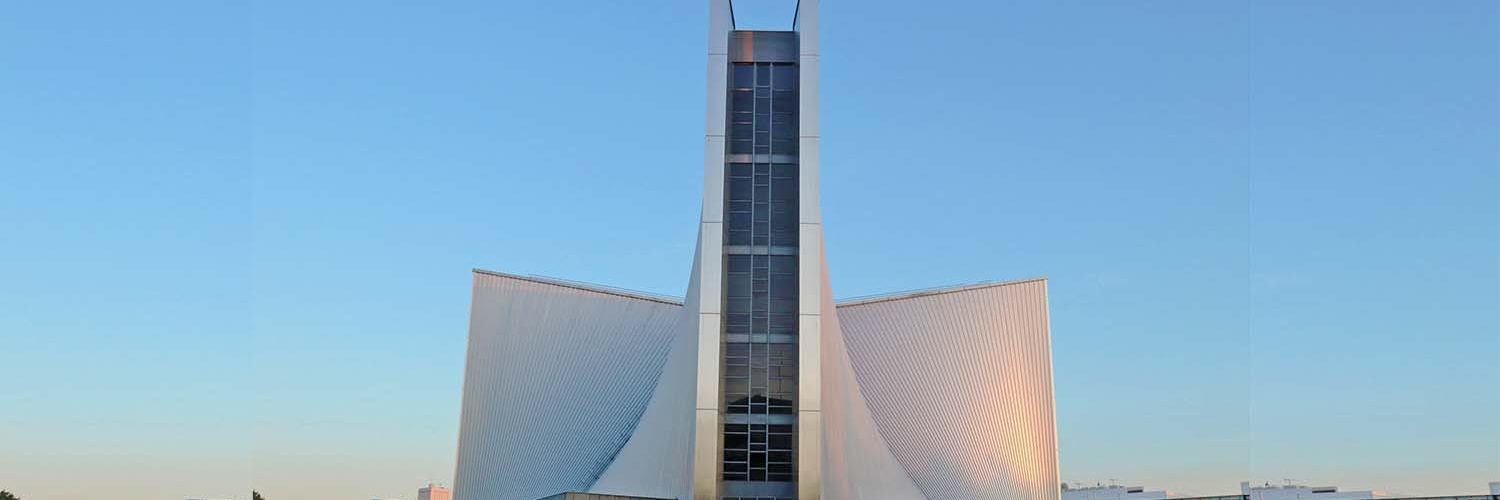
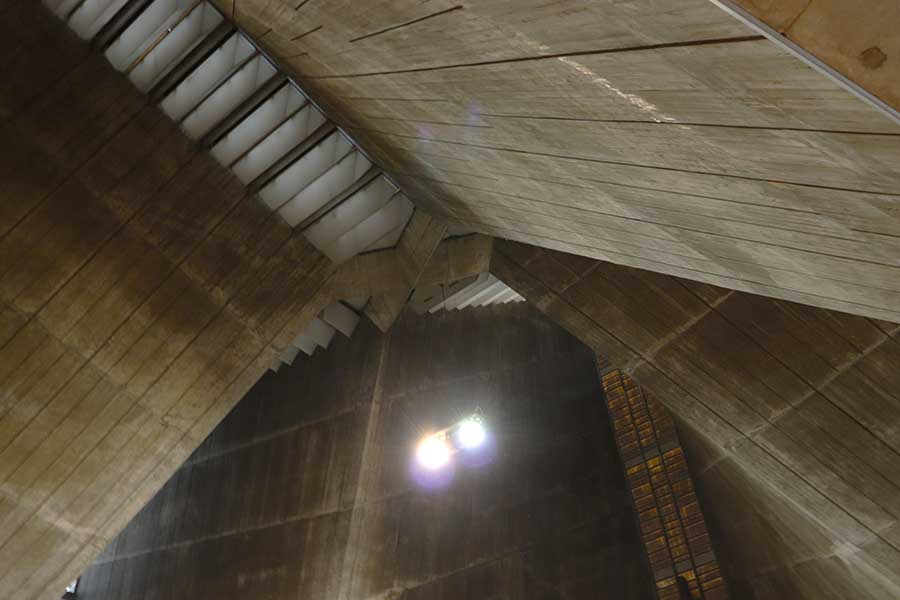
Kenzo Tange won the competition for St. Mary’s Cathedral renewal project in 1961 for its innovative hyperbolic paraboloid (HP) shell structure. The walls/roofs are made of eight concrete HP shells covered by stainless steel. Each panel functions as a wall and roof. The shells meet at the top with small openings, which collectively make a large cross sign when seen from the sky.
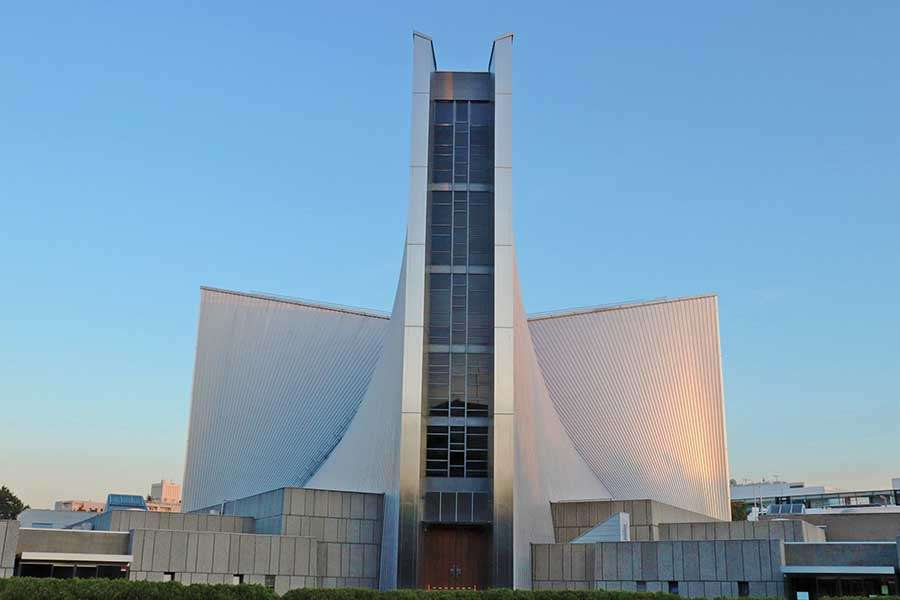
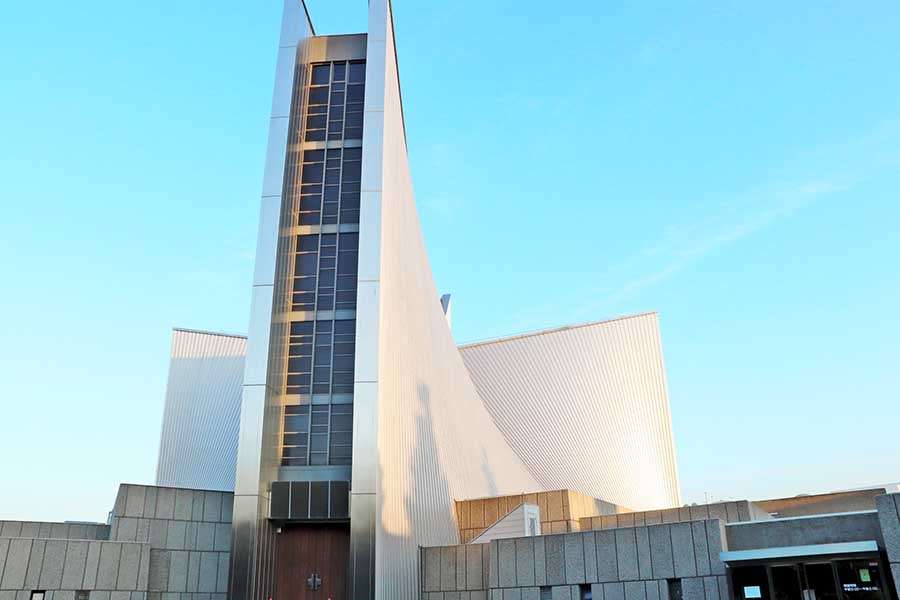
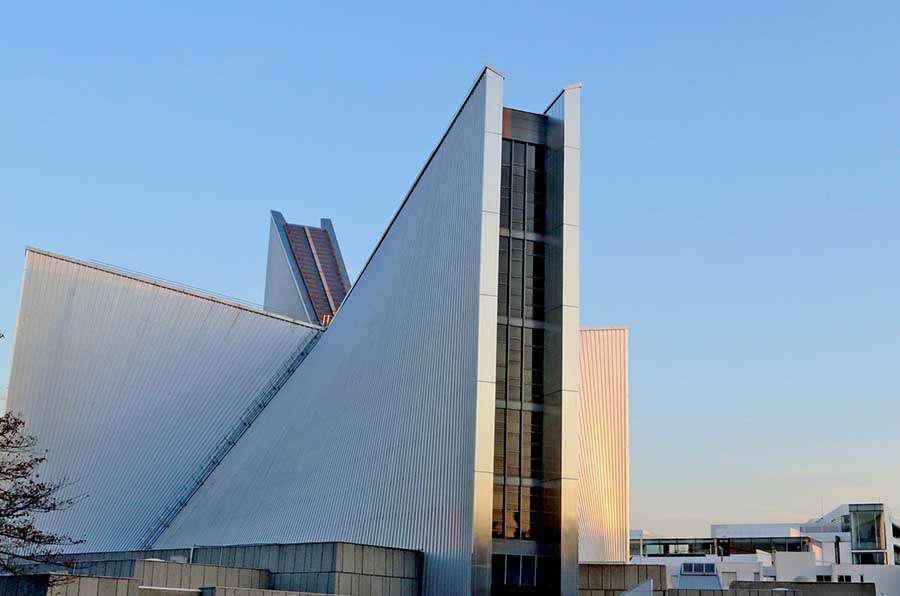
The construction was completed in 1964 and the cathedral is considered one of the most timeless pieces of modern architecture. Despite its very modern look especially for a religious facility, Tange focused on traditionalism to design this cathedral: “I feel that modern architecture has forgotten the symbolism found in traditional architecture. I wanted to re-visit and dive deep in what symbolism meant for architecture.” Although the cathedral does not look like conventional from outside, it has a shape of a cross when seen from the sky, and has very high ceilings which are not interrupted by columns. Thanks to the HP shell structure, the entire facility has no single column, which makes it look like a huge cave.
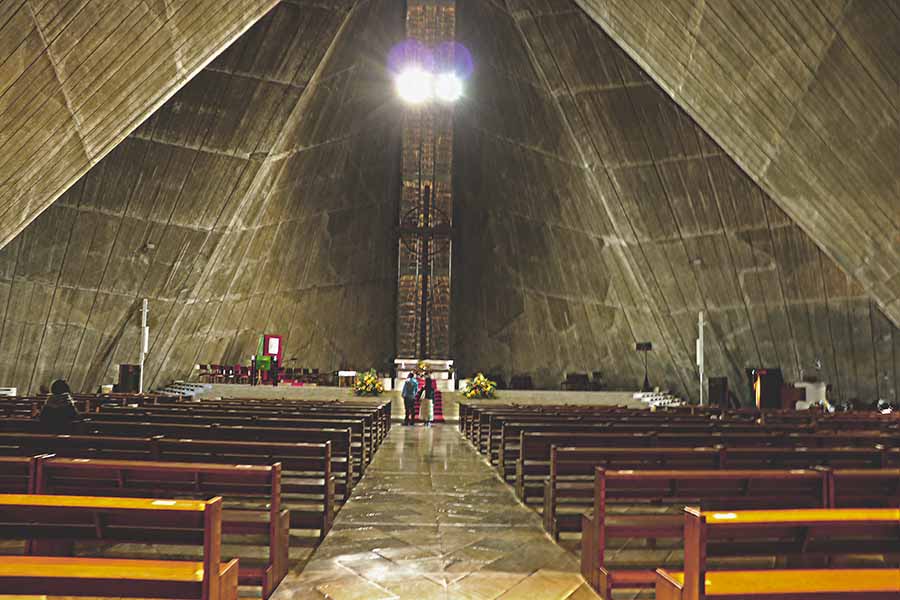
Natural light falls down from the cross-shaped openings at the top of the ceiling.
The alter was inspired by the supper table in Da Vinci’s “Last Supper.” The golden windows are framed with alabaster slabs, and a tall cross (17 meters) is installed in front of them. Natural light coming from the ceilings and windows creates solemn atmosphere.
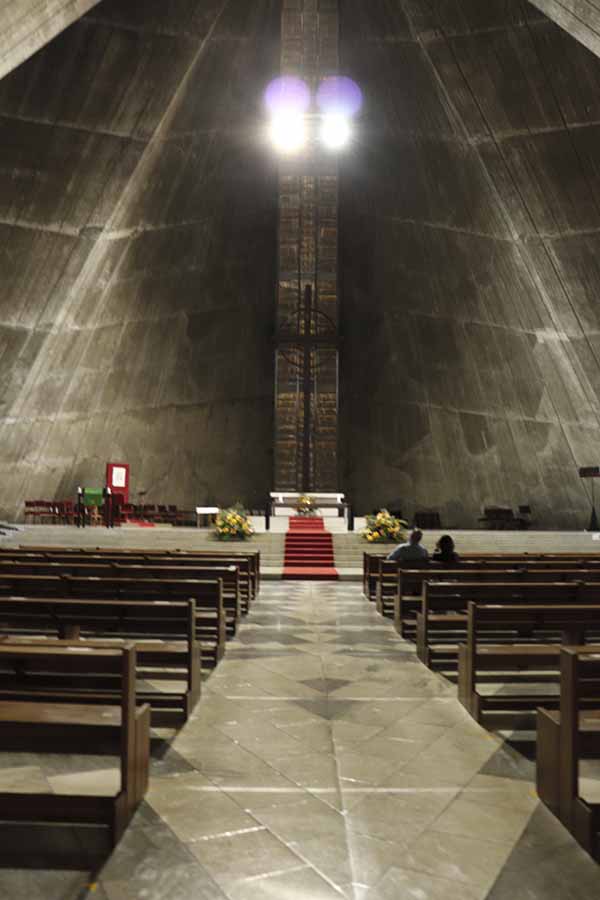
He also adopted the concept of traditional Japanese religious facilities, which required worshippers to enter a sacred gate, walk through the paths towards the main facility as a process to purify themselves. Instead of using the conventional, straight pathway to the alter, Tange designed a long winding path so that the people could prepare themselves to religious experiences as they walked up.
Interesting fact: Tange was not a Christian when he designed the Cathedral. However, he converted to Christianity in 2003, only two years before he passed away at the age of 91. It is not known if he did it so that he could be buried at the place he designed, or it was because his religious salvation in Christianity.



Leave a Comment