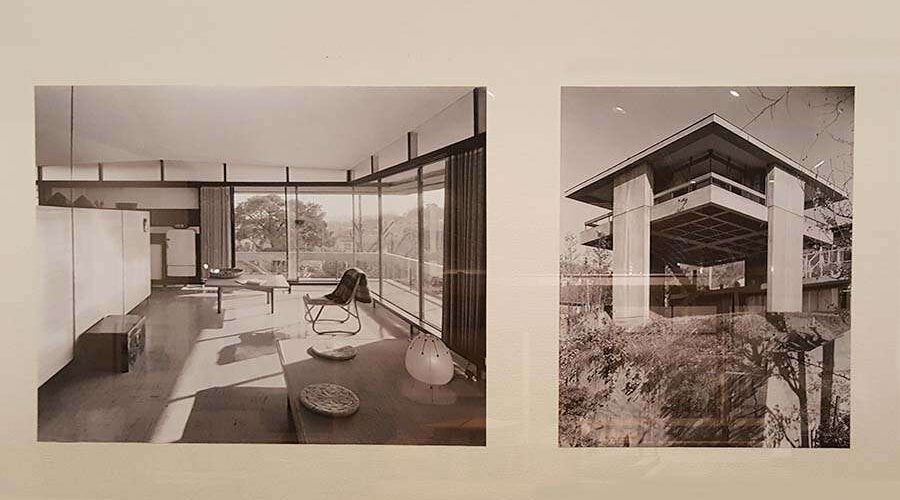
Kiyonori Kikutake designed the “Sky House” in 1958. It was only a couple of years before he started the epoque-making “Metabolism” movement with other young and ambitious architects including Kisho Kurokawa and Fumihiko Maki. The Sky House – which was his own house – was full of innovative ideas that led him to the formation of the Metabolism, the concept that modern buildings must metabolize and keep renewing themselves.
Design of the Sky House
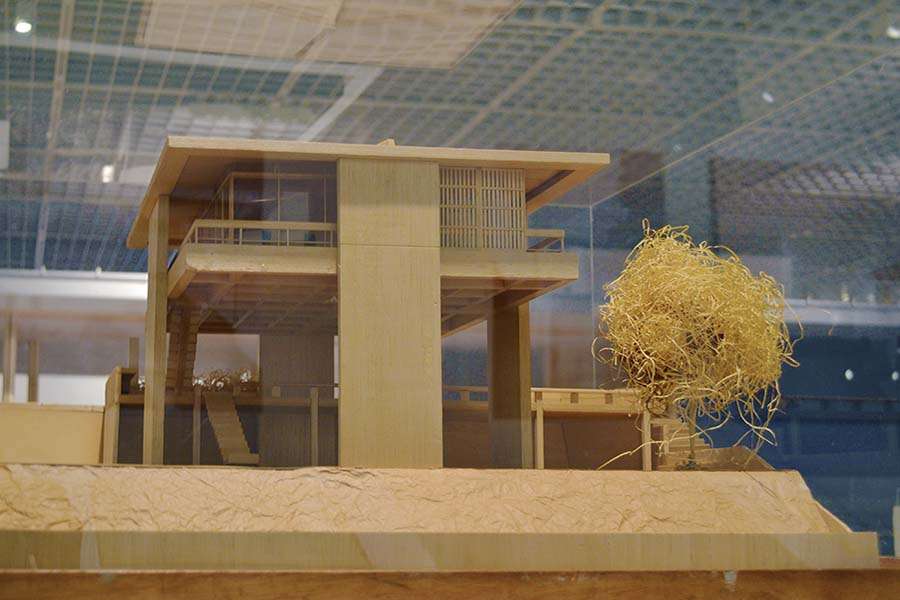
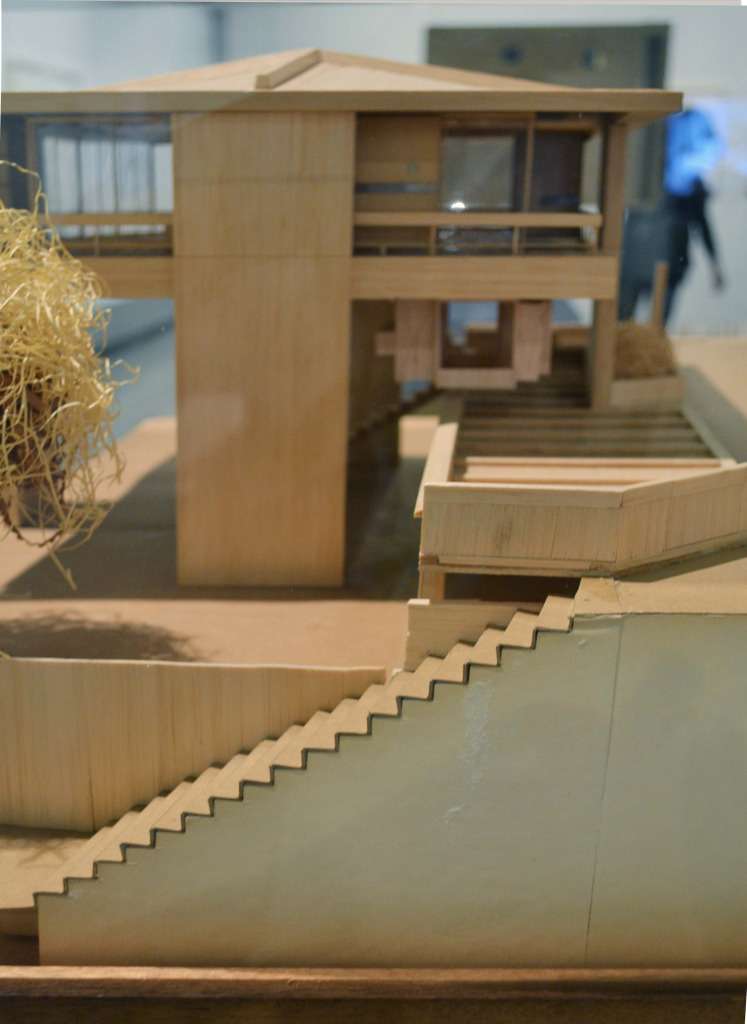
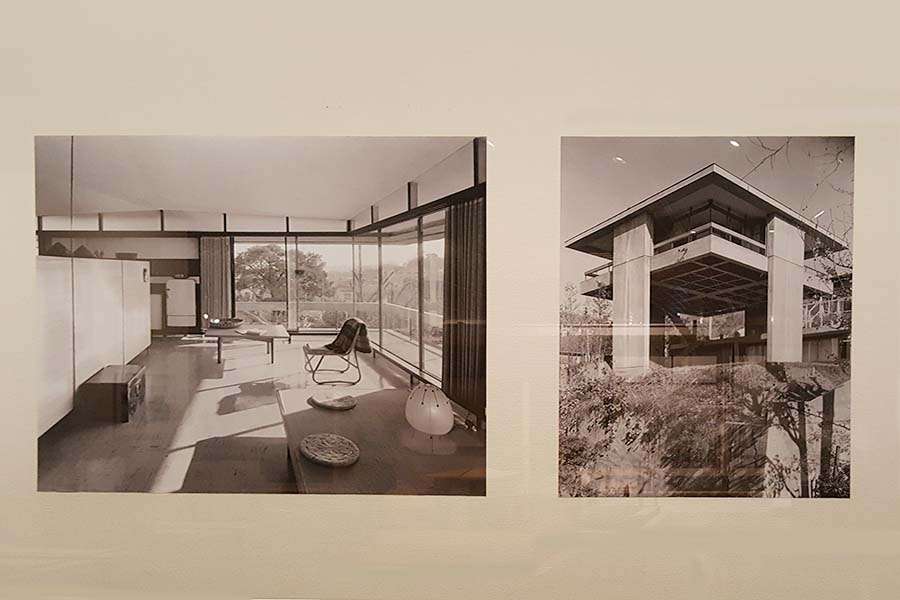
The house sat on a slanted piece of property and had pilotis supported by four pilaster-like columns. The original residential area was on the third floor, which was connected with the exterior through stairs from the second floor. The milady-slanted roofs used HP (hyperbolic paraboloid) shell, the technology Kenzo Tange used for his famous St. Mary’s Cathedral, Tokyo. As the name suggested, the house looked as if it was hanging in the air.
The Interiors of the Sky House and “Movenetts”
The interior is a 10m x 10m space with no columns nor walls thanks to the HP shell structure. The centeral area, which was 7.2×7.2m, was the living and bedroom area for Kikutake and his wife, surrounded by hallways facing windows. Kikutake named functional units such as kitchen and bathroom “movenett,” and attached them around the living area. They were considered movable/replaceable depending on family needs. He didn’t have children when he designed the Sky House, and planned kids’ rooms as additional “movenetts” which would be attached underneath the third floor when he had them.
Kikutake executed the idea in 1962 for his first daughter, who enjoyed using the room. She would use a ladder to go inside her room and close a “lid” instead of a door. After the couple had another girl, the units kept extending. The kitchen was moved to the mezzanine floor to accommodate more home appliances. The library was added to the pilotis area to house an ever-increasing volume of books. Then the master bedroom was moved next to it.
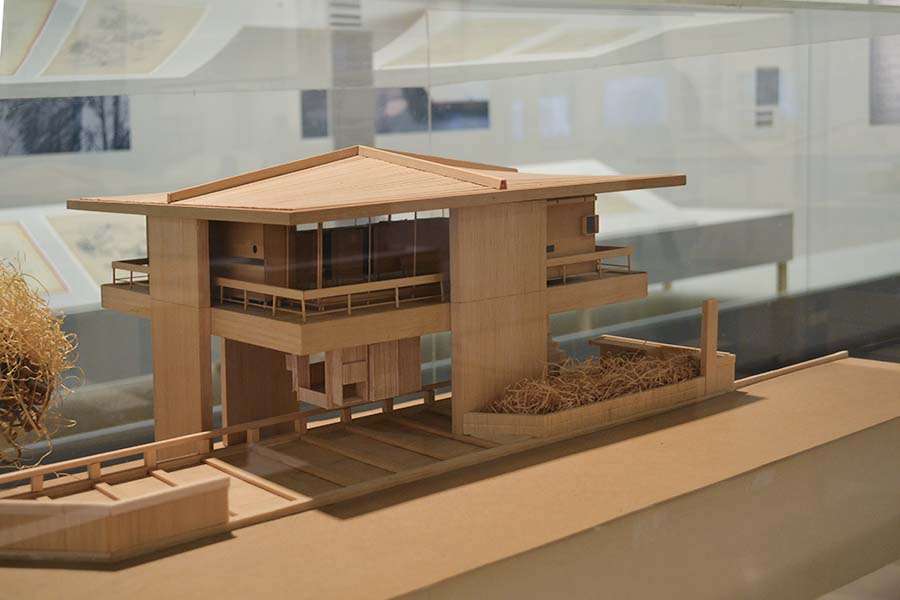
By 1994, more than 30 years after its construction, the pilotis area was completely occupied with a library, master bedroom and bathroom. The mezzanine floor had an entrance, kitchen and dining room. The second floor had an office and a guest room. The Sky House is still standing in Tokyo.
Kiyonori Kikutake’s Design Philosophy
When he designed the house in 1958, Japanese society was still dominated by men, and wives were supposed to obey their husbands. But Kikutake was free from such prejudice and treated all family members equally and fairly. That philosophy is reflected in the master bedroom, which was at the center of the house, and shared equally by him and his wife. If there was one critical change in the Japanese family after WW II, it was the improvement of the status of women. The “Sky House” symbolizes such change. According to this article, Kikutake’s daughter remembers him as truly open and fair person. “He treated everyone equally. He didn’t treat us like children. He often talked about his work and when doing so, made sure to ask our opinions. When we renovated this house, we brainstormed together. When we were kids, we wanted a pool with a slide in the pilotis area. He got excited and wanted to start working on it right away. My mom didn’t approve it as she already knew how much work it would be to maintain it (laughter). Our house was designed by my father and was taken care of by my mother.
Reference: 菊竹清訓の「スカイハウス」

Leave a Comment