About the Mongol Empire
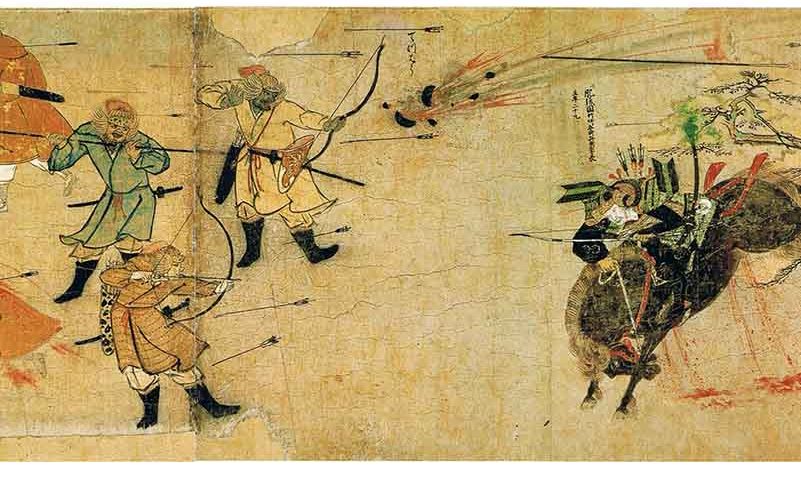
When the Mongols attempted to invade Japan in 13th century, the Mongol Empire was the largest territory on Earth. (It’s still the largest empires that ever existed.) It was founded by Genghis Khan (1162-1227), who successfully united several horse-riding, bow-wielding tribes in the Mongolian grassland regions to form almost invincible cavalry. It is believed that no other people back then could travel as swiftly and battle as effectively as Mongols. The uniquely nomadic Empire kept invading unprepared neighboring regions to enlarge their territories. At its peak in 13th century, it expanded from Eastern Europe to China and Korea. After Genghis’ death, Kublai Khan (1215-1294) – the grandson of Genghis – became the most influential Khan (emperor) of the Empire. It was Kublai Khan who decided to invade Japan. He attempted the attack twice in 1274 and 1281. It’s called 元寇 (Gen ko) in Japan.
There were a couple of reasons why Kublai Khan wanted to invade Japan. First, Japan was a believed to be a massive gold-producing country, although it was not the case. Second, Kublai wanted to use Japan to maintain his control over far Eastern Asia. He had already annexed China and Korea, but it wasn’t easy to keep these regions under control. Kublai sought to stabilize the region by annexing Japan.
Japan in 13th century
While Mongols were learning to control extended territories they’ve conquered, Japan in 13th century was still in the middle of unifying its own country and going through social changes. For centuries, Japanese aristocrats ran the 朝廷 (chotei) administration in Kyoto by having Tenno (Emperor) as the leader, and the Tennno family’s royal blood lines were uncontestable. However, their grip on regional samurai groups was becoming increasingly volatile. Some powerful samurai leaders in different parts of Japan started threatening aristocrats in Kyoto, and eventually in 1192, a new political regime was born. The Minamotos’ – one of the largest regional warrior clans from Kamakura, (in current Kanagawa Prefecture next to Tokyo) – declared the establishment of 幕府 (bakufu) administration. It might sound as if Japan ended up having two governments (chotei and bakufu), and it was true in many ways. However, the Minamotos insisted that the chotei simply delegated the bakufu the authority to regulate samurai class around the country, and the chotei still controlled other social classes.
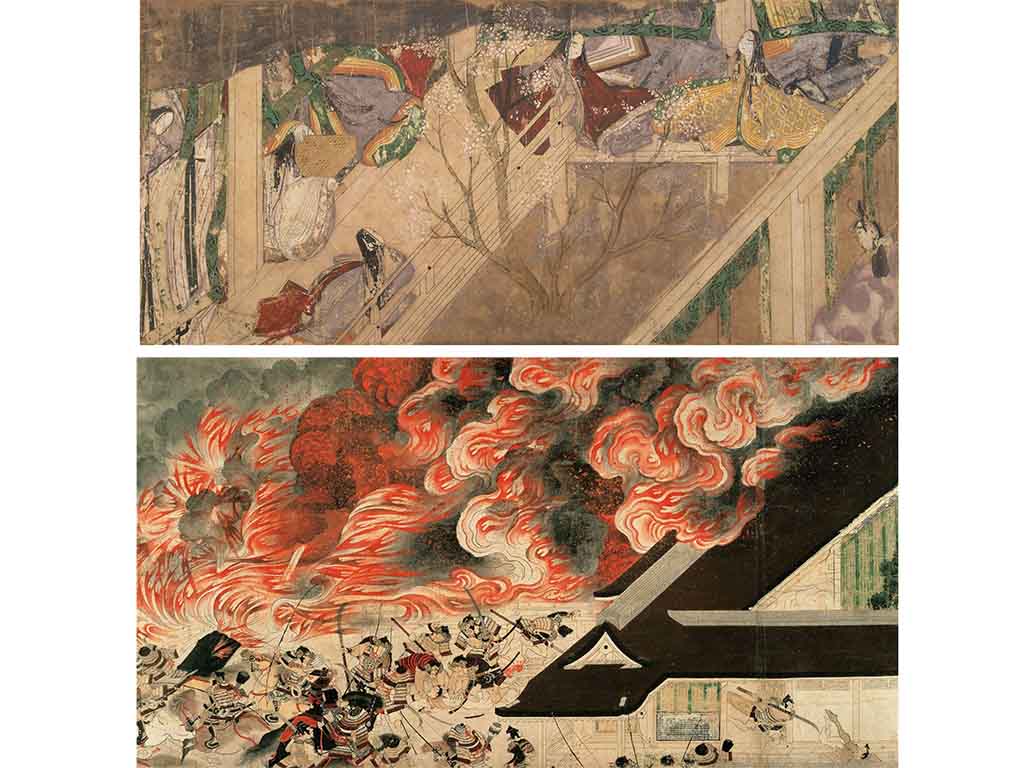
Because of the royal blood lines, bushi leaders showed respect to chotei in public. But privately, they worked hard to expand their power and influence over chotei and general people. Conflicts were everywhere. The Mongols invaded Japan when Minamotos were still immature rulers and learning to play diplomatic games, while chotei was struggling to maintain its influence. It would be safe to say that Japan was far from being ready to confront world’s strongest armies.
Was Jin Sakai a samurai?
The term “samurai” is popular outside Japan, probably because of the movie “Seven Samurai” by Akira Kurosawa and other famous entertainment productions. However, it’s rather an informal name to describe the class and Japanese use multiple terms including 武士 (bushi). During the Kamakura bakufu era, high ranking warriors who were recognized by shogun (the chief of the bakufu administration) were called 御家人 (gokenin). The official chief of warriors in Tsushima Island during the Mongolian invasion was the 宗家 (The So clan). They were from Fukuoka, but were appointed by the Kamakura bakufu to move to the island to govern it. It’s likely that the So army included a bunch of local male such as peasants and fishermen. They weren’t samurai. If Jin Sakai was a local resident, it’s possible that he was not samurai.
Japan’s Diplomatic responses to Kublai Khan
In 1266, Kublai Khan sent an official diplomatic letter to Japanese ministry of foreign affairs in Dazaifu (today’s Fukuoka which is close to Tsushima). He doubled down the supremacy of his dynasty and urged Japan to enter into “diplomatic relationships” with the Empire. He threatened that Japan could be the next Korea if it didn’t listened to him – by then, Korea was already invaded and annexed by the Mongols. Japanese counterparts in Dazaifu forwarded the letter to chotei (aristocrat’s administration) in Kyoto. The Chotei and bakufu scrambled to figure out how to respond, but after many arguments they eventually decided to “ignore” the message, as the Minamoto’s bakufu insisted so.
Hojo Tokimune, young bakufu leader
In hindsight, “no reply” was an amateur diplomatic move. However, as Japanese back then didn’t have much international experiences, they thought “no reply” would indicate “no thank you, we are good.” Obviously, it wasn’t what the Mongols (and the Koreans who were sent on behalf of Mongols) were expecting. They kept sending delegations to get some answers from Japanese, and negotiations (or the lack of thereof) took years.
In a sense, Japan’s diplomatic inexperience was due to its geographic location. As it is separated from the Chinese continent by the Oceans, it never faced serious invasion threats before. Japanese administration underestimated Mongol’s diplomatic and military capabilities, and selected an 18 year-old boy as Commander in Chief to deal with the crisis.
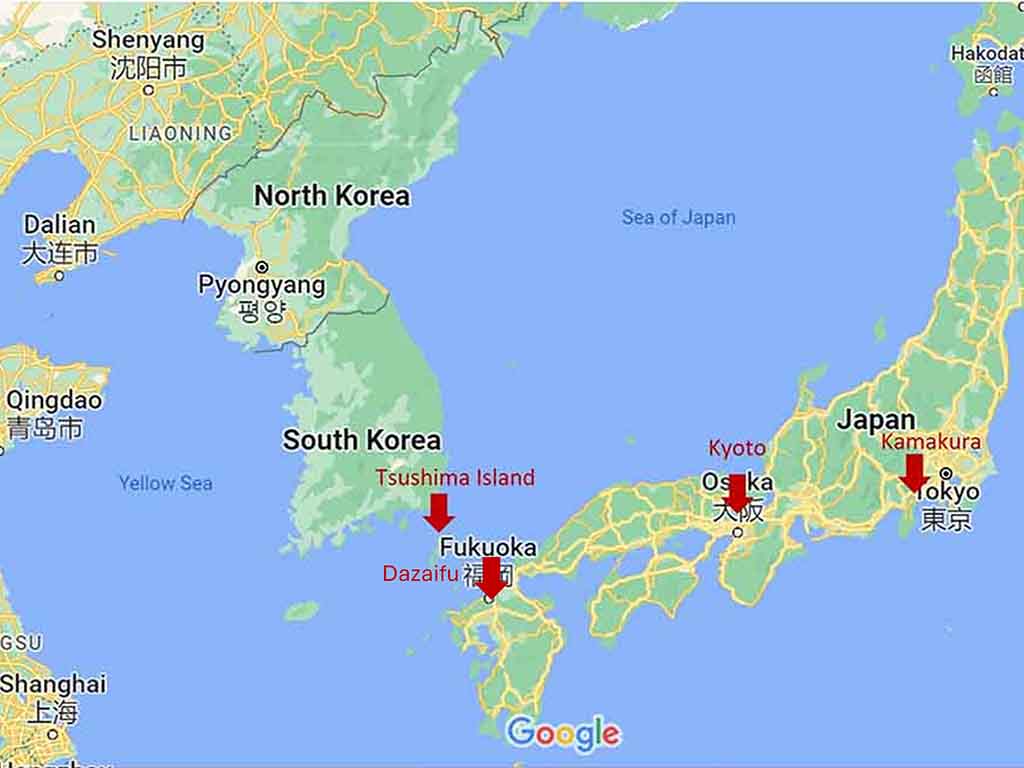
The new Commander in Chief was 北条時宗 (Hojo Tokimune), who had been seen as the next leader of the Kamakura bakufu administration ever since he was a small child. While he “ignored” Mongol’s attempts to negotiate, he sent troops to Dazaifu and tried to prepare for warfare. Eventually in 1274, Kublai Khan decided to send his troops to Japan from Korea. He ordered Koreans to make an almost impossible number of ships only in 10 months – 300 large ships, 300 middle-sized ships and another 300 small-sizes ships to carry water. In order to meet unrealistic deadlines, Koreans had to streamline design and construction process. The hastily-made convoy wasn’t very study, which was met by storms on the way to Japan.




Leave a Comment