Hassun: the epitome of Japanese “little bit of everything”
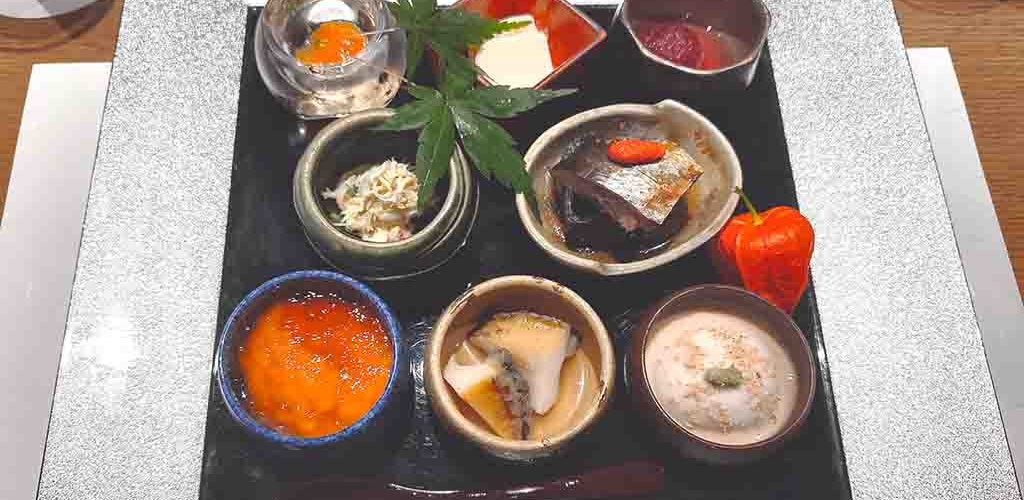
One of the major characteristics of authentic Japanese cuisine is “little bit of everything.” By default, Japanese meals consist with a main dish and a couple of sides, which are accompanied by a small bowl of rice and miso soup. Traditional kaiseki course extends it: you will enjoy dozens of different dishes that contain several dozens of ingredients neatly assembled together. You may want to try it in Japan as you get to experience the types of intricate ingredients and cooking techniques that may not be available in your home country. In particular, 八寸 (hassun), a visually aesthetic appetizer sampler of kaiseki, is the perfect plate to try a little bit of everything – vegetables, seafood and fruits in season.
The origin of hassun
The origin of hassun was the meal served at the end of traditional tea ceremony. At the end of the ceremony, a host would offer sake for a relaxed conversation, and hassun was introduced to accompany it. It got its name because it was served on a “hassun (eight sun)”-sized square plate. “Sun” is a unit of measurement, and eight suns is about 24 cm. Originally, two kinds of protein (“seafood”) and two kinds of vegetables (“food from mountain”) were carefully chosen to create a coherent dish. Today, hassun is served early during a kaiseki course to accompany alcohol, which is offered at the start of the meal.
Hassun ingredients
Japan extends latitudinally, which means that local food can be quite different from region to region reflecting regional climate. You will find rare and unique locally sourced ingredients in kaiseki. As some of them have distinct flavors or texture, you will need skillful, experienced cooks who know how to best enjoy them.
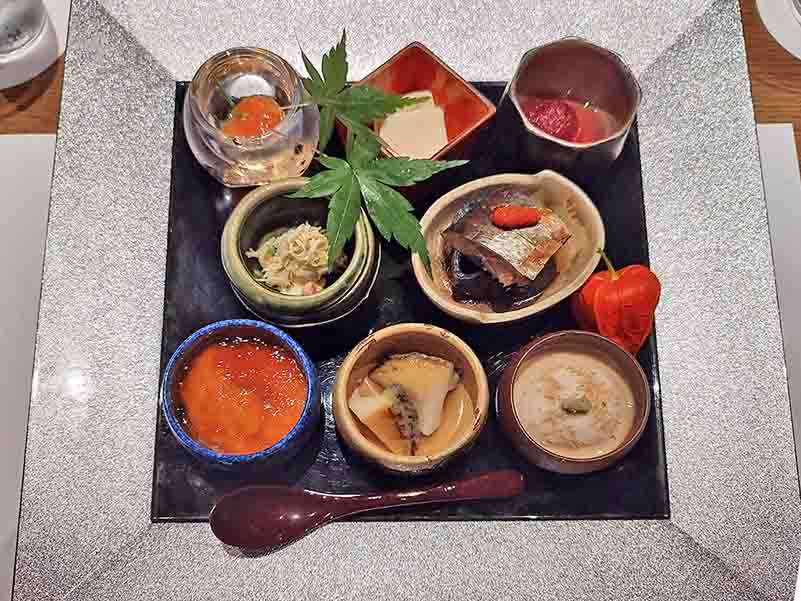
Interesting seafood you may find in hassun: shrimps, crabs, awabi (avalone), uni (sea urchin), ikura (salmon roe), shirauo (Japanese icefish), hamaguri (Japanese clam), hamo (see eel), ayu (sweetfish), katsuo (bonito), ankimo (fish liver), karasumi (dried mullet roe), fugu (puffer fish) shirako (cod sperm sack…I know, but it’s what it is.)
Interesting vegetables and fruits you may find in hassun: renkon (lotus root), chestnuts, eggplants, satoimo (taro), nagaimo (Chinese yam), turnips, ginnan (ginkgo), matsutake (pine mushroom), nameko (nameko mushroom), myoga (Japanese myoga ginger), kiku (chrysanthemum), takenoko (bamboo shoots), junsai (water shield), soramame (fava beans), yurine (lily bulb), yuba (tofu skin)
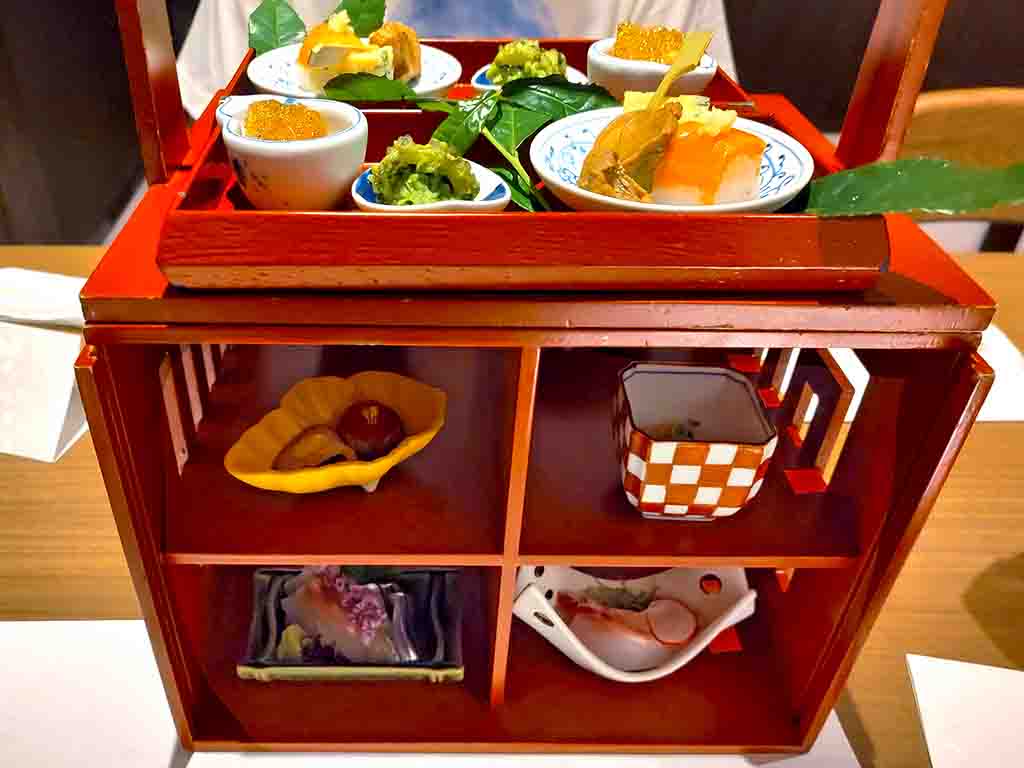
In addition, hassun is visually pleasing. It’s often served individually in tiny bowls or plates. In other cases, it’s neatly placed in a box.

Leave a Comment