
Issey Miyake (21_21 Founder) and the post-war Japanese design community
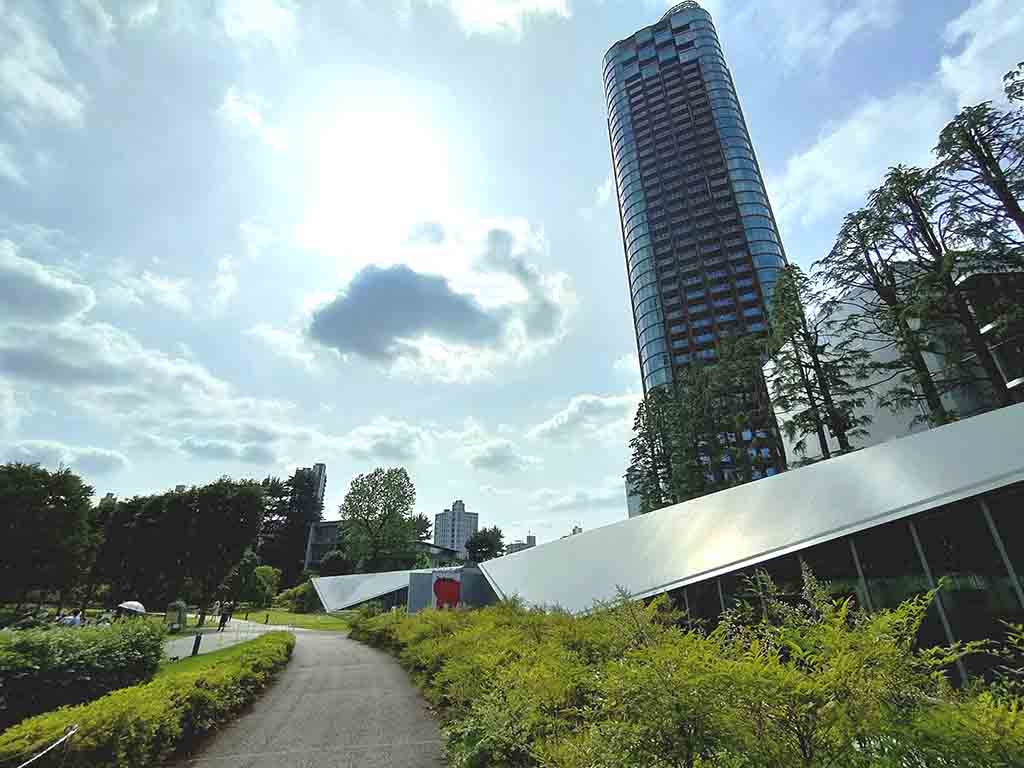
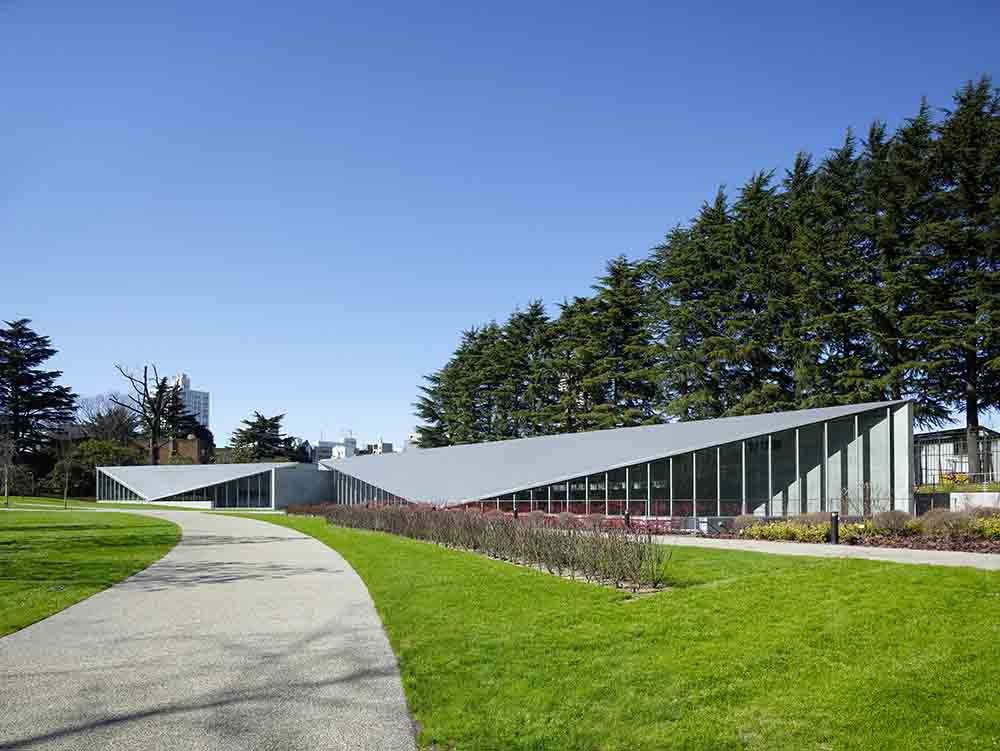
Japan holds a unique place in modern design and architecture thanks to energetic trailblazers such as fashion designer Issey Miyake (1938-2022), sculptor Isamu Noguchi (1904-1988) and architect Tadao Ando (1941- ). For decades, they have influenced each other and the society to help re-build Japanese culture after WWII. As part of the long-term endeavors, they have had the idea of creating a design museum in Japan, as they saw the power of design as critical resources for the Japanese society. Issey Miyake led the way and founded the 21_21 DESIGN SIGHT. It opened in the middle of the super-urban Roppongi district in Tokyo in 2007. Tadao Ando designed the facility.
Many post-war Japanese designers pursued ultimate simplicity, universality and functionality by mixing traditional artisanship and/or natural materials with modern technology. For example, Issey Miyake launched “PLEATS PLEASE” in the late 90’s that looked like origami using state-of-the-art synthetic fibers. These creative endeavors were part of the drivers that helped Japanese to quickly become one of the largest economies by the 80’s, only a couple of decades after the devastating loss in WWII. However, by early 90’s the momentum was gone. Japan plunged in the “lost decades,” a prolonged recession. After an almost euphoric growth, Japan was back to soul-searching that seems to continue to this day. Issey Miyake and his fellow creators became concerned about the future of Japanese design. In 2003, Miyake penned an article on newspaper to stress the need to establish a design museum in order to remind people how design could/should play a role to re-establish national identity.
Japanese design during early 20th century was defined by the folk craft (mingei) movement. Things drastically changed after WWII, which saw an explosive development thanks to the economic growth. In the field of product design, we had trailblazers such as Isamu Kenmochi, Sori Yanagi, and Shiro Kuramata; in the graphic arts there were Yusaku Kamekura and Ikko Tanaka. Their efforts elevated Japanese design to the international standards. The same applied to industrial design, architectural and environmental design. In the field of fashion design, Japanese designers and materials have been exciting the world.
However, today most Japanese do not appreciate how underlying design and technologies support many products they use. They need to understand that their lives are not as rich as they are now without innovative and robust design industry. Unfortunately the lack of recognition is so much so that both public and private sectors are reluctant to invest in new design ideas and projects because “they cannot generate money from day one.” It is not acceptable. If Japan is “struggling” today, it’s not a material or financial one. We are struggling because we cannot feel proud of what we have been creating or achieving. Governments no longer know how to support arts and design to make society better. Businesses feel they “cannot afford to” finance cultural activities. And young people don’t know where to find national pride.
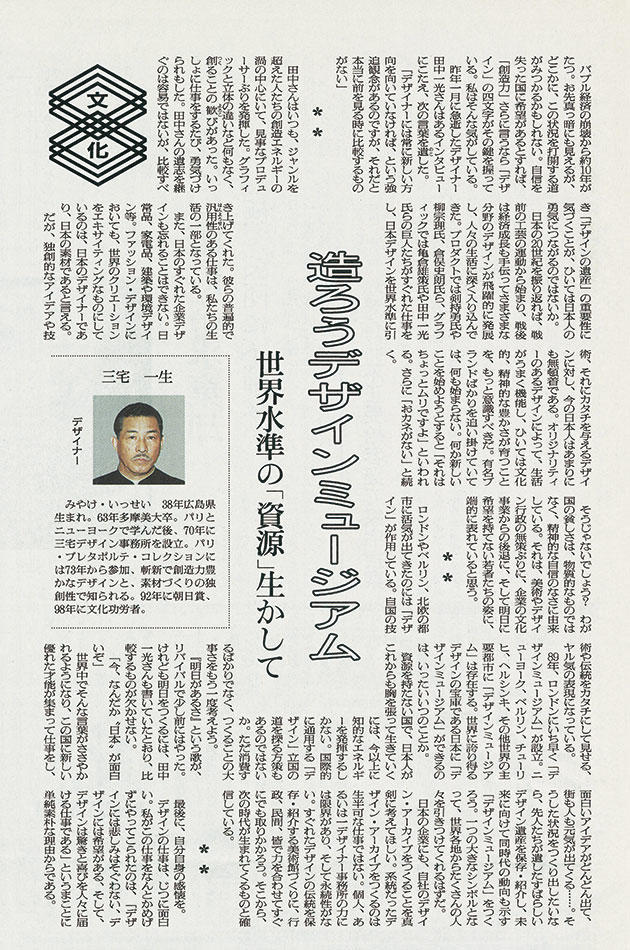
“Time to Create a Design Museum – Making the Most of Japan’s World-Class ‘Natural Resources’ in Design -“
Asahi Shimbun, published on January 28, 2003
(Summary and translation by the author.)
Miyake pointed out that London opened its design museum in 1989, which was followed by similar projects in New York City, Berlin, Zurich and Helsinki among other cities. He observed that vibrant cities almost always had vibrant design communities, as they are the engine to showcase technologies, traditions and passions for creativity fostered in the society. He believed that intellectual energy such as design was one of the only few resources Japanese could rely on to move forward, as Japan is not rich in natural resources. “One way to do so is to rebrand ourselves as a ‘design country.’ We should remind ourselves that we cannot keep consuming. We need to ‘create.’”
21_21 DESIGN SIGHT Museum Concept
Miyake’s plea garnered enthusiastic support – businesses, designers and a variety of stakeholders got together to create a design museum in Japan, and 21_21 DESIGN SIGHT opened in 2007 as the culmination of Miyake’s tireless efforts since 80s.
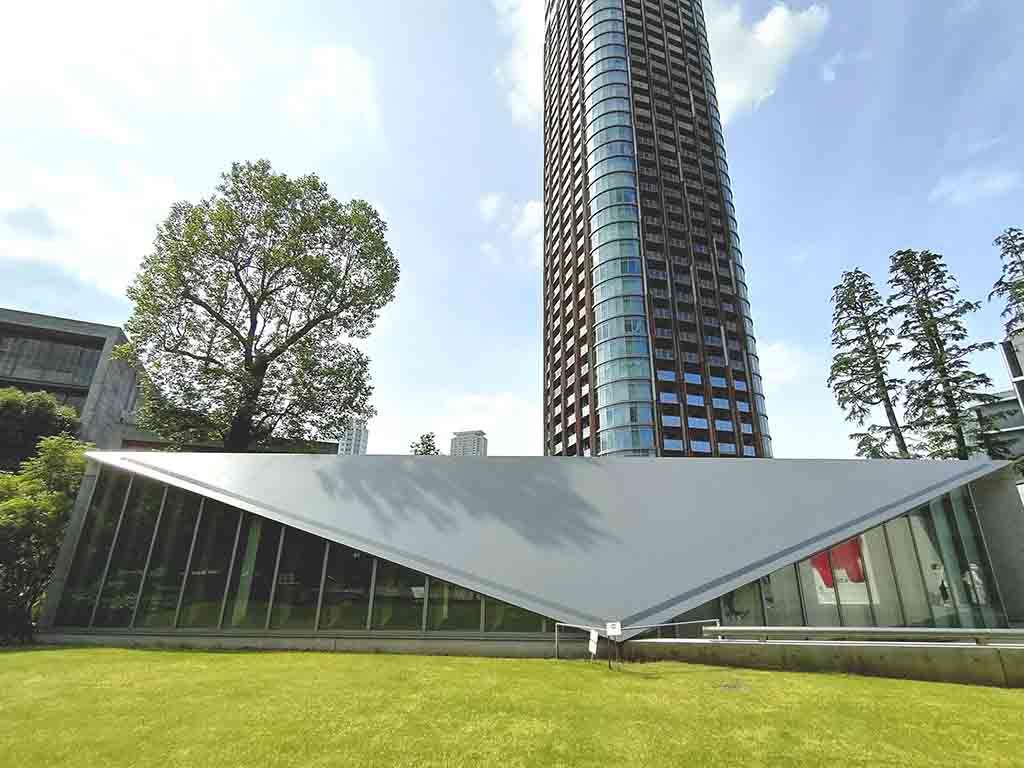
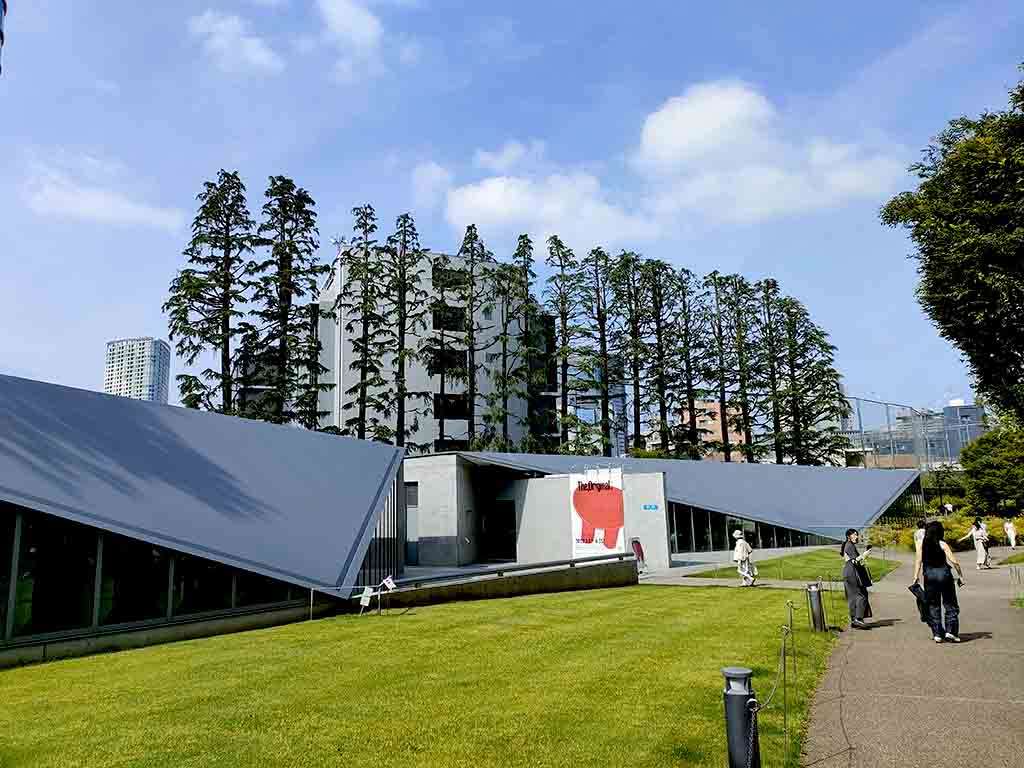
Ever since its inception, 21_21 DESIGN SIGHT continues to be the venue to explore a variety of design ideas and innovations, involving designers, engineers, artisans/craftsmen, businesses and the public. Their exhibitions, panel discussions or workshops focus on design that can be found in everyday life so that visitors can renew their perspective on design through their own daily experience.
Tadao Ando’s design concept
Issey Miyake’s long, outstanding career has been defined by his unique design philosophy: A piece of cloth. It is about focusing on your body, a piece of cloth that covers it, the in-betweens (the fit or margin, for example), and these collective relationships that help create beautiful and comfortable clothes.
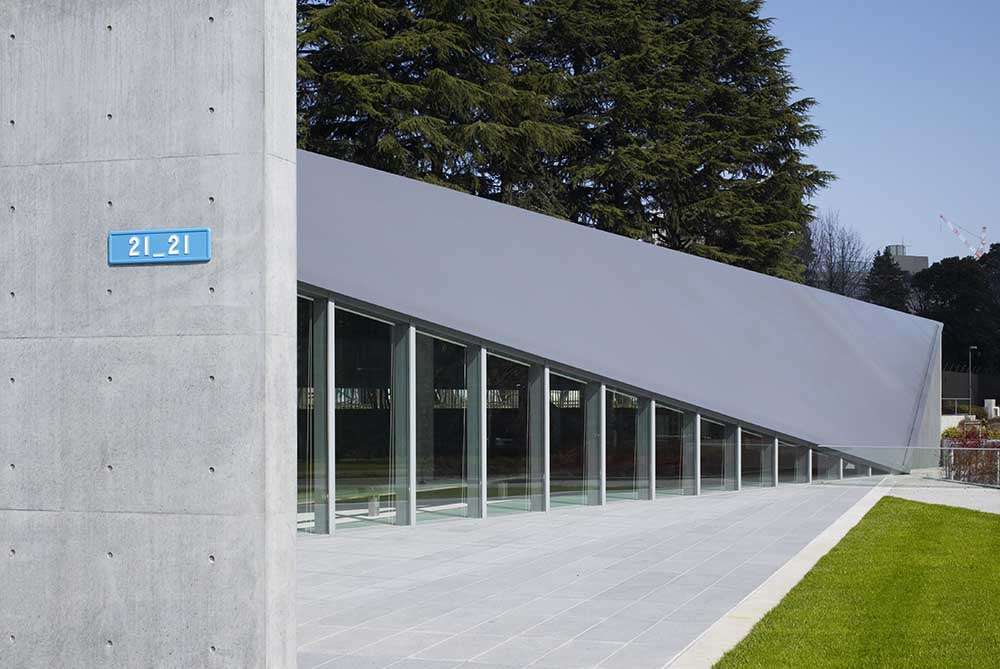
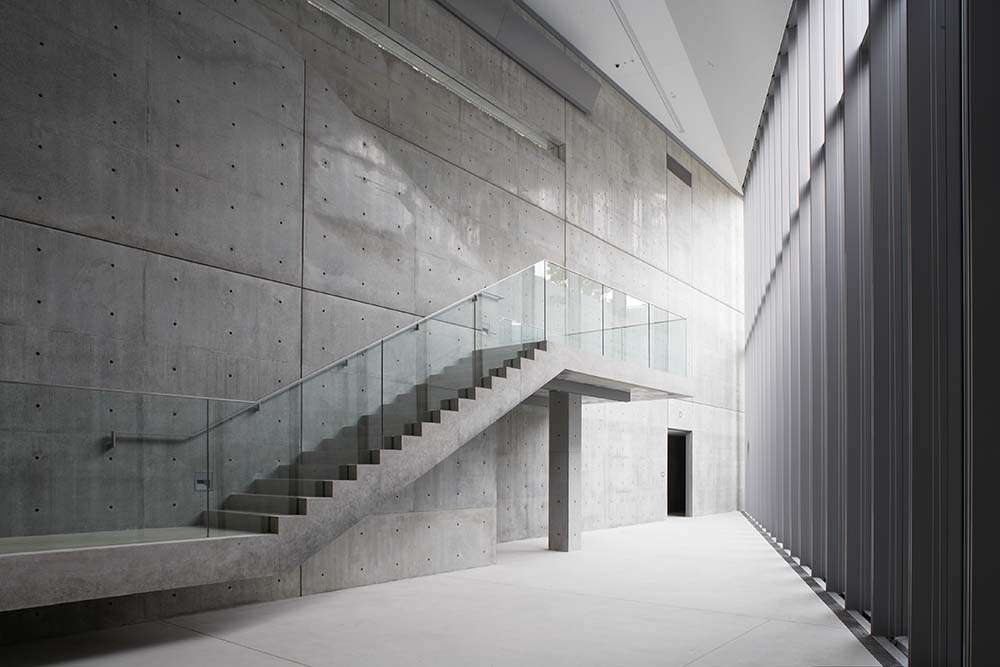
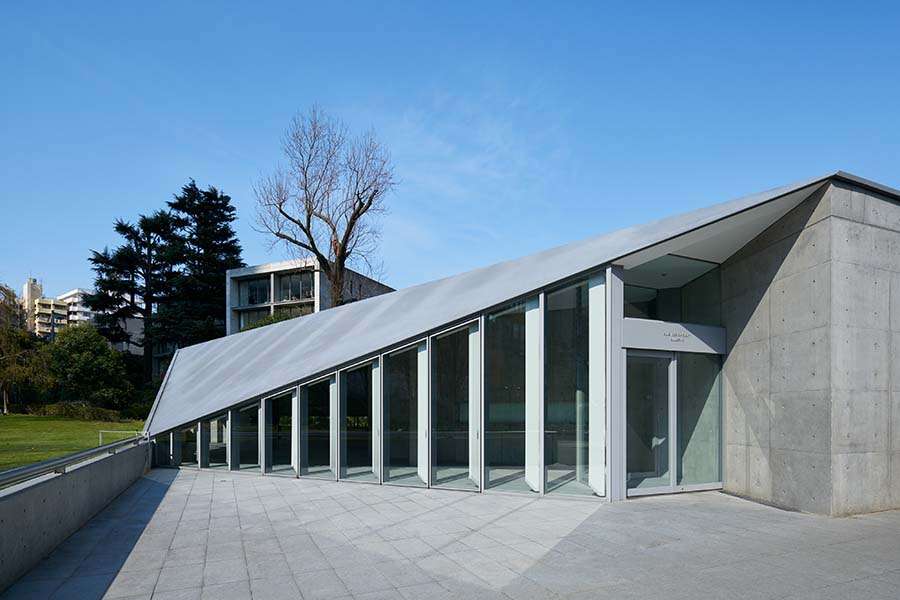
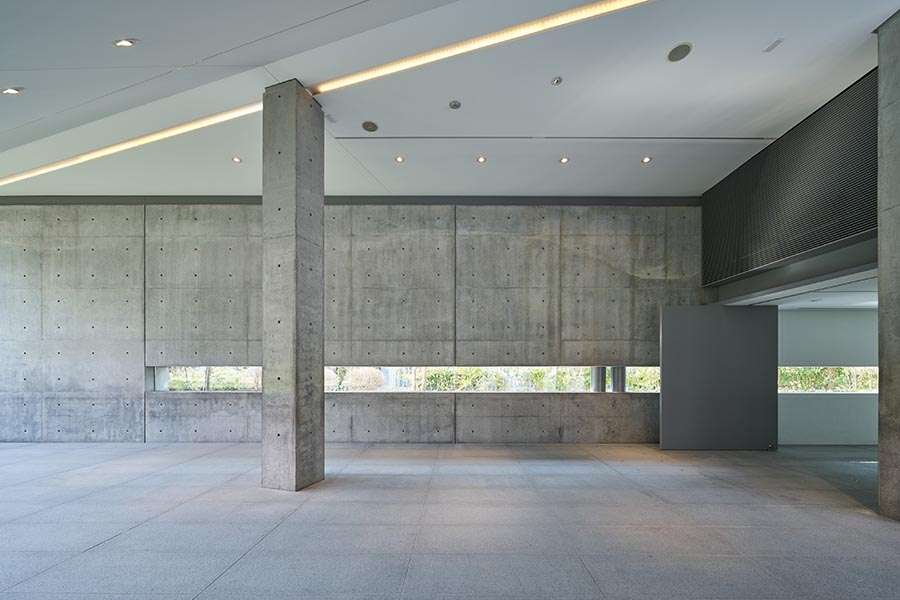
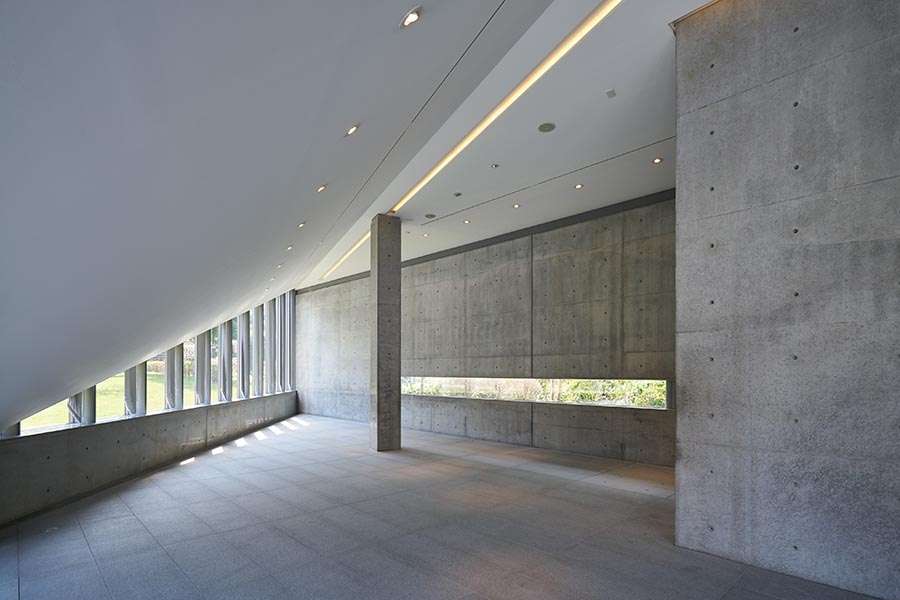
So Ando attempted to introduce his concept of “A piece of iron sheet:” – a seamless piece of metal covers a building so that it will naturally be embraced by the surrounding environment. In order to achieve his goal, he buried 80 percent of the building mass under the ground. However, it was a challenge to actually have “A piece of iron sheet” cover the building: how do you process a gigantic piece of 54 m steel so that it perfectly fits over the entire structure? Ando applauds everyone who was involved in the design, engineering and construction, as it required high level of precision and and determination throughout the process. The quality of work is also on display, both interior and exterior: Ando kept up a constant stream of communication with the team who worked on the ground in order to deliver the best results for every detail, including staircases, banisters and ceilings.
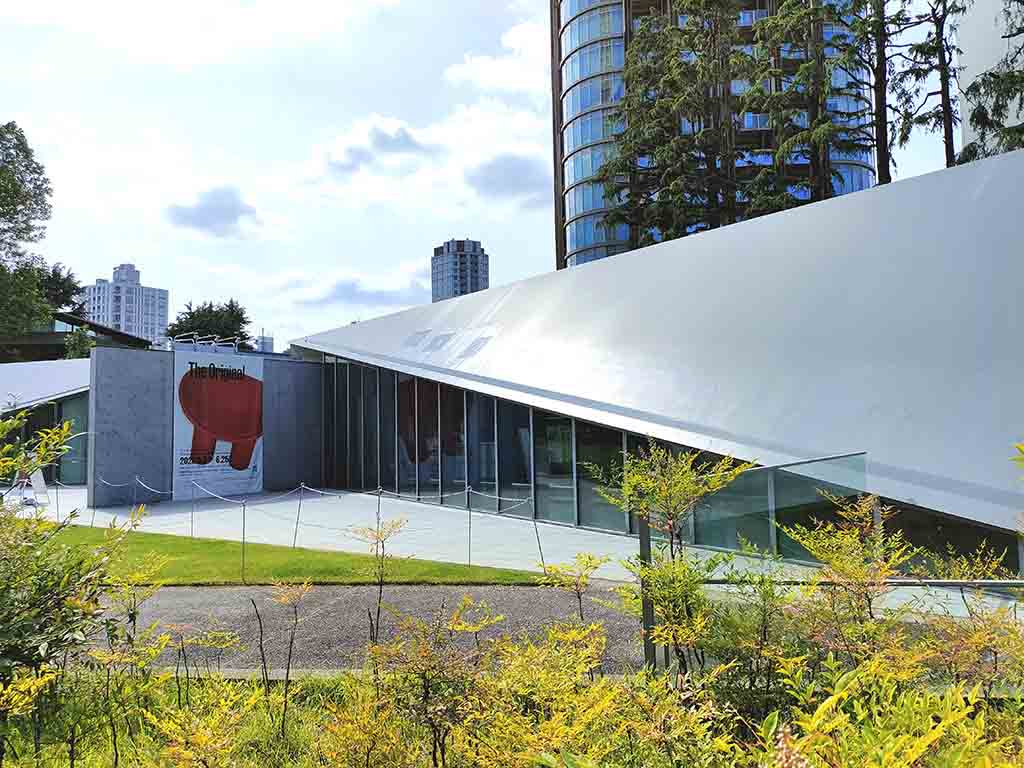
Ando hopes that 21_21 DESIGN SIGHT will serve as a cultural hub where a variety of people, especially young ones, can experience the potential of design so that they can leverage it in shaping their cultural identity in the future.




Leave a Comment